When to Prune Fruit Trees in NC at a Glance
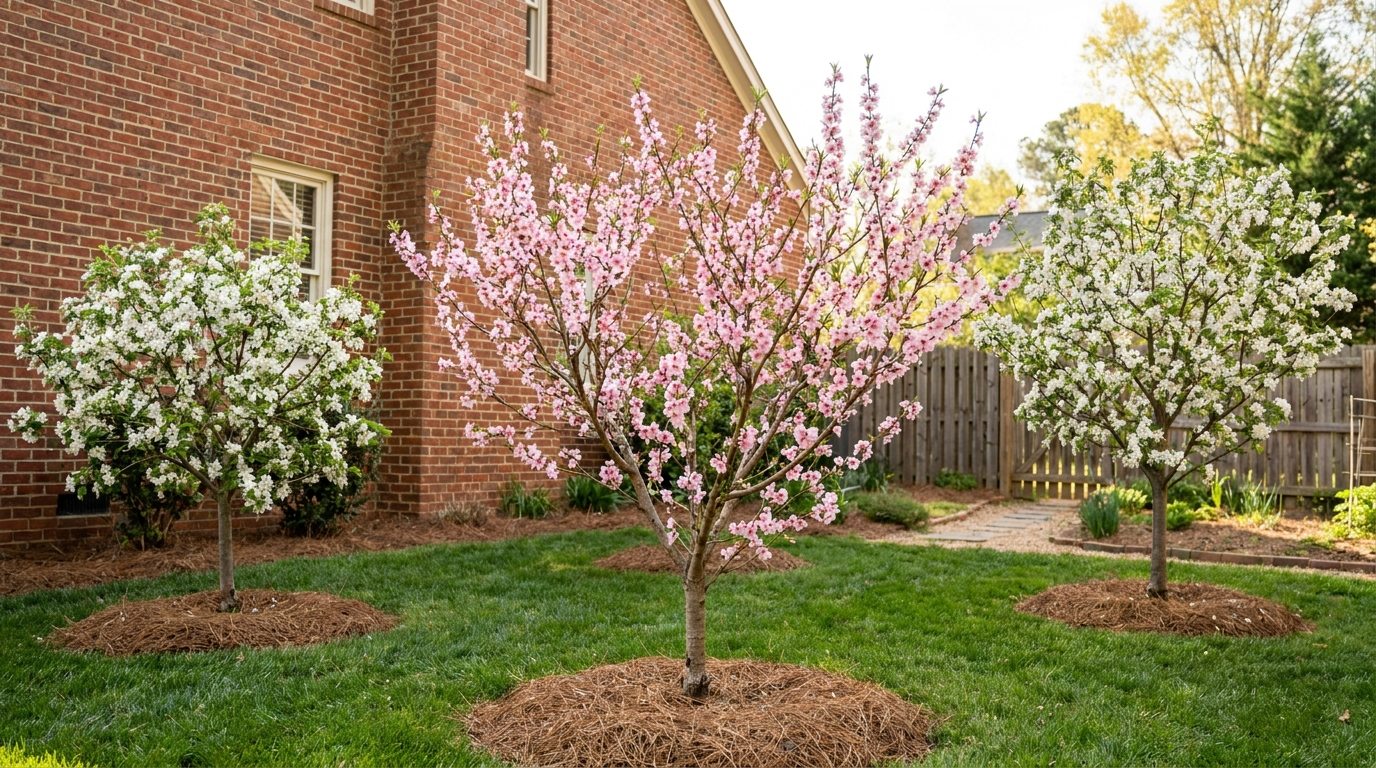
The best time to prune fruit trees in North Carolina is late winter, while the trees are dormant and before the buds open. In Raleigh, apple and pear trees are usually pruned from late January through February, and peach and plum trees from mid-February into early March, last of all. Apples and pears are trained to a central leader, while peaches and plums are pruned to an open center. Light summer pruning of water sprouts should be finished by the end of July, and fall pruning is best avoided.
Most backyard fruit trees in Raleigh are not short of sunshine, water or good soil. What they are usually short of is pruning at the right time. An apple tree that has gone a few winters without care turns into a thicket of upright shoots with small, spotty fruit at the very top, and a peach tree left alone stops fruiting on its lower branches within a few seasons. Pruning at the wrong time of year can make things worse, costing a crop or opening the door to disease.
Our crews prune apple, pear, peach, plum, cherry and fig trees in backyard orchards across Raleigh, Cary, Apex and Wake Forest. The timing changes from one type of fruit tree to the next, and so does the method. Getting both right is what turns a crowded, unproductive tree back into one that carries a full crop on strong branches every summer.
When to Prune Fruit Trees in NC: Late Winter Before Bud Break
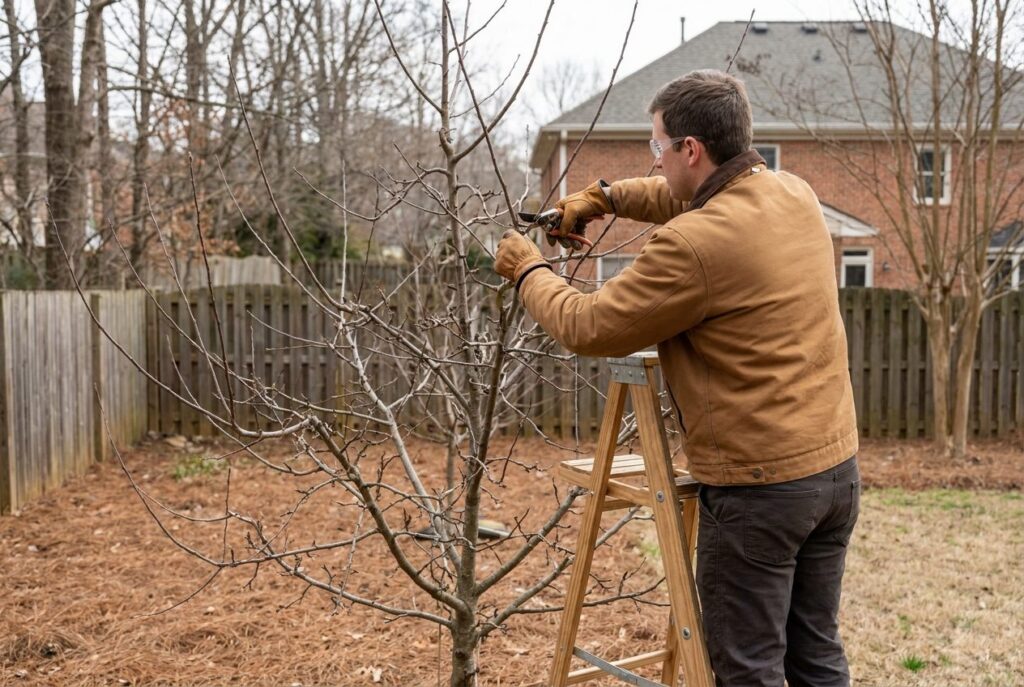
The best time to prune fruit trees in NC is late winter, during the dormant season and before the buds begin to swell. With the leaves off, the shape of the tree is easy to read, and cuts made just before spring growth heal quickly as the tree comes back to life. NC State Extension advises delaying dormant pruning until late winter to avoid winter injury to fresh cuts (Extension Gardener Handbook). In the Raleigh area, that window usually runs from late January into early March.
Order matters within that window. The same handbook recommends pruning the latest-blooming trees first and the earliest-blooming trees last, which means apples come first, then cherries, and peaches and plums at the end of the season. Peaches are especially sensitive to cold injury on fresh wounds, so they are pruned as close to bloom as practical. Figs wait until the end of winter, once the hardest freezes have passed.
| Fruit Tree | Best Time to Prune in Raleigh | Training System |
|---|---|---|
| Apple | Late January through February | Central leader |
| Pear | Late January through February, on dry days | Central leader |
| Cherry | February | Modified leader or open center |
| Peach and nectarine | Mid-February to early March, last | Open center |
| Plum | Late February to early March | Open center |
| Fig | Late winter, just before new growth | Bush or low multi-stem |
Dead, broken or diseased branches are the exception to every rule, and they can be removed whenever you find them. Our month-by-month tree trimming calendar for Raleigh shows how fruit tree work fits alongside the shade trees and crepe myrtles in the rest of your yard.
Not Sure When Your Fruit Trees Should Be Pruned?
Our certified arborist will look at each fruit tree with you, explain what needs to come off this winter and give you a clear written price. Every estimate is free, and late-winter dates fill quickly.
Why Late Winter Is the Best Time to Prune Fruit Trees
Pruning a dormant fruit tree is a different job from pruning one in leaf. In winter, the tree’s energy is stored in its roots and trunk, and the cuts you make decide where that energy goes when spring arrives. Remove a third of the shoots and the tree pushes its full spring growth into the branches that remain. That is how late-winter pruning shapes the tree and improves the fruit at the same time.
Pruning in fall or early winter has the opposite effect. Wounds sit open through the coldest months, and stimulated buds can be killed by a hard freeze. Clemson Extension advises against pruning peaches between October and January for exactly this reason (Clemson Cooperative Extension). Many Raleigh homeowners prune right after harvest in the fall, and it is one of the most common causes of winter dieback we see on backyard peach trees.
Pruning Fruit Trees in Winter: What to Look For
- Dead, broken and diseased branches
- Branches that cross and rub against each other
- Upright water sprouts growing from limbs and old cuts
- Suckers growing from the base of the trunk
- Narrow, weak forks that could split under a heavy crop
- Crowded growth that shades the center of the tree
Sunlight is the reason behind most of these cuts. Leaf buds need good light to develop into flower buds for the following year, and shaded inner branches produce little fruit. Opening the canopy also helps leaves and fruit dry quickly after rain, which matters in Raleigh’s humid summers.
When to Prune Apple Trees in North Carolina
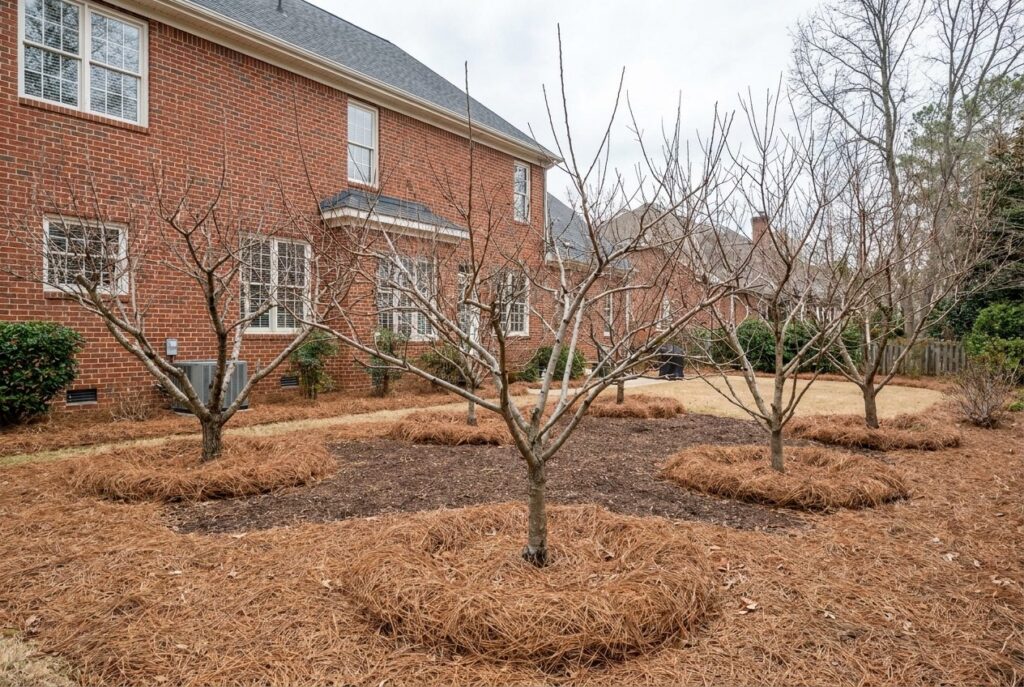
The best time to prune apple trees in North Carolina is late winter, from late January through February. Apples flower later than peaches, so they can be pruned first without much risk to the coming season’s blossoms. NC State Extension notes that apples and pears produce their fruit on short spurs along wood that is two years old or more (Extension Gardener Handbook). Good apple tree pruning protects those spurs while thinning out the growth that shades them.
Pruning apple trees to a central leader gives the tree one main upright trunk with tiers of side branches spaced around it, so it takes a loose Christmas-tree shape. The lower branches are kept longer than the upper ones, letting light reach every level of the tree. NC State Extension recommends spacing the main scaffold branches about 18 to 24 inches apart up the trunk (NC State Extension). Branches growing at wide angles from the trunk are far stronger than narrow forks.
How to Prune Apple Trees Step by Step
- Step 1: Remove dead and diseased wood. Cut out any dead, broken or cankered branches back to healthy wood.
- Step 2: Take out suckers and water sprouts. Remove shoots from the base and upright sprouts growing from the limbs.
- Step 3: Keep the central leader in charge. Remove any upright branch that competes with the main trunk.
- Step 4: Thin crowded scaffolds. Remove crossing branches and keep side branches well spaced around the trunk.
- Step 5: Shorten overlong limbs. Cut long branches back to an outward-facing side branch to keep fruit within reach.
- Step 6: Protect the fruiting spurs. Avoid stripping the short spurs along older wood, which carry the apples.
Older apple trees that have been left for years usually need two or three winters of restoration rather than one heavy cut. NC State Extension advises against removing more than about 30 percent of a neglected tree’s top in a single year. Taking off too much at once triggers a forest of water sprouts the following summer. If an old fruit tree is dead, hollow or leaning toward the house, our tree removal team can take it down safely and clear the space for a new one.
How to Prune Pear Trees and Avoid Fire Blight
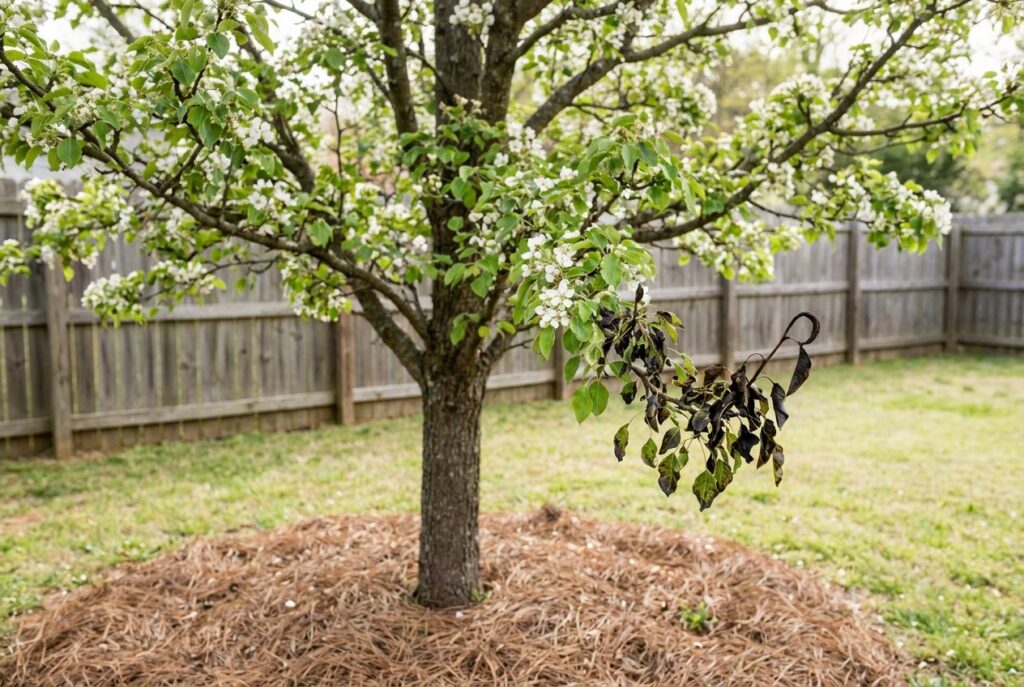
Pear trees are pruned in late winter, at the same time as apples, and they are trained to the same central leader system. Pears naturally grow tall and upright, so a big part of pear tree pruning is spreading branches to wider angles and removing the vertical shoots that crowd the center. Kieffer, Moonglow and Asian pears are all common in Raleigh yards, and all of them respond well to steady pruning each winter. Pruning on dry days is especially important for pears.
Fire blight is the main reason. This bacterial disease is common on pears and susceptible apples across the Triangle, and it spreads easily through fresh cuts in wet weather. Infected shoots wilt and turn black, as if scorched, and the tips often bend into a hook. NC State Extension advises pruning infected wood on the driest, coolest days possible, cutting at least 12 inches past the last visible sign of infection, and removing every pruning from the site (NC State Extension).
Signs of Fire Blight on Pear Trees and Apple Trees
- Shoot tips that wilt and bend into a shepherd’s crook
- Leaves and blossoms that turn black or brown and stay on the branch
- Branches that look scorched by fire
- Sunken, cracked cankers on older wood
- Amber droplets oozing from infected bark in spring
- Dieback spreading from blossoms toward larger limbs
We clean our pruning tools between cuts on infected trees so the disease is not carried into healthy wood. Ornamental Bradford and Callery pears are also hosts, and our article on Bradford pears in Raleigh explains why so many of them split apart in storms.
★★★★★
“Steven Beard with Ashland Tree Service answered my call promptly, came out and gave me an estimate. Best part, he was able to come out that same day to trim my 4 trees. Done professionally and to my satisfaction and would highly recommend him.”
Jerome K. · Verified Google Review
When to Prune Peach Trees in Raleigh
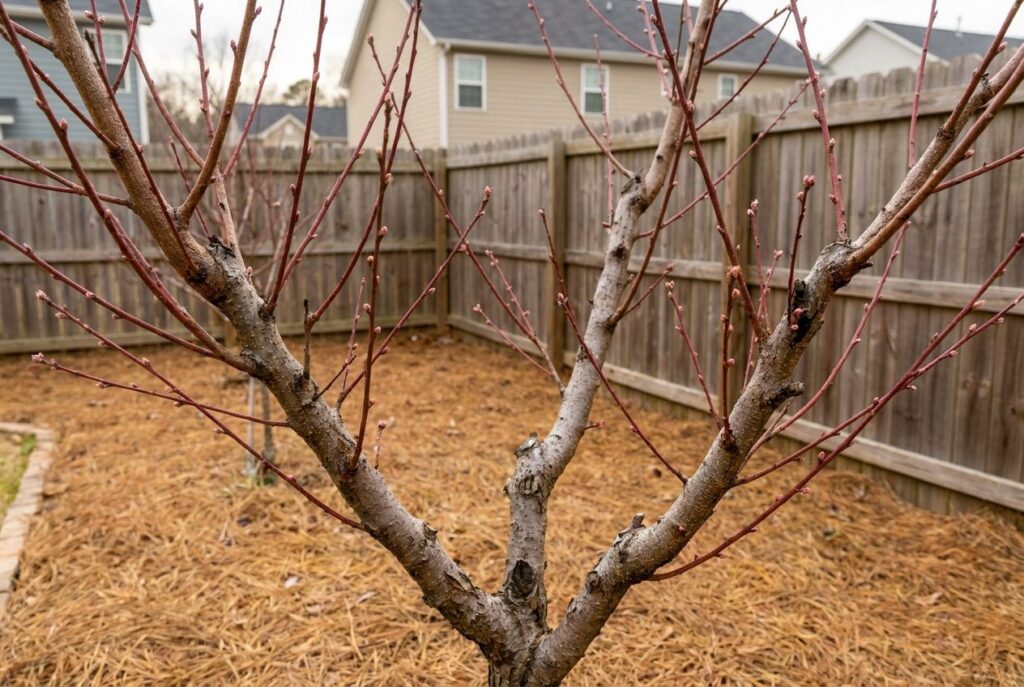
The best time to prune peach trees in Raleigh is from mid-February into early March, last of all your fruit trees and as close to bloom as practical. Pruning peaches too early in winter leaves fresh wounds exposed to cold injury and disease, and it can also stimulate buds that a hard freeze then kills. Waiting until late in the dormant season also lets you see which buds survived the winter, so you can keep the healthiest fruiting wood. Peaches respond to pruning more than almost any other fruit tree.
Peaches fruit on wood that grew the previous summer, so each winter’s pruning must remove older, unproductive shoots and keep a steady supply of new fruiting wood. Peach tree pruning uses the open center system, with the central leader removed and three to five strong scaffold limbs spreading outward at about 45 to 60 degrees (NC State Extension). The open shape lets sunlight into the middle of the tree, which peaches need to fruit well.
How to Prune Peach Trees in Late Winter
- Remove dead, broken and diseased wood first
- Keep three to five well-spaced main scaffold limbs
- Open the center by removing upright shoots growing inward
- Keep healthy one-year shoots about the thickness of a pencil for fruit
- Cut back overly tall shoots to keep the tree easy to reach
- Remove water sprouts and suckers from the base
Plum trees are pruned in a similar way to peaches, to an open center and late in the dormant season, though they usually need lighter cuts. Cherries are pruned in February and also prefer a lighter touch. Both are less vigorous than peaches, so removing too much wood can reduce the following crop.
Summer Pruning Fruit Trees: Water Sprouts and Timing
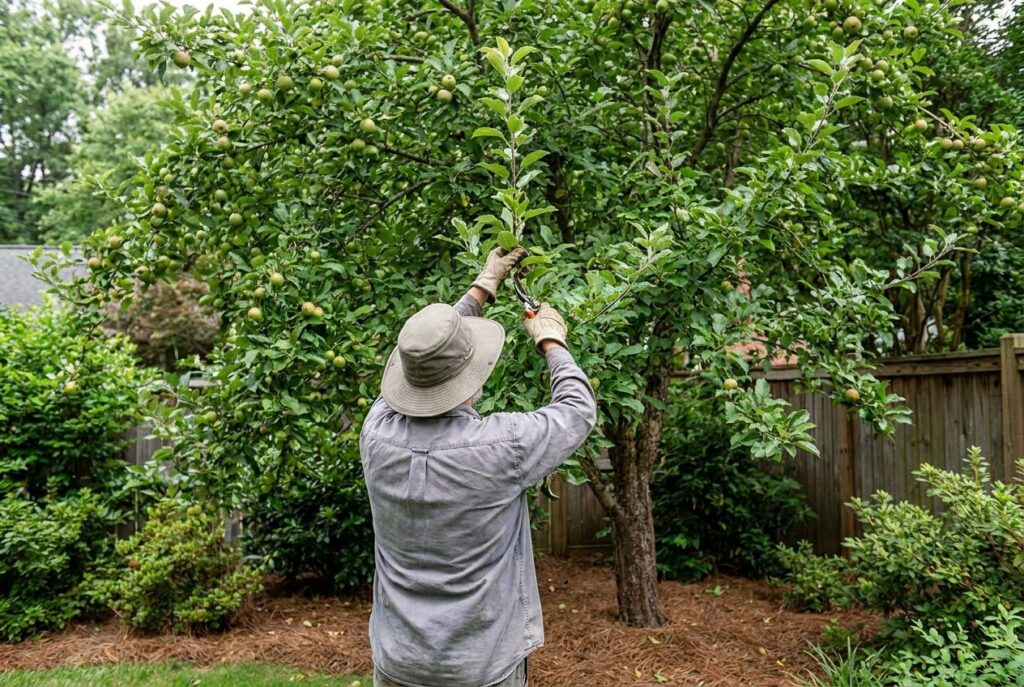
Summer pruning fruit trees has a narrow but useful role. Water sprouts, the fast, upright shoots that grow from limbs and old pruning cuts, shade the tree and produce little fruit. Removing them in early summer, while they are still green and soft, slows regrowth and lets light reach the fruit that is forming. Light summer cuts are also the best way to control the size of very vigorous trees.
Timing matters just as much in summer as in winter. NC State Extension recommends finishing summer pruning by the end of July, so the tree has time to harden off its growth before winter (Extension Gardener Handbook). Late-season cuts can push tender shoots that the first frost kills. Heavy pruning in the heat of a Raleigh summer also adds stress to the tree at the worst possible time.
Summer Fruit Tree Care Checklist
- Remove green water sprouts in early summer
- Thin heavy fruit clusters so branches do not break
- Water deeply during long dry spells
- Pick up fallen and diseased fruit promptly
- Watch for wilting shoots, cankers and leaf spots
- Finish all summer pruning by the end of July
Thinning the fruit itself is part of good summer care. Peach and apple trees often set far more fruit than they can carry, and thinning clusters early in the season gives larger fruit and protects branches from breaking under the weight.
How to Prune a Fig Tree in Raleigh
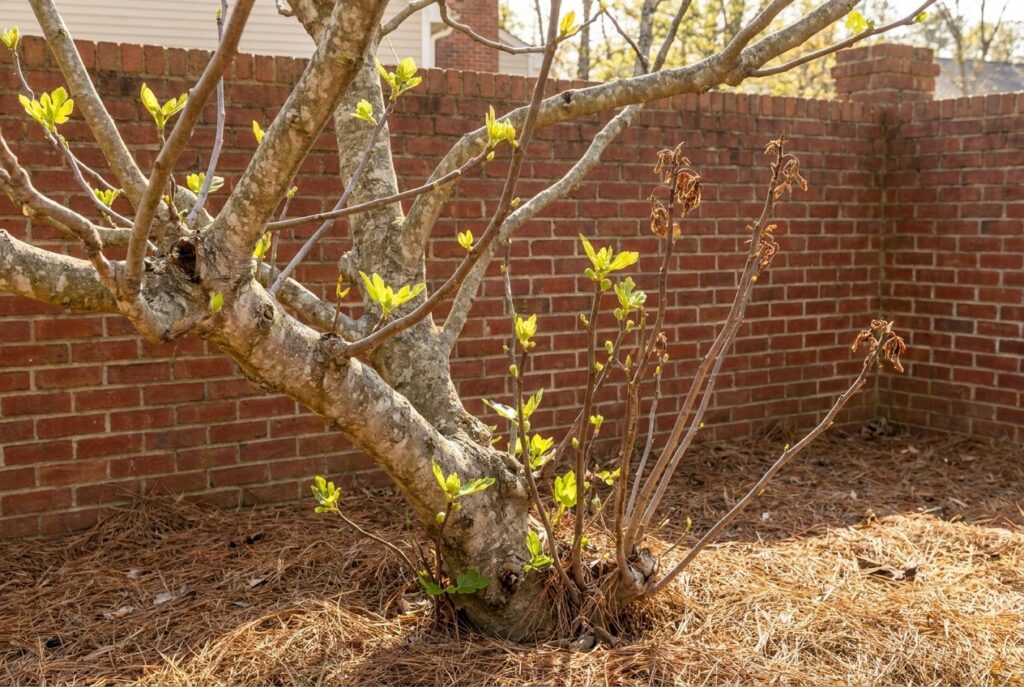
Fig trees are popular in Raleigh gardens and need far less pruning than apples or peaches. The best time to prune fig trees is late winter, just before new growth begins (NC State Extension). Figs in the Piedmont can be damaged by hard freezes, so it often pays to wait until new leaves appear and show exactly where the cold damage ends. Dead wood is then cut back to live growth.
How to prune a fig tree depends on its size and age. On young trees, we choose a few strong stems to form a low, open bush. On mature figs, we thin out crowded and crossing stems, remove suckers that are not needed and shorten branches that have outgrown their space. Brown Turkey and Celeste figs fruit on new growth, so a light hand keeps them productive.
Our Crew at Work Around Raleigh
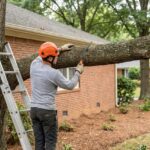
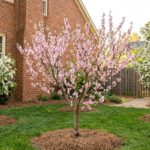
From backyard fruit trees to large shade trees over the house, our crew brings the same care and cleanup to every job. These are recent jobs from around Raleigh and Wake County.
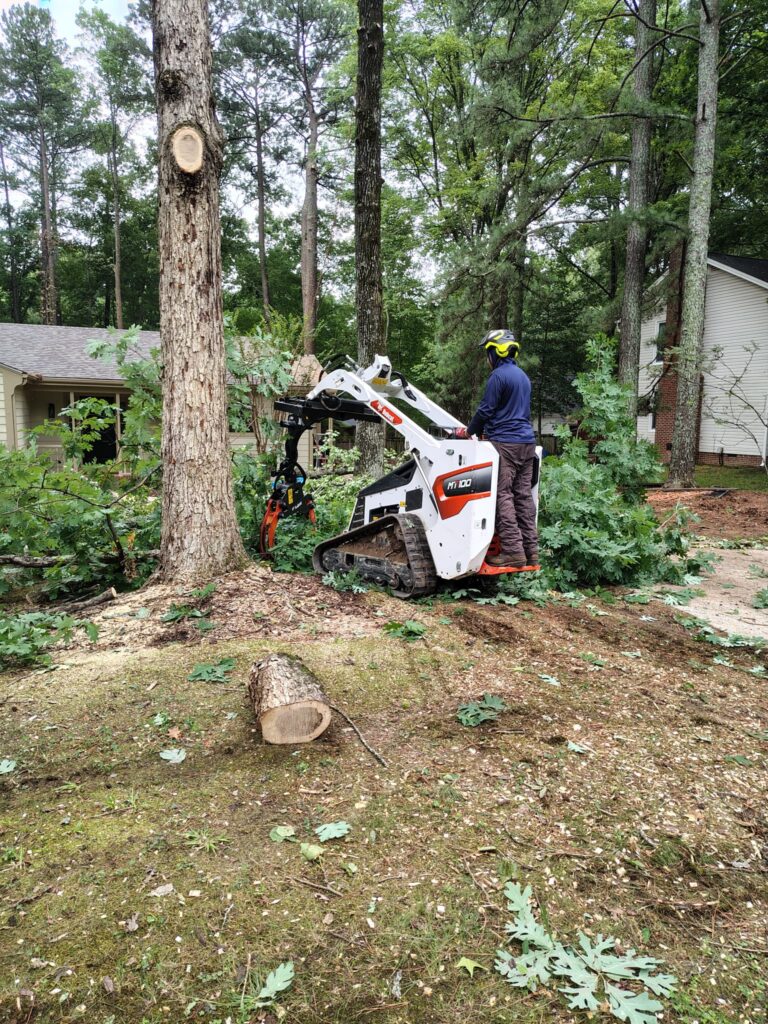
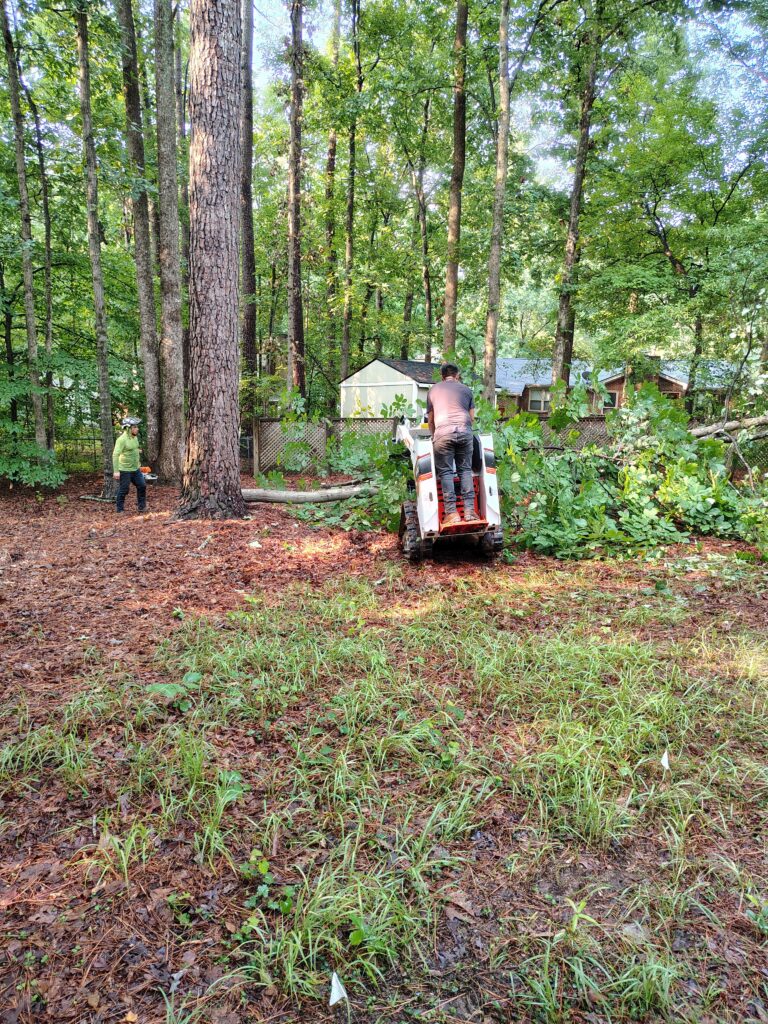
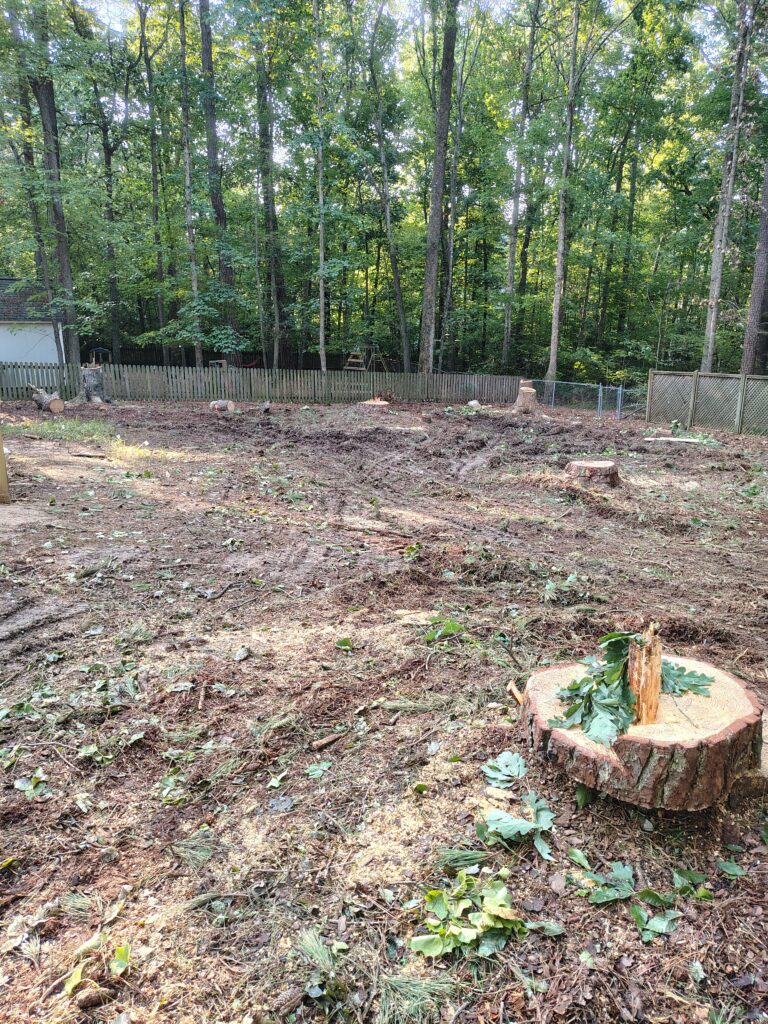
Every visit ends with prunings chipped or hauled away, diseased wood removed from the property and the ground raked clean. Our fruit tree pruning service covers apples, pears, peaches, plums, cherries and figs, and our tree pruning service takes care of the larger trees that shade your orchard.
Fruit Tree Pruning FAQs for Raleigh Homeowners
When Is The Best Time To Prune Fruit Trees In North Carolina?
Late winter is the best time to prune fruit trees in North Carolina, while the trees are dormant and before the buds open. In Raleigh, that usually means late January through early March. Prune apples and pears first and peaches and plums last, closer to bloom.
When Is The Best Time To Prune Apple Trees In Raleigh?
Apple trees in Raleigh are best pruned from late January through February, while they are dormant. This timing avoids winter injury to fresh cuts and lets the tree heal quickly as spring growth starts. Green water sprouts can also be removed in early summer.
How Do You Prune Apple Trees?
Apple trees are pruned to a central leader, with one main upright trunk and tiers of well-spaced side branches. Remove dead wood, suckers, water sprouts and crossing branches, then thin crowded limbs while protecting the short fruiting spurs on older wood.
When Should You Prune Peach Trees?
Peach trees should be pruned from mid-February into early March, as close to bloom as practical. Pruning later in the dormant season reduces the risk of cold injury and lets you see which buds survived the winter. Avoid pruning peaches from October through January.
How Do You Prune Peach Trees?
Peach trees are pruned to an open center, with three to five main limbs spreading outward and the middle kept open to sunlight. Each winter, remove older shoots and keep healthy one-year wood, because peaches fruit on growth from the previous summer.
How Do You Prune Pear Trees?
Pear trees are pruned to a central leader in late winter, on dry days. Spread upright branches to wider angles, remove vertical shoots crowding the center and cut out any fire blight at least 12 inches past the visible damage, cleaning tools between cuts.
When Should You Prune Fig Trees In North Carolina?
Fig trees in North Carolina are pruned in late winter, just before new growth begins. If the tree has been damaged by cold, wait until new leaves show where the live wood starts, then cut the dead tips back to healthy growth.
Can You Prune Fruit Trees In The Summer?
Yes, light summer pruning is useful for removing water sprouts and controlling vigorous growth. Finish all summer pruning by the end of July so the tree can harden off before winter. Major structural pruning is still best done in late winter.
I am Steve, and I own Ashland Tree Service. I have spent more than 30 years caring for trees around Raleigh, and there are few things more satisfying than seeing a neglected backyard fruit tree come back into a full crop. If your apple, pear, peach or fig trees need their late-winter pruning, call me directly at (984) 328-3971 or book a free estimate. I will look at each tree with you and give you a clear plan and price, and we leave your property looking better than it was when we arrived.