Bad Tree Pruning at a Glance
Bad tree pruning damages more trees in Raleigh than storms do, and most of it is done with good intentions. The seven most common mistakes are topping, flush cuts, leaving stubs, tearing bark with a single heavy cut, lion tailing, removing too much of the crown at once and painting wounds with sealer. Good pruning cuts are made just outside the branch collar, heavy limbs come off with the three-cut method, and no more than about a quarter of a tree’s living crown is removed in one season. A tree pruned this way seals its wounds, stays strong and stands up far better in summer storms.
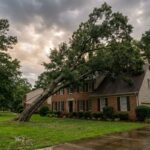
Most trees that end up on our removal list in Raleigh were not killed by a single storm. Many of them were weakened years earlier by pruning that looked tidy on the day it was done. A topped oak, a maple with its lower trunk stripped bare or a pine with a row of rotting stubs can look fine from the street for a long time. Then decay sets in behind the cuts, a limb fails in a thunderstorm and the damage lands on a roof or a car.
The good news is that almost every pruning mistake is avoidable. Our certified arborists have spent more than 30 years pruning trees across Raleigh, Cary, Wake Forest and the rest of the Triangle, and we see the same seven errors again and again. Knowing what bad pruning cuts look like helps you protect your own trees and spot a tree company that is about to do real harm.
Bad Tree Pruning: The 7 Mistakes Raleigh Homeowners Make

Tree pruning mistakes fall into two groups. Some are about where the cut is made, such as flush cuts, stubs and torn bark. Others are about how much is taken off and from where, such as topping, lion tailing and over pruning. Both groups do the same thing in the end: they leave wounds a tree cannot seal and remove the leaves it needs to feed itself.
| Pruning Mistake | What It Looks Like | What It Does to the Tree |
|---|---|---|
| Tree topping | Main limbs cut back to flat stubs | Weak sprouts, decay in every stub, higher storm risk |
| Flush cut | Cut made tight against the trunk | Large wound that cannot seal, decay inside the trunk |
| Stub cut | Short stub left beyond the branch collar | Stub dies and rots, decay spreads into the trunk |
| Torn bark | Long strip of bark ripped from the trunk under a cut | Open wound down the trunk, entry point for disease |
| Lion tailing | Interior branches stripped, leaves only at the tips | Heavy limb ends, more wind load, limb failure |
| Over pruning | Far more than a quarter of the crown removed | Stress, water sprouts, slow decline |
| Wound sealer | Black paint or tar over cuts | Traps moisture and slows natural sealing |
Each of these mistakes is covered in detail, along with what proper pruning looks like instead. If you are planning work on a large tree, our tree pruning service in Raleigh follows the industry pruning standards that avoid every one of them.
Worried a Tree Was Pruned the Wrong Way?
Our certified arborist will look at the cuts, check for decay and give you an honest answer on whether the tree can recover. Every estimate is free and comes with no obligation.
Tree Topping: The Most Damaging Bad Pruning Cut
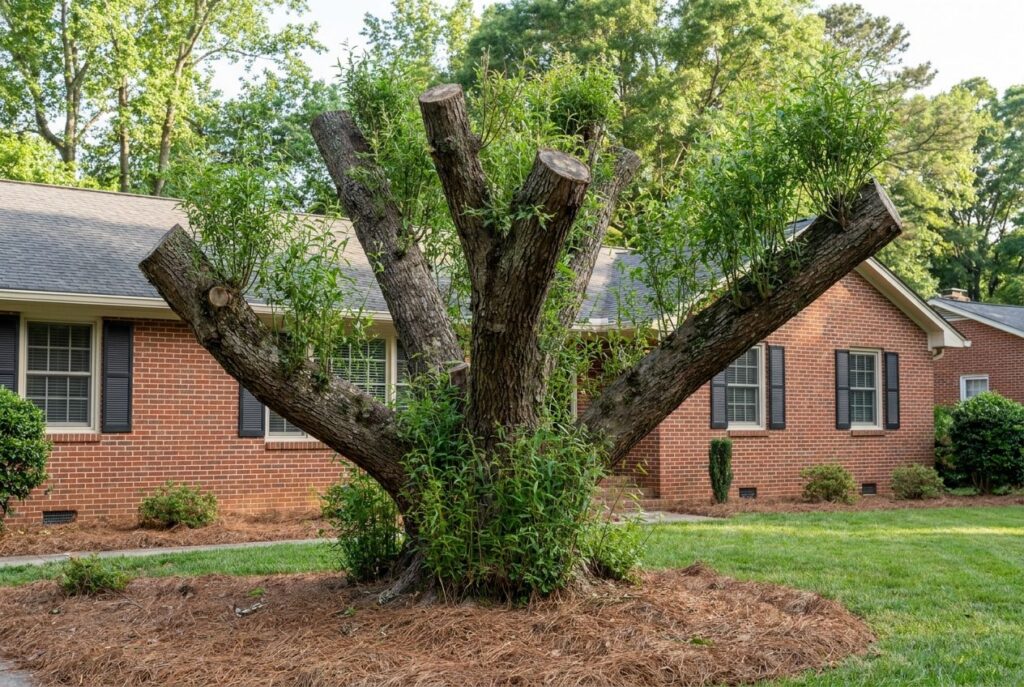
Tree topping means cutting the main limbs of a tree back to stubs, usually to make a tall tree shorter. It is often sold as a way to make a tree safer, and it does the opposite. The International Society of Arboriculture describes topping as perhaps the most harmful tree pruning practice known (ISA TreesAreGood). Topping can remove 50 to 100 percent of a tree’s leaf-bearing crown in one day (ISA), and every large cut is a wound the tree cannot close.
The tree responds by pushing out a mass of fast, upright sprouts from just under each cut. Those sprouts are weakly attached to the outer layers of wood, while the stub behind them slowly rots. Within a few years, the tree is just as tall as it was before, but its new limbs are poorly anchored to decaying wood. That combination is exactly what breaks and falls in a Raleigh summer thunderstorm or the tail end of a hurricane.
Why Topping Trees Is Bad
- Removes most of the leaves the tree needs to make food
- Leaves large wounds that decay instead of sealing
- Forces weak, crowded sprouts that break easily in storms
- Exposes thin bark to sunscald once the canopy is gone
- Needs repeat work every few years and costs more over time
- Often shortens the life of the tree or leads to removal
Crape myrtles are topped more than any other tree in Raleigh, and our article on when to prune crepe myrtles in NC shows how to fix a topped crape myrtle over two or three seasons. Large shade trees that have been topped can sometimes be restored too, by selecting the strongest sprouts and thinning the rest.
Flush Cuts and Stub Cuts: The Wrong Place to Make a Pruning Cut
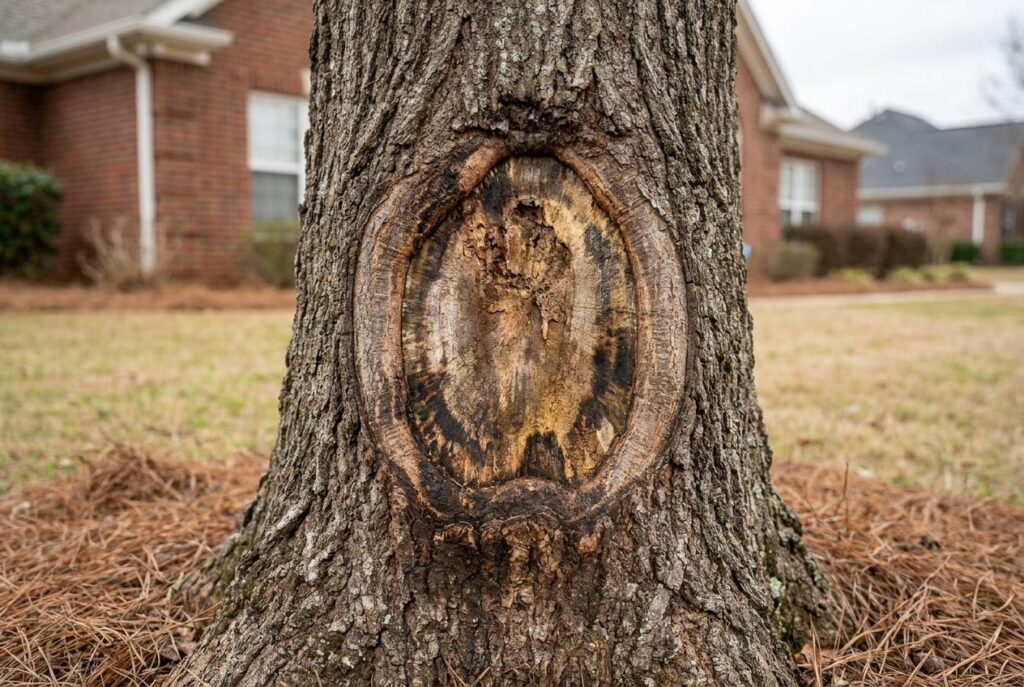
Where a cut is made matters as much as which branch is removed. Every branch joins the trunk at a slightly swollen ring of bark called the branch collar, and that collar contains the tissue that seals the wound after a branch is removed. A flush cut slices right through the collar, tight against the trunk. It looks neat, but it creates a much larger wound and removes the very tissue the tree needs to close it.
A stub cut makes the opposite mistake. Leaving several inches of branch beyond the collar gives the tree nothing to seal around, so the stub dies, dries out and starts to rot. Decay then travels from the stub back into the trunk, often for years before anyone notices. Proper pruning cuts are made just outside the branch collar, leaving it intact so the tree can grow a smooth ring of new wood over the wound.
NC State Extension explains that pruning cuts should be made just outside the branch collar, and that removing it opens the trunk to decay (NC State Extension). On most trees, you can see the collar as a slight bulge or a ridge of rougher bark where the branch meets the trunk. If you cannot find it, a cut angled slightly away from the trunk, just beyond the branch bark ridge, is the safest choice.
How to Make Proper Pruning Cuts
- Find the branch collar, the swollen ring where the branch meets the trunk
- Cut just outside the collar, never flush against the trunk
- Never leave a stub sticking out beyond the collar
- Angle the cut slightly away from the trunk
- Use sharp, clean tools so the cut is smooth, not crushed
- Make small cuts where possible, since small wounds seal fastest
Torn Bark and the Three-Cut Method for Heavy Limbs
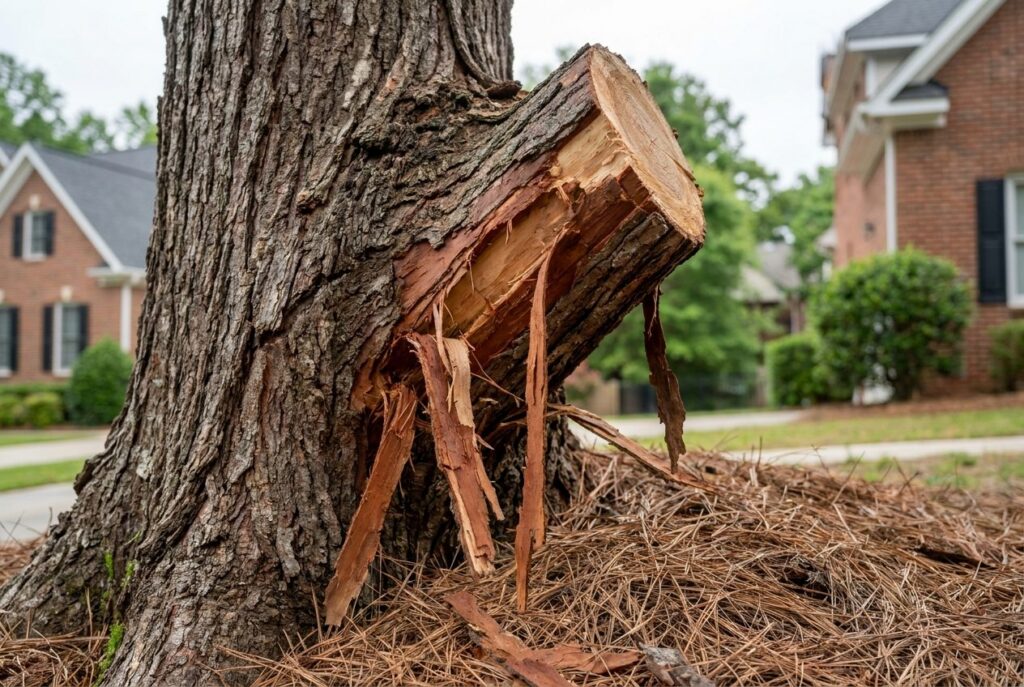
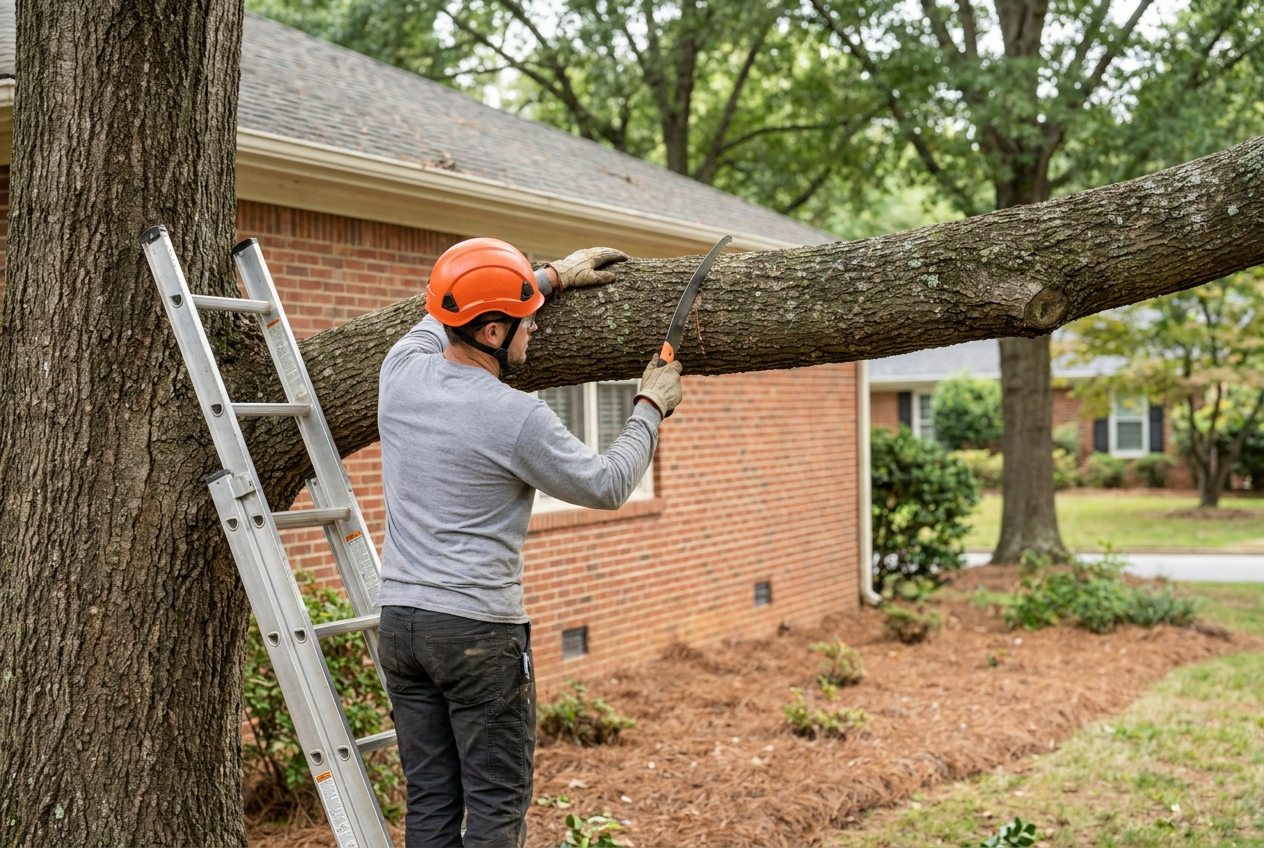
Torn bark is one of the most common bad pruning cuts we see after homeowners tackle a large limb themselves. When a heavy branch is cut from the top in a single pass, its weight pulls it down before the cut is finished, and the falling limb rips a long strip of bark off the trunk under the cut. That tear can be several feet long, and it is far harder for the tree to recover from than the cut itself would have been.
The three-cut method avoids this. It removes the weight of the limb first, so the final cut at the collar can be made cleanly and without tearing. Arborists use it on every branch too heavy to hold in one hand, and it takes only a few extra minutes per limb.
The Three-Cut Method for Removing a Heavy Limb
- Step 1: Make an undercut. About 12 inches out from the trunk, cut upward from the underside of the limb about a third of the way through.
- Step 2: Remove the weight. A few inches farther out, cut down from the top until the limb drops, breaking off cleanly at the undercut.
- Step 3: Make the final cut. Remove the remaining stub with a clean cut just outside the branch collar, supporting it as you finish.
For limbs over a roof, fence or power line, the weight has to be controlled as well as cut. Our crews lower heavy limbs on ropes or remove them from a bucket truck, so nothing drops onto your home. Any limb near the power line to your house should be left to a professional crew, and the main lines are the responsibility of Duke Energy.
★★★★★
“The Ashland Tree Service team was great. Came in, worked quickly pruning some large oaks, left the yard clean.”
Dan L. · Verified Google Review
Lion Tailing and Over Pruning: Removing Too Much From a Tree
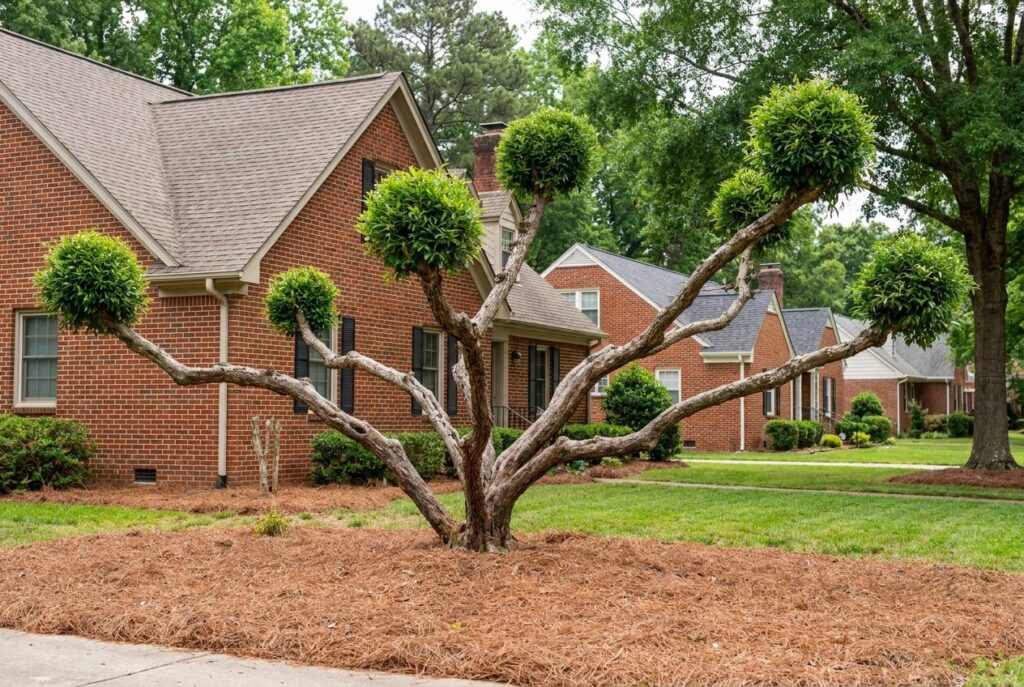
Lion tailing is the practice of stripping out all the small interior branches of a tree and leaving leaves only at the ends of the limbs. It is often done in the name of thinning, because it lets more light through and looks open from the ground. The trouble is that it moves all of the weight and wind load out to the very tips of each limb, like a weight on the end of a fishing rod. Lion-tailed limbs are far more likely to snap in a storm, and the bare interior often sprouts a fresh crop of water sprouts.
Over pruning is the broader version of the same mistake. Leaves are how a tree feeds itself, so every leafy branch removed reduces its food supply for the year. The International Society of Arboriculture advises that generally no more than 25 percent of the crown should be removed at once, and less for mature trees (ISA). Mature willow oaks, which are common across Raleigh, are especially sensitive to heavy cuts, as covered in our guide to willow oak trees in Raleigh.
Signs a Tree Has Been Over Pruned
- Long bare limbs with leaves only at the tips
- Dense clusters of upright water sprouts the following summer
- A thin, see-through canopy compared with nearby trees
- Sunscald or cracked bark on newly exposed limbs
- Dieback in the upper crown within a year or two
- Fewer flowers or fruit on ornamental and fruit trees
Proper crown thinning removes selected branches evenly throughout the canopy, including some from the interior, so the tree keeps its natural shape and an even spread of leaves. The result looks lighter from the ground without changing the outline of the tree.
Tree Wound Dressing and Pruning Sealer: Why We Skip Them
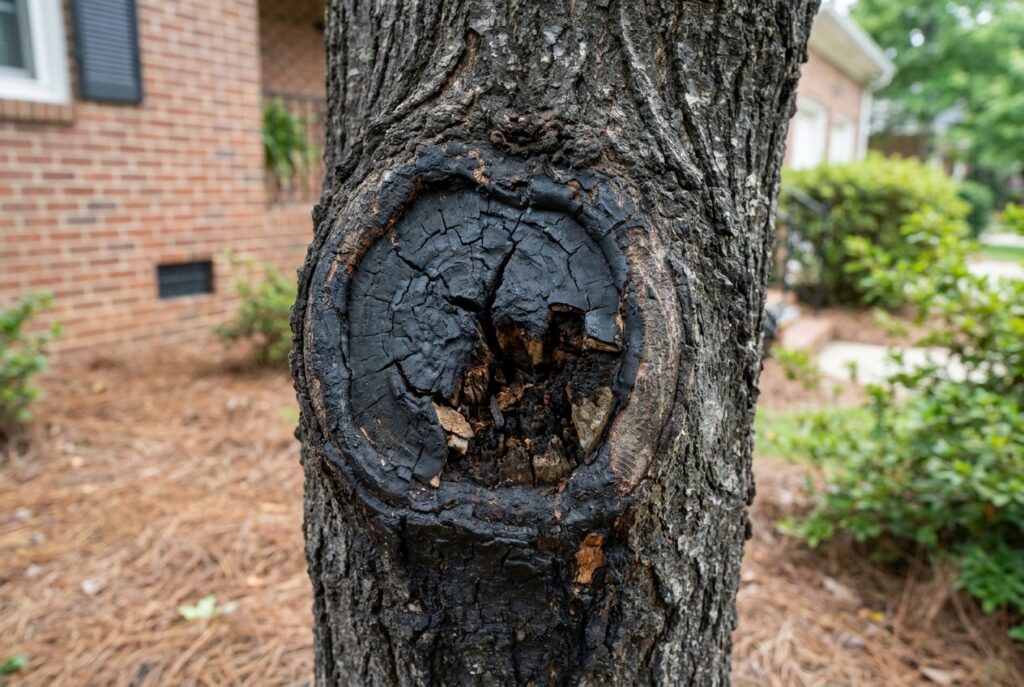
Painting pruning cuts with black tar or pruning sealer is one of the oldest tree care habits, and many homeowners still assume it protects the tree. Most experts recommend against wound dressings, and NC State Extension advises never applying wound paint or tar. Wound dressings do not stop decay, and they can trap moisture against the wood and slow the tree’s own sealing process. Trees do not heal in the way skin does. They seal off wounds by growing new wood around them and walling off damaged tissue inside.
The best protection for a pruning cut is a clean cut in the right place, made at the right time of year. There are a few narrow exceptions, such as oak pruning in spring and early summer in regions where oak wilt is active, where some arborists use a light coating to keep beetles away. For most trees in Raleigh, a clean cut just outside the branch collar is all the tree needs. If you are not sure when to prune a particular tree, our month-by-month tree trimming calendar for Raleigh covers the right timing for each species.
How to Fix Bad Tree Pruning in Raleigh
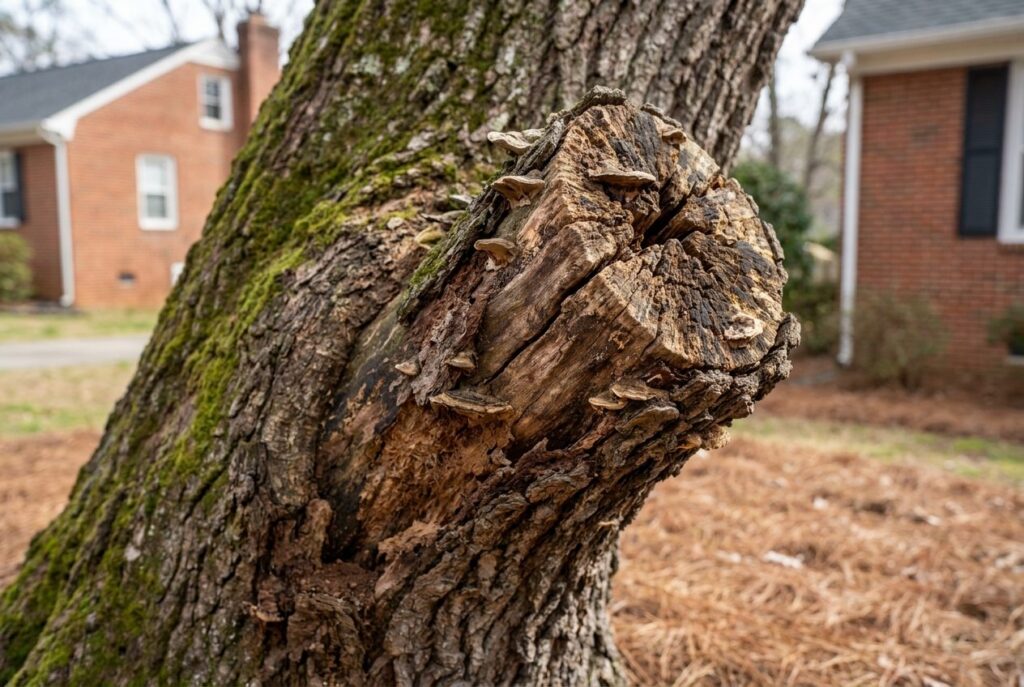
A tree that has been pruned badly is not always a lost cause. Topped and lion-tailed trees can often be brought back over two or three years of careful restoration pruning. The process selects the strongest, best-placed sprouts to become new limbs, thins out the weaker ones and slowly rebuilds a balanced crown. Trees with stubs or torn bark can be cleaned up with correct cuts that give the tree a chance to seal.
Some trees are too far gone to save. When decay from old pruning wounds has spread deep into the trunk or main limbs, the tree may no longer be safe over a house, driveway or play area. Our arborist will check for decay, cavities and cracks before recommending anything, and if removal is the safer choice, our tree removal team can take it down safely. Honest advice comes first, whichever way it goes.
Restoring a Badly Pruned Tree
- Year one: remove dead stubs and select the strongest sprouts on each cut
- Year two: thin competing sprouts and shape the new limbs
- Year three: balance the crown and remove remaining weak growth
- Every year: check old wounds for decay and cracks
- Throughout: never remove more than about a quarter of the crown
Our Crew at Work Around Raleigh
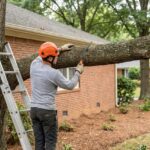
From careful crown thinning on mature oaks to restoring trees that were topped in the past, our crew handles every job with the same care and cleanup. These are recent jobs from around Raleigh and Wake County.
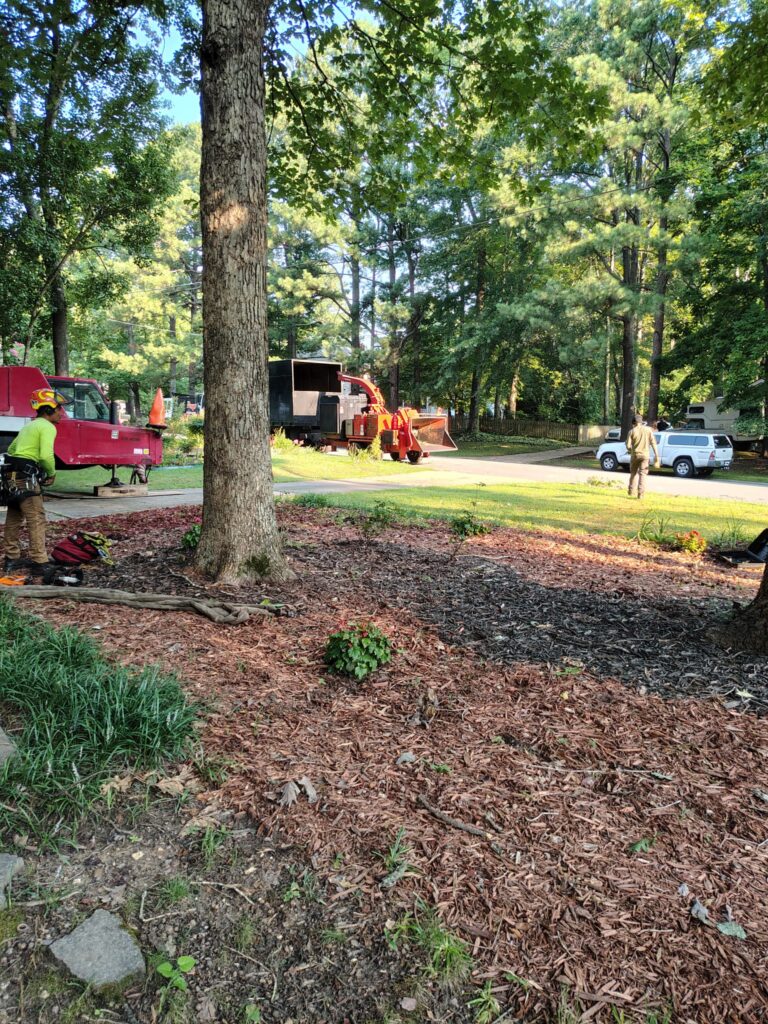
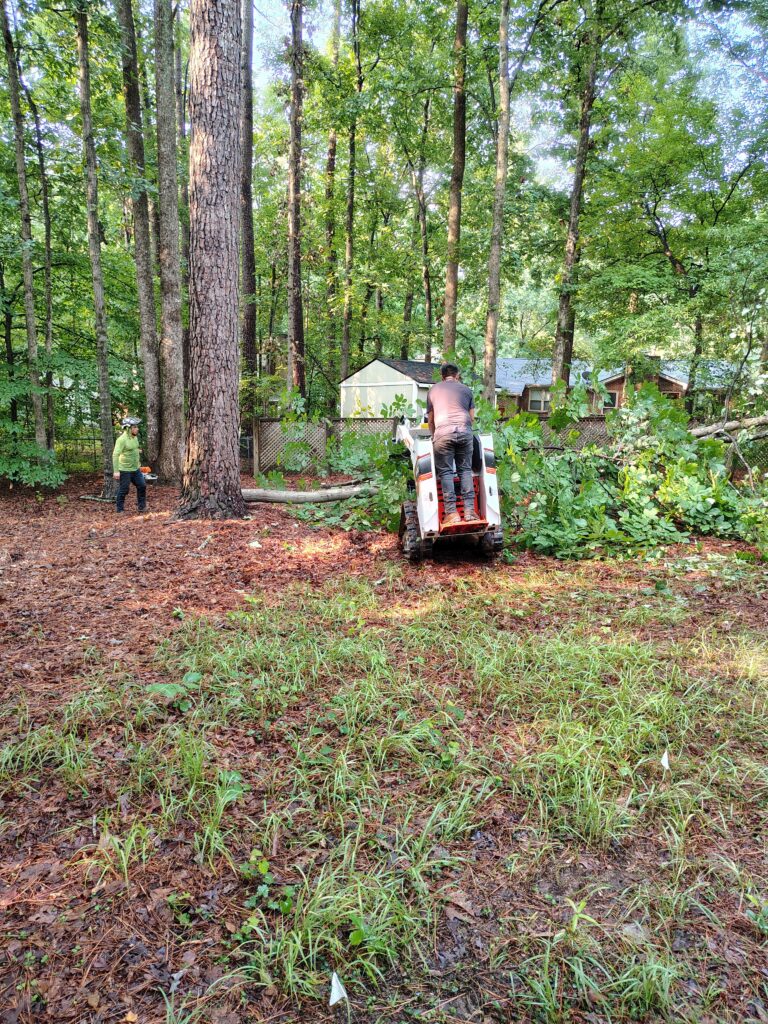
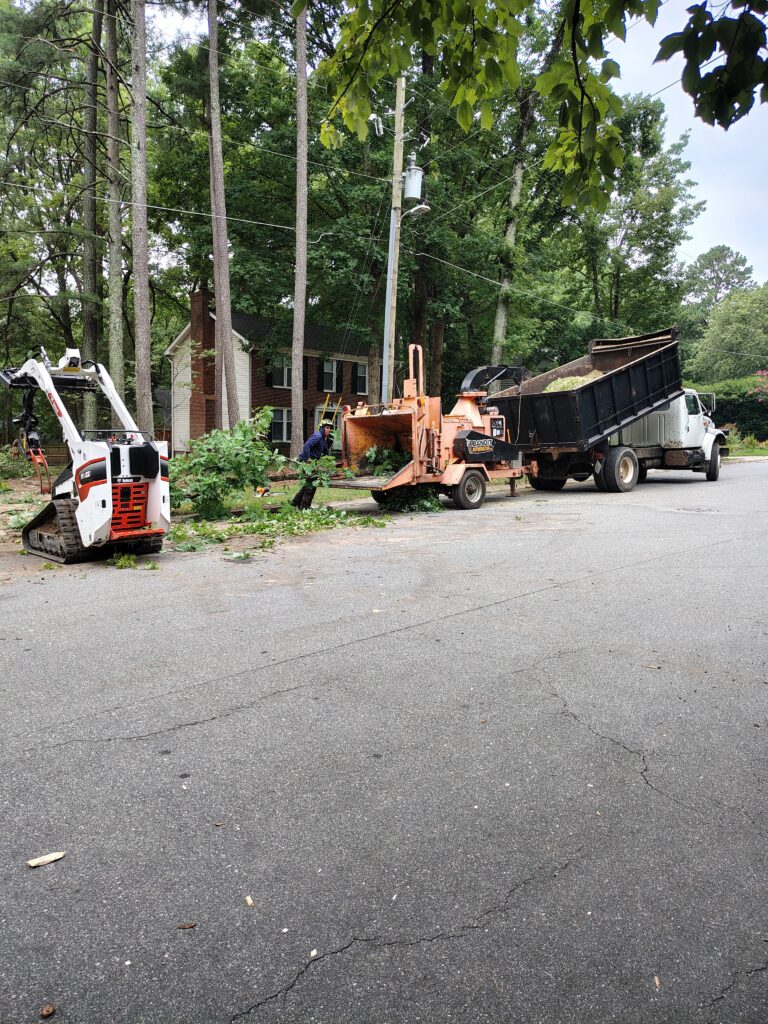
Every job ends with the branches chipped, the beds raked and the driveway blown clean. Our tree trimming service covers clearance, canopy raising and dead wood removal for homes across the Triangle.
Bad Tree Pruning FAQs for Raleigh Homeowners
What Does Bad Tree Pruning Look Like?
Bad tree pruning usually shows up as flat-topped limbs, stubs left sticking out from the trunk, large flush cuts against the trunk, torn bark under old cuts or limbs stripped bare with leaves only at the tips. A tree that suddenly looks thin and see-through, or sprouts dense clusters of upright shoots the following summer, has often been pruned too hard.
Why Is Topping Trees Bad?
Topping removes most of a tree’s leaves at once and leaves large wounds that decay instead of sealing. The tree responds with weak, crowded sprouts that are poorly attached and break easily in storms. Topped trees usually need repeated work and often decline or need removal sooner.
What Happens If You Make A Flush Cut On A Tree?
A flush cut removes the branch collar, which holds the tissue that seals the wound. The result is a larger wound that the tree struggles to close, and decay can spread into the trunk. Cuts should be made just outside the branch collar instead.
Can You Over Prune A Tree?
Yes. Removing too many leafy branches at once starves the tree of food, causes stress and triggers a flush of water sprouts. As a general rule, no more than about 25 percent of the living crown should be removed in one season, and less on mature or stressed trees.
What Is Lion Tailing A Tree?
Lion tailing means stripping out the small interior branches and leaving leaves only at the ends of the limbs. It shifts weight and wind load to the tips, making limbs more likely to break, and often causes water sprouts to grow along the bare limbs.
Should You Seal Tree Cuts After Pruning?
For most trees, no. Wound dressings and pruning sealers do not stop decay and can trap moisture against the cut. A clean cut just outside the branch collar, made at the right time of year, is the best protection.
What Is The Three Cut Method For Pruning?
The three-cut method removes heavy limbs without tearing bark. First, make an undercut about a third of the way through, a foot or so from the trunk. Second, cut from the top a little farther out until the limb drops. Third, remove the remaining stub just outside the branch collar.
Can Trimming Kill A Tree?
Proper trimming will not kill a healthy tree, but bad pruning can. Topping, over pruning, flush cuts and large wounds weaken the tree and let decay in, and a tree that is already stressed may decline and die after heavy cutting.
I am Steve, and I own Ashland Tree Service. I have spent more than 30 years pruning trees around Raleigh, and I would much rather prune a tree correctly than come back years later to remove it. If a tree on your property has been topped, stubbed or stripped, or you simply want it pruned the right way, call me directly at (984) 328-3971 or book a free estimate. I will look at the tree with you and give you an honest plan and price, and we leave your property looking better than it was when we arrived.