
Fruit Tree Pruning in Raleigh, NC
A well-pruned fruit tree produces larger, sweeter fruit, carries its crop on strong branches and stays healthy for many years. Ashland Tree Service provides professional fruit tree pruning in Raleigh, NC for apple, pear, peach, plum, cherry and fig trees in backyard orchards across the Triangle. Every tree is pruned to the system that suits its type, and every clipping is hauled away when we finish.

Professional Fruit Tree Pruning for Healthier Trees and Better Harvests
Pruning fruit trees is different from pruning shade trees. The goal is a strong framework of well-spaced branches that lets sunlight reach every part of the canopy, because fruit buds form and ripen best in good light. An unpruned fruit tree quickly becomes a dense thicket of crossing branches and upright shoots, with small fruit high out of reach and more problems with disease. Regular pruning keeps the tree productive, manageable and easy to harvest.
Our arborists prune fruit trees for homeowners with a single backyard apple tree and for gardeners with a small home orchard. Each tree is pruned for its type: apples and pears to a central leader, and peaches and plums to an open center. We remove dead, diseased and crossing wood, thin crowded branches and take out upright water sprouts, using clean, sharp tools and making every cut at the right point so the tree seals quickly.
Careful work matters most on fruit trees, because the wrong cut at the wrong time can cost a season of fruit. As a rule, we never remove more than about a third of a tree’s top in a single year, and older trees that have been left for years are brought back over two or three seasons. You get a healthier tree, a better crop and branches that can carry the weight of the fruit.
Why Gardeners Choose Our Fruit Tree Care

Fruit Tree Trimming Across Raleigh and Wake County Backyards
We prune fruit trees throughout Raleigh, from long-established gardens in Five Points, Hayes Barton and Oakwood to newer homes in North Hills, Brier Creek and Wakefield. Our team also serves Cary, Apex, Wake Forest, Garner, Knightdale and Durham. Many Triangle homeowners have one or two fruit trees inherited with the house that have not been pruned in years, while others are training young trees planted in the last season or two. We work with both, and we bring the ladders and tools to reach every branch safely.
Fruit trees rarely stand alone. Larger shade trees nearby can cut the sunlight a fruit tree needs, and our tree pruning service can raise or thin them on the same visit so your fruit trees get the light they need. Ornamental trees in the same yard, such as crape myrtles, can be looked after through our crape myrtle pruning service, so the whole garden is handled in one trip.
Pruning Fruit Trees in Raleigh, NC for Bigger Harvests and Stronger Branches
Sunlight is what makes fruit. Pruning fruit trees opens the canopy so light reaches the inner branches, where fruit buds form for the following year, and it lets air move through the tree so leaves and fruit dry quickly after rain. In Raleigh’s warm, humid summers, that airflow is one of the best defenses against the fungal diseases that spot leaves and rot fruit. A well-pruned tree also ripens its crop more evenly.
Pruning builds strength as well. Branches growing at wide angles from the trunk are far stronger than narrow, upright forks, which tend to split under a heavy crop. We keep the best-placed scaffold branches, remove weak and crowded ones and shorten overly long limbs, so the tree can carry its fruit without breaking. Upright water sprouts and suckers from the base are removed, because they shade the tree and produce little fruit.
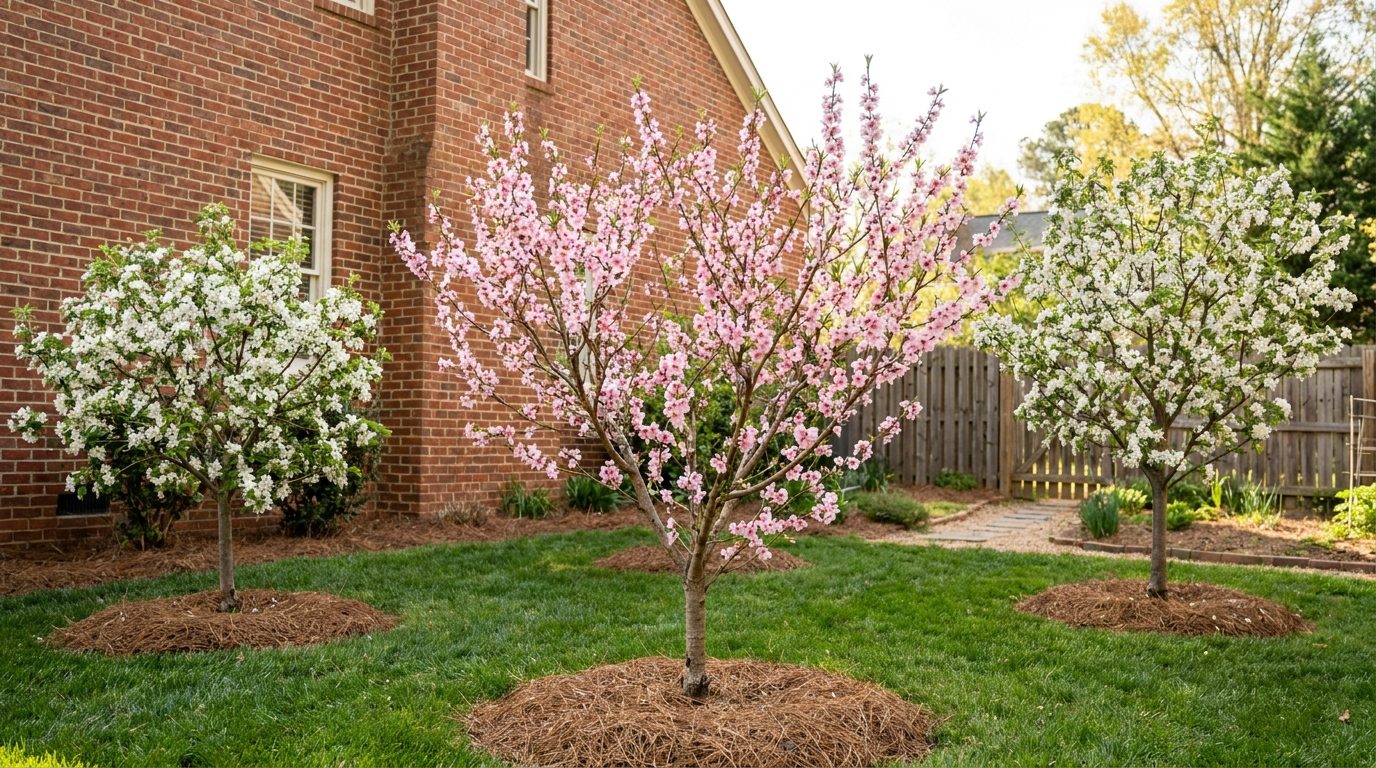
Fruit trees in Raleigh and across Wake County face conditions that make regular pruning especially valuable. Our long, humid growing season pushes vigorous growth that crowds the canopy within a single year, and summer thunderstorms test every weak fork and overloaded limb. Heavy clay soils hold water around the roots, so trees that are already crowded and stressed are slower to recover. A late-winter fruit tree pruning visit sets each tree up to handle the Raleigh summer and still deliver a full, healthy crop.
Book Your Fruit Tree Pruning Before Spring Bud Break
Call 984-328-3971 or request a free estimate, and we will look at each fruit tree with you and recommend the right pruning plan for its type and age. Late winter is the ideal window for most fruit trees in Raleigh, so booking early secures the best timing.
Fruit Tree Trimming and Pruning Services We Offer
Every fruit tree pruning plan is built from the techniques that suit the tree, its age and its condition. Young trees need training cuts to set up a strong framework, mature trees need thinning and renewal of fruiting wood, and neglected trees need patient restoration. We match each method to the fruit you grow. Every visit ends with a full cleanup.

Central Leader Pruning
Training apple and pear trees around one strong upright trunk with tiers of well-spaced side branches for even light and strong limbs.
Open Center Pruning
Shaping peach and plum trees into an open vase with three to five main limbs, so sunlight reaches the center of the tree.

Water Sprout Removal
Removing the fast, upright shoots that grow from branches and pruning cuts, which shade the tree and produce little fruit.

Restoring Overgrown Fruit Trees
Bringing neglected fruit trees back into shape and production over two or three seasons, without shocking the tree.

Young Fruit Tree Training
Formative pruning in the first few years to choose the main branches and build a framework that will carry heavy crops.

Fire Blight Pruning
Cutting out branches infected with fire blight on pear and apple trees, well past the damage, with tools cleaned between cuts.
When to Prune Fruit Trees in Raleigh, NC
The best time to prune fruit trees in Raleigh is late winter, while the trees are dormant and before the buds begin to swell. NC State Extension advises delaying dormant pruning until late winter to avoid winter injury to fresh cuts (Extension Gardener Handbook). With the leaves off, the structure of each tree is easy to see, and the cuts heal quickly once spring growth begins. Apples and pears are usually pruned first, and peaches and plums last, closer to bloom.
Light summer pruning has its place too. Water sprouts and overly vigorous shoots can be removed in early summer to let light into the canopy, but summer pruning should finish by the end of July so the tree has time to harden off before winter. Pruning right after harvest in fall is best avoided, because it can stimulate tender growth and weaken the tree going into the cold months. Our month-by-month tree care calendar for Raleigh shows how fruit tree work fits with the rest of the yard.
Best Time to Prune Fruit Trees by Type
Apple Tree Pruning and Pear Tree Pruning in Raleigh, NC
Apple tree pruning in Raleigh follows the central leader system, which trains the tree around one main upright trunk with tiers of side branches spaced around it. The lower branches are kept longer than the upper ones, so the tree takes a loose pyramid shape and light reaches every level. Pruning apple trees each winter thins crowded spurs, removes water sprouts and keeps the leader in charge. Pear trees are trained the same way, and they benefit from branches being spread to wider angles, because pears naturally grow tall and upright.
Apple and pear trees are some of the most common fruit trees in Raleigh backyards, from Fuji and Gala apples to Kieffer, Moonglow and Asian pears. Many were planted years ago and have grown tall, crowded and hard to harvest, with most of the fruit at the top of the tree. Our apple tree pruning and pear tree pruning bring the height down gradually, open the center to the sun and renew the fruiting spurs, so the crop moves back within reach. Pruning on dry winter days also lowers the risk of spreading disease through fresh cuts, which matters in a humid climate like ours.
Fire blight is the disease we see most often on pear trees and on susceptible apples in the Triangle. It causes young shoots to wilt and turn black, as if scorched, often bending into a shepherd’s crook. Infected branches should be cut on a dry, cool day, at least 12 inches past the last visible sign of infection, and every pruning removed from the property, as recommended by NC State Extension. We clean our tools between cuts so the disease is not carried to healthy wood.
Signs of Fire Blight on a Pear Tree or Apple Tree
How to Prune Peach Trees and Fig Trees
Peach tree pruning uses the open center system, with the central leader removed and three to five strong scaffold limbs left to form a vase. That open shape lets sunlight into the middle of the tree, which peaches need to fruit well. Peaches bear on wood grown the previous year, so each late-winter visit removes older, unproductive shoots and keeps a steady supply of new fruiting wood. Peach trees are best pruned last, close to bloom, and plum trees are pruned in a similar way.
Fig trees are popular in Raleigh gardens and need much lighter pruning than most fruit trees. How to prune a fig tree depends on its size and age: we remove dead and cold-damaged wood once new growth shows where the damage ends, thin out crowded and crossing stems and shorten branches that have outgrown their space. Figs produce their main crop on new growth, so a light hand keeps them productive. Overgrown figs can be reduced over two or three seasons without losing a full year of fruit.
Figs, peaches and plums all grow well in Raleigh’s long, warm summers, but each needs a different approach. Brown Turkey and Celeste figs grow quickly against warm brick walls and often need their height kept in check, while peach trees in Wake County gardens need yearly renewal to keep producing fruit on new wood. Plum trees follow a similar open center pattern to peaches, with lighter cuts. We prune each tree for how it grows here, so it stays productive year after year.
Fruit Tree Care Between Pruning Visits
How Our Fruit Tree Pruning Service Works
Every fruit tree pruning visit follows the same careful routine, from the first look at your trees to the final cleanup. You know which branches will be removed and why before any cut is made. Our team works around your garden beds, vegetable plots and lawn with care.
01
Fruit Tree and Home Orchard Walkthrough
We look at each fruit tree with you, note its type, age and shape and check for dead wood, disease and crowding.
02
Fruit Tree Pruning Plan and Written Estimate
We agree on the shape we are working toward and how much will be removed this year, then give you a written estimate.
03
Clean Fruit Tree Pruning Cuts
Each cut is made just outside the branch collar or above a healthy bud, with sharp tools cleaned between trees.
04
Protecting the Garden Around Fruit Trees
Ladders are placed with care and branches are lowered by hand, so the plants and beds around your trees stay undamaged.
05
Fruit Tree Cleanup and Haul-Away
All prunings are raked up and hauled away, and diseased wood is removed from the property, not left on site.


Fruit Tree Pruning FAQs for Raleigh, NC Homeowners
Every fruit tree pruning estimate from Ashland Tree Service is free and comes with honest advice about your trees. For a question about a particular tree, call 984-328-3971 and speak with our team.
When Is The Best Time To Prune Fruit Trees In Raleigh?
Late winter is the best time to prune most fruit trees in Raleigh, while the trees are dormant and before the buds begin to swell. Apples and pears are usually pruned first, and peaches and plums last, closer to bloom. Light summer pruning of water sprouts should be finished by the end of July.
When Is The Best Time To Prune Apple Trees?
Apple trees in Raleigh are best pruned in late winter, from February into early March, while they are still dormant. This timing avoids winter injury to fresh cuts and lets the tree heal quickly as spring growth begins. Water sprouts can also be removed in early summer.
When Should You Prune Peach Trees?
Peach trees should be pruned in late winter to early spring, as close to bloom as practical. Pruning later in the dormant season reduces the risk of cold injury, and it lets us see which buds survived the winter. Peaches are pruned to an open center with three to five main limbs.
How Do You Prune A Fig Tree?
Fig trees need only light pruning. We remove dead and cold-damaged wood once new growth begins, thin crowded and crossing stems and shorten branches that have outgrown their space. Because figs fruit on new growth, heavy pruning is avoided so the tree keeps producing.
What Is Fire Blight On A Pear Tree?
Fire blight is a bacterial disease that makes the shoots, leaves and blossoms of pear and apple trees wilt and turn black, as if scorched by fire. It spreads through infected branches and on pruning tools. Infected wood should be cut out on a dry day, at least 12 inches past the visible damage, with tools cleaned between cuts and all prunings removed.
How Much Should You Prune A Fruit Tree Each Year?
Most healthy fruit trees need only moderate pruning each year to remove dead wood, water sprouts and crowded branches. As a rule, no more than about a third of the tree’s top should be removed in a single year, and neglected trees should be brought back over two or three seasons.
Can An Old Overgrown Fruit Tree Be Saved?
Many old, overgrown fruit trees can be brought back into good shape and production. We remove dead and diseased wood first, then reduce height and thin the canopy gradually over two or three winters, so the tree is not shocked into producing a mass of water sprouts. If a tree is dead or too far gone, our tree removal team can take it down safely and clear the space for a new one.
How Much Does Fruit Tree Pruning Cost In Raleigh?
Fruit tree pruning is priced after a free on-site visit, because the cost depends on the number, size and type of your trees and how much pruning they need. You get a clear written price before any work starts, and cleanup is always included.