Storm Damage Cleanup at a Glance
The City of Raleigh collects normal yard waste at the curb, but only within strict limits: tied bundles no longer than five feet, limbs no thicker than six inches, and no stumps. Anything bigger, anything hanging in a tree, and anything resting on a roof, fence or power line is the homeowner’s job to arrange, and that is the work a tree service carries out. Fallen tree removal is priced on site, with our published removal ranges running from $250 for a small tree to $4,000 or more for crane work. If a tree is on your house or tangled in wires, get everyone clear first and call us at (984) 328-3971, day or night.
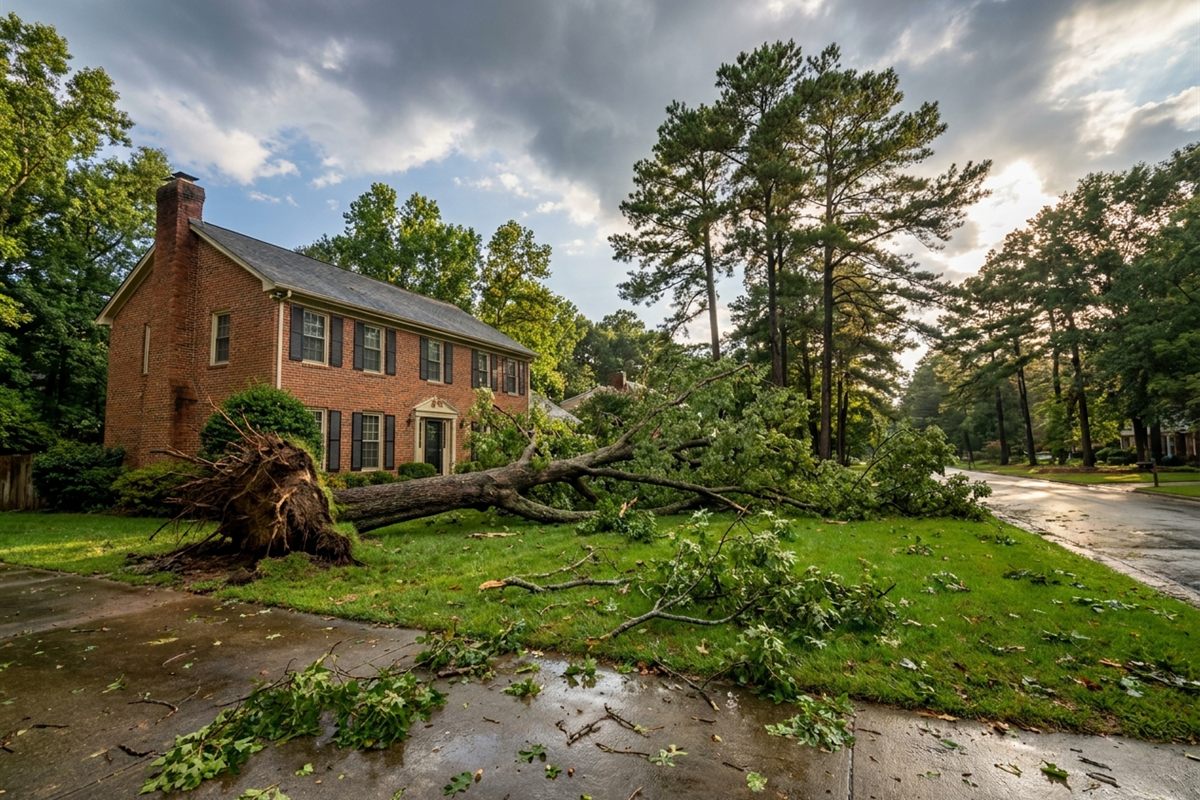
When a summer thunderstorm or a tropical system rolls through Wake County, the phone starts ringing before the wind has fully dropped. A pine is lying across the driveway, an oak limb is hanging over a bedroom, or the whole backyard is buried in broken branches. The first thing most homeowners want to know is what the City will haul away and what they will have to pay someone to handle. The honest answer depends on size, location and safety, and getting it wrong can cost you a missed collection or, far worse, an injury.
Our crews have spent more than 30 years cleaning up after storms across Raleigh and the Triangle. We run bucket trucks, a crane, grapple saws, chippers and stump grinders, and we have seen exactly what happens when someone cuts into a tree that is loaded with tension. The City of Raleigh’s yard waste rules shape every storm cleanup we do, because they decide what can go to the curb and what has to leave on our trucks. Our goal never changes: a safe property, a clear plan, and a yard that looks better than it did before the storm.
What to Do After a Tree Falls: Storm Damage Safety in Raleigh
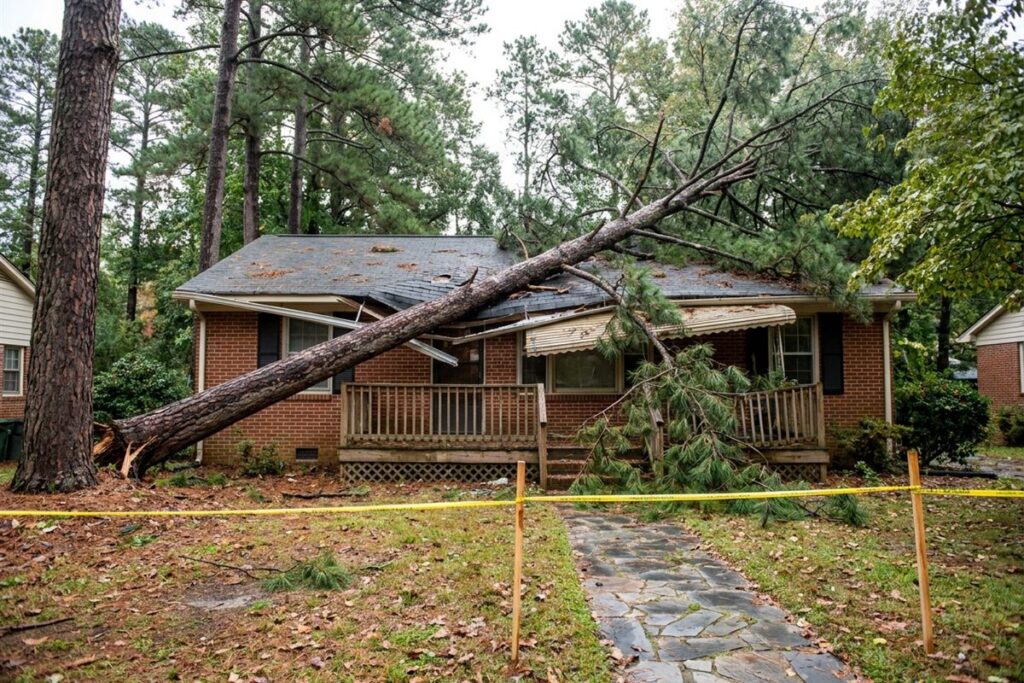
The first hour after a tree comes down decides how safe the rest of the cleanup will be. Fallen trees rarely lie still and harmless, because trunks and limbs pinned under their own weight store a huge amount of tension. A cut in the wrong place can make a log jump, roll or spring back with enough force to break bones. That is why our crews read the load on every piece before a saw touches it, and why we ask homeowners to hold off on the chainsaw until the dangerous pieces are down.
Step 1: Get Everyone Clear and Check for Power Lines. Move people and pets away from the tree and out of any room it is resting on. Treat every wire touching a tree or lying in the yard as live, and report downed lines to the power company, police or fire department right away. Call 911 if anyone is hurt, trapped or in danger. Nobody should approach a tree that is in contact with a line until the utility has made it safe.
Step 2: Photograph the Damage Before Anything Moves. Take wide shots of the tree, the roof, the fence, any vehicles and anything else it hit, then close-ups of the break and the root plate. Photos taken before cleanup begins are the clearest record you will have for an insurance claim or a conversation with a neighbor. Pictures on your phone are fine, because they carry the date and time. We are always happy to wait a few minutes while you take them, unless the tree is actively shifting.
Step 3: Call Your Insurance Company if a Structure Was Hit. If the tree landed on your house, garage, fence or car, let your insurer know early and ask how they want the removal documented. Policies differ a great deal, so your agent is the only person who can tell you what your coverage includes. Keep every photograph, estimate and invoice together in one place. Our written estimates and invoices describe the work clearly, so your adjuster can see what was done and why.
Step 4: Call a Tree Service for Anything Large, Hanging or on a Structure. A tree on a roof, a limb hung up in the canopy, or a trunk bigger than you can safely lift is professional work. Our emergency tree service in Raleigh answers 24/7, and we will tell you on the phone whether it needs a crew tonight or can safely wait for daylight. Removing weight from a roof in the wrong order can cause more damage than the fall itself. We lift it off with a crane or bucket truck and lower it piece by piece.
Step 5: Sort What the City Will Take From What It Will Not. Small sticks and branches you can safely handle can go out for the City’s regular yard waste collection if they are prepared correctly. Bigger limbs, logs, stumps and anything cut by a hired crew fall outside those rules. Separating the two early saves you from a pile that sits at the curb for weeks. Knowing the City’s size limits before you start cutting keeps your pile from being left behind.
Whether the damage is one broken limb or an oak across the driveway, safety comes before speed every time. Many of the injuries we hear about after storms happen during the cleanup rather than the storm itself, usually from a chainsaw on a bent, loaded limb or a ladder set under a hanging branch. If you are unsure whether a piece is under tension, leave it alone and call us. A few hours of patience is a far better trade than a trip to the emergency room.
Storm Damage You Need Handled Fast?
Our crews answer 24/7 across Raleigh and Wake County. We make the tree safe, clear the debris and haul every piece away, so nothing is left sitting at the curb waiting for a City truck. You get a clear price before any cutting starts.
Tree Debris Removal in Raleigh: What the City Picks Up After a Storm
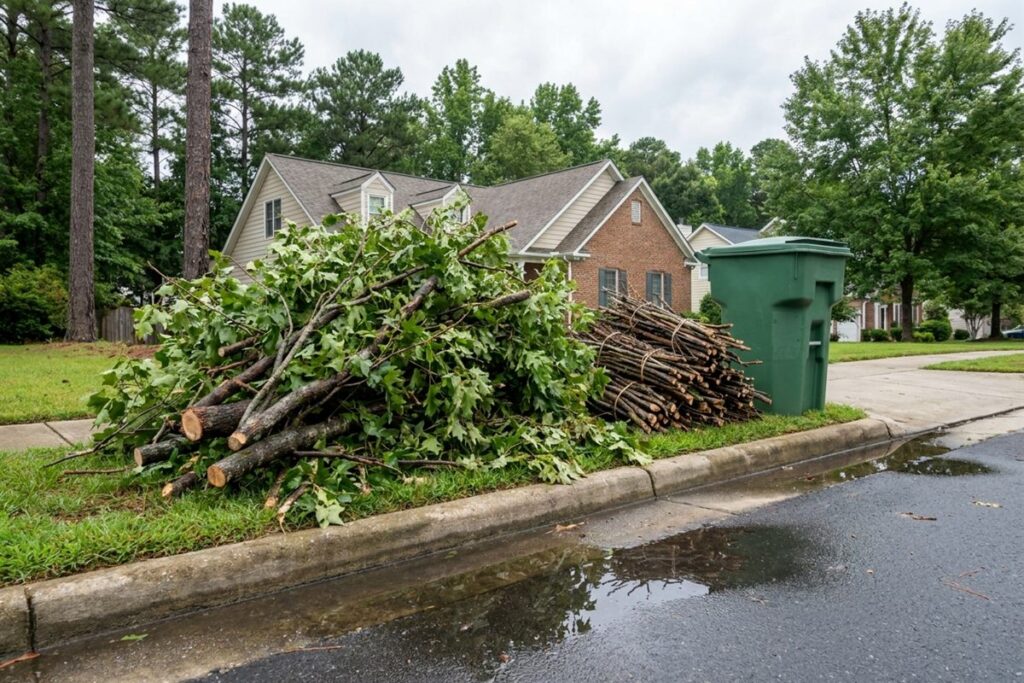
City of Raleigh Solid Waste Services collects yard waste at the curb, and after a storm that service is the first thing most homeowners turn to. It works well for leaves, twigs and small branches, but it has firm limits on size, weight and how material is prepared. Material that breaks those rules is simply left where it sits. Knowing the limits before you start dragging branches to the street saves a great deal of wasted effort, and the current details are always published in the City of Raleigh yard waste guidelines.
| Yard Waste Item | City of Raleigh Curbside Rule |
|---|---|
| Yard waste cart | Light green 95-gallon City-issued cart. |
| Paper bags | Biodegradable paper bags only, up to 15 per collection, 25 pounds each. |
| Bundled limbs and brush | Tied with rope or twine, up to 5 bundles per collection, each no more than 5 feet long, 18 inches in diameter and 50 pounds. |
| Large logs and limbs | Not collected if more than 6 inches in diameter or longer than 5 feet. |
| Stumps, rocks, old mulch and dirt | Not collected. |
| Debris from hired crews or land clearing | Not collected. Yard waste produced by contracted jobs has to be hauled away by whoever did the work. |
| Plastic bags | Black or clear plastic bags of yard waste are not collected. |
| Timing | Out no earlier than noon the day before collection, with anything left uncollected removed from the curb by 7 p.m. the day after. |
Two of those rules matter most after a storm. The six-inch and five-foot limit means a storm-broken limb of any real size has to be cut down before it qualifies, and most trunks never will. The second is that yard waste from contracted jobs is not collected at all, so if you hire someone to cut up a fallen tree, the debris has to leave with them. That is why every storm job we do includes loading, chipping and hauling, and we leave your property looking better than it was when we arrived.
Special Storm Debris Collection in Raleigh
After some major storms, the City has announced separate storm debris collections, with a City contractor working through the hardest-hit neighborhoods. In those announcements, residents were asked to pile storm debris separately at the curb, keep it out of the street and gutter, and keep it clear of low wires, hydrants, mailboxes and trees. Construction material mixed into yard debris was not accepted. These collections do not happen automatically after every storm, so check the City’s current announcements or call Solid Waste Services at 919-996-3245 before you build a large pile and wait.
Taking Tree Debris to the Raleigh Yard Waste Center
Residents, businesses and contractors can also take yard waste directly to the City’s Yard Waste Recycling Center at 900 N. New Hope Road. A tipping fee applies and opening hours are limited, so confirm them with the City before loading a trailer. For a homeowner with a pickup truck and a few loads of brush, that can be a sensible option. For a whole tree, it usually means a long weekend of cutting, loading and driving, with a chainsaw in hands that do not use one every day.
Storm Damage a Tree Crew Should Handle:
- Trunks and heavy logs. Anything thicker than six inches, which the City will not take at the curb.
- Hanging limbs. Broken branches caught in the canopy that can drop without any warning.
- Trees on structures. Roofs, garages, sheds, fences and cars, where the order of cuts protects what is underneath.
- Uprooted trees. Root plates that can tip back into the hole once the trunk is cut free.
- Leaning or cracked trees. Trees still standing after the storm but with torn roots or split trunks.
- Stumps. The City does not collect them, and they need a stump grinder to remove properly.
Fallen Tree Removal Cost in Raleigh: What Homeowners Pay For
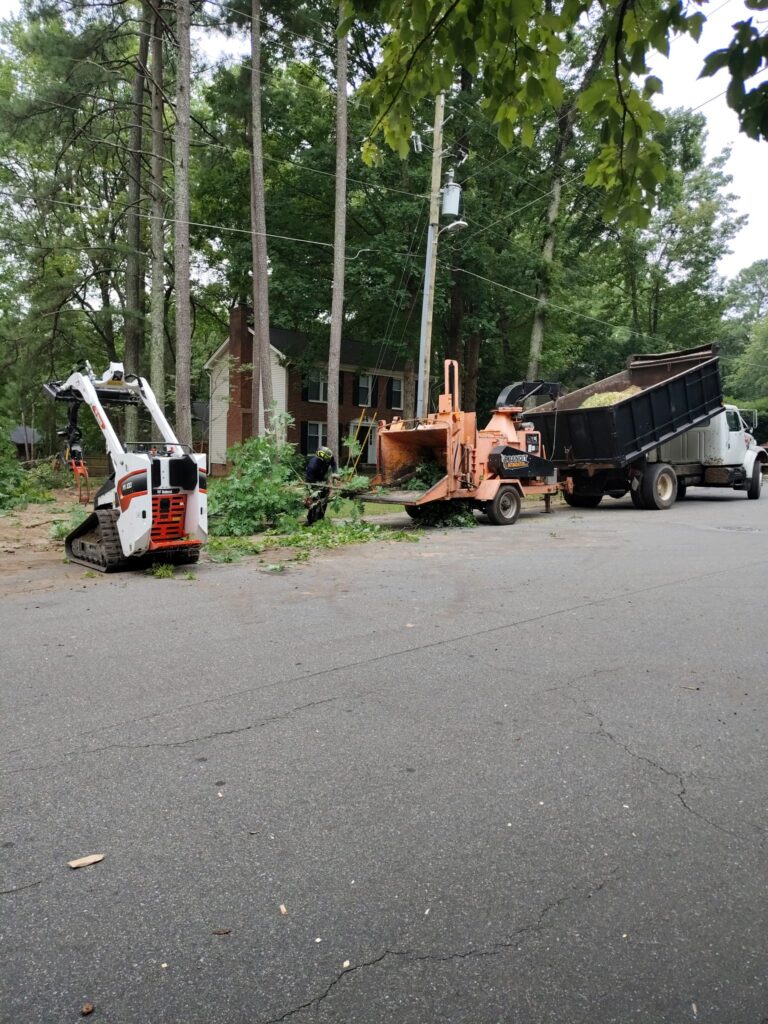
Once the City’s limits are clear, the next question is what the rest will cost. Fallen tree removal is priced on site, because a tree lying flat in an open yard is a very different job from the same tree resting on a roof with a limb through the gutter. We look at the size of the tree, what it is lying on, access for our equipment, how much tension is in the wood, and how much debris needs to be chipped and hauled. You get a clear written price before any work begins, and emergency work is priced the same straightforward way once we have seen it.
| Ashland Tree Service Work | Published Range |
|---|---|
| Tree under 30 feet | $250 to $500 |
| Tree 30 to 60 feet | $500 to $1,200 |
| Tree 60 to 80 feet | $1,200 to $1,900 |
| Tree over 80 feet or crane required | $1,900 to $4,000+ |
| Work over structures or fences, or hand-lowering | Add $200 to $600+ |
| Stump grinding | $100 to $200 per stump, or $3 to $5 per inch, with a $100 to $125 minimum |
| Emergency and fallen tree work | Priced on site after we assess the tree |
These ranges are for tree removal by height, and they give you a realistic starting point. A fallen or storm-damaged tree can land anywhere in that table, because a tree already on the ground in an open lawn needs no climbing or rigging, while one hung up in other trees does. A tree that is split and under tension, or sitting on a house, moves toward the top of its range and usually picks up the structure add-on. Our tree removal cost calculator gives you a quick figure for a standing tree before you call.
What Affects Tree Debris Removal Cost After a Storm
Tree debris removal on its own, meaning branches and limbs already on the ground with no trunk to cut, is usually the smallest storm job we do. The price comes down to volume, how far the material has to be carried to the chipper, and whether any of it is tangled in fences, shrubs or other trees. Debris cleanup is included with every removal we carry out, so you never pay a second crew to finish what we started. We rake the lawn, blow off the driveway and walks, and haul every load.
Does Homeowners Insurance Cover Tree Removal After a Storm?
Insurance is the question that usually comes right after price, and the only reliable answer comes from your own policy. Coverage often depends on whether the tree damaged a covered structure, such as your house or a fence, or simply fell across open lawn. Limits, deductibles and exclusions vary from one policy to the next, so call your agent before assuming either way. Keep your photos, your estimate and your invoice together, because your adjuster will want to see all three.
★★★★★
“I called them Friday afternoon to remove a tree that fell on the house. By Saturday afternoon the tree was gone, the porch and the gutters were clean and the refuse was gone. Best work I have seen on short notice or otherwise.”
Gary S. · Verified Google Review
Storm Damage Tree Removal in Raleigh: How Our Crews Work Safely
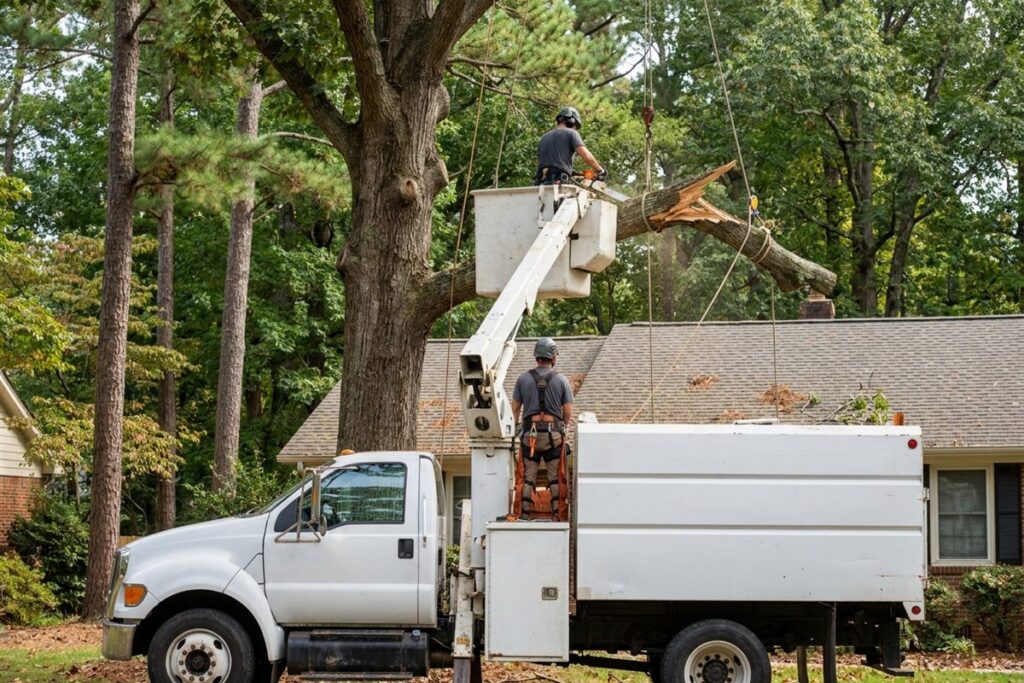
Every storm call starts with a walk around the whole tree, not just the part that fell. We look for cracked unions, torn roots, limbs hung in neighboring trees and anything touching a line, because the damage you can see is not always the most dangerous part. Only then do we decide which equipment goes where and in what order. Whether the job is a single hanging limb or three pines across a backyard, the plan comes before the saw.
Removing Hanging Limbs and Split Trees
Broken limbs hung up in a canopy are among the most dangerous things a storm leaves behind. They can shift with a light breeze or the vibration of someone walking underneath, and they come down without any warning. We reach them from a bucket truck wherever the ground allows, tie them off with rigging line, and lower them under control instead of letting them fall. On a split trunk, we take weight off the damaged side in a planned sequence, so the tree cannot tear itself apart while anyone is nearby.
Fallen Trees on Roofs, Fences and Cars
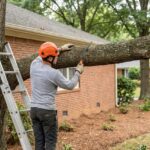
A tree resting on a roof is often holding itself in place against the structure, and cutting it the wrong way can drop the full weight straight through. For big trees on houses, we set up for crane assisted tree removal, lifting sections clear of the roof and setting them down in the yard. Our grapple saw lets one operator hold, cut and lift each piece without anyone climbing onto a damaged roof. It takes more setup than dropping pieces, but it protects your home and our crew, and that trade is always worth making.
Choosing a Tree Service After a Storm in Raleigh
Storms bring out a lot of trucks with chainsaws, and not all of them carry insurance or have any training. NC State Extension warns that door-to-door solicitors are especially common after storms, and recommends asking for a certificate of insurance sent straight from the insurance agent. Ask whether the company carries liability coverage and workers’ compensation, and read local reviews before you sign anything. We are fully insured and owner-operated, and we are glad to show you our paperwork before the first cut.
★★★★★
“After a tree fell on our house, Steve and his crew were there the next morning. They were very efficient and careful and Steve made sure we were satisfied in every step.”
Barry J. · Verified Google Review
Tree Down or a Limb Hanging Over Your Home?
Call us any time. We will tell you honestly whether it needs a crew now or can wait for daylight, and you will have a clear price before we start. Safety comes first on every storm call we take.
Storm Damage Cleanup in Wake County: Stumps, Yard Repair and the Next Storm
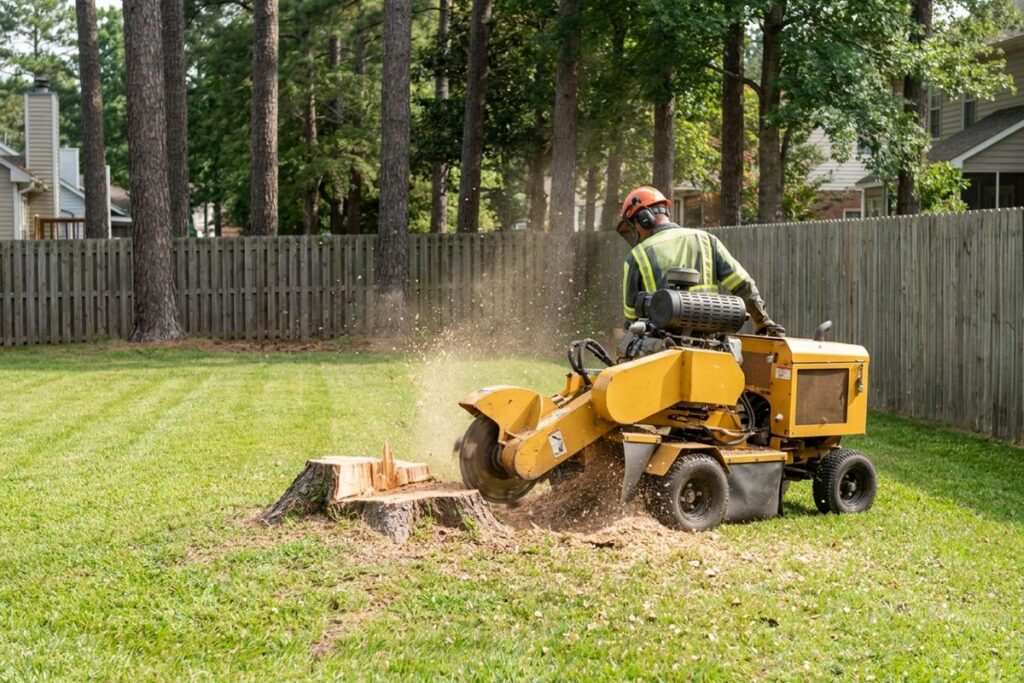
A cleanup is not finished when the trunk is gone. Storm-felled trees leave stumps, torn root plates, ruts and scattered chips, and the City will not collect stumps at the curb. Our stump grinding service in Raleigh grinds the stump out beneath ground level and backfills the hole so the ground can settle and be reseeded. Uprooted trees are a little different, because the root plate usually has to be cut apart and the crater filled rather than ground.
Once the yard is clear, take a hard look at the trees that survived. A storm that drops one tree has often loosened roots or cracked limbs on its neighbors, especially pines and older oaks that took the same wind. Look for fresh cracks in the trunk, soil heaving at the base, new leans and limbs with dead leaves hanging on in summer. Our free tree risk checker walks you through the warning signs, and we are happy to come out and look at anything you are unsure about.
Hurricane Season Tree Prep in Raleigh and the Triangle
The Atlantic hurricane season runs from June 1 to November 30, and ReadyNC puts the peak between mid-August and late October. Tropical systems that make landfall on the coast can still reach Wake County as heavy rain and strong winds, and saturated soil is exactly when big trees tip over. Removing dead trees, thinning heavy canopies and taking out cracked limbs before that window does far more good than any cleanup afterward. Work done on your own schedule is calmer, safer and simpler than work done in the dark with a tree on the roof.
Before the Next Storm Reaches Raleigh:
- Dead or dying trees near the house. Have them removed while the job can still be planned.
- Limbs over the roof. Cut back branches hanging over the roof, gutters and driveway.
- Cracked or split unions. Have a certified arborist check any fork with a visible seam.
- Leaning trees with lifted soil. Soil heaving at the base is a sign the roots are failing.
- Your emergency number. Save (984) 328-3971 in your phone so you are not hunting for it with the power out.
We serve homeowners across Raleigh, Cary, Garner, Knightdale, Wake Forest and the rest of the Triangle, and storm season is when those calls stack up fastest. Getting a tree looked at in early summer means the work fits into a normal schedule rather than an emergency list. From a single hazardous limb to a full crane removal, our crews bring the same care to safety and the same finish to the cleanup. Your yard should be ready to enjoy again, not just cleared.
Storm Damage Tree Cleanup FAQs for Raleigh, NC
Will The City Of Raleigh Pick Up Storm Debris?
The City collects normal yard waste at the curb when it is in the green cart, in paper bags, or tied in bundles no more than five feet long, 18 inches across and 50 pounds. Logs and limbs thicker than six inches or longer than five feet, stumps, and debris from hired crews are not collected. After some major storms the City has run separate storm debris collections, so check current announcements or call Solid Waste Services at 919-996-3245.
Who Is Responsible For Fallen Tree Removal In Raleigh?
When a healthy tree comes down in a storm, each property owner normally deals with the damage on their own side and through their own insurance, whoever the tree belonged to. That can change if the tree was already dead or visibly dangerous and the owner did nothing about it. Trees across a public street or on power lines should be reported to the City or the utility rather than cut by homeowners.
How Much Does Fallen Tree Removal Cost In Raleigh?
Fallen tree removal is priced on site, because the size of the tree, what it landed on and access all change the work. As a guide, our published tree removal ranges run from $250 to $500 for trees under 30 feet up to $1,900 to $4,000 or more for trees over 80 feet or crane work. Work over a structure or fence adds $200 to $600 or more, and you always get a clear price before any cutting starts.
Does Homeowners Insurance Cover Tree Removal After A Storm?
It depends on your policy and on what the tree hit. Coverage is often tied to damage to a covered structure such as your house or fence, and limits and deductibles vary widely. Photograph everything before cleanup, call your agent early, and keep your estimate and invoice for the claim.
How Much Does Tree Debris Removal Cost?
Debris-only cleanup, with branches already on the ground and no trunk to cut, is priced by volume, the distance to the chipper and how tangled the material is. It is usually the smallest storm job we do, and we quote it on site. Debris removal is always included when we take down a tree for you.
Can I Leave A Fallen Tree In My Yard?
A tree lying flat in an open part of the yard is not usually an emergency, but it is rarely harmless for long. Trunks under tension can shift, decaying wood attracts insects, and a root plate can tip back into its hole when the trunk is cut. If the tree is on a structure, hung in other trees or beside a walkway, have it removed promptly.
Who Do I Call For A Fallen Tree On A Power Line?
Report it to the power company straight away, and call 911 if anyone is hurt or the line is sparking. Stay well away from both the tree and the wire, and keep children and pets inside. Once the utility has made the line safe, we can remove the tree and clean up the yard.
Can A Storm Damaged Tree Wait Until Morning?
Often it can, if the tree is on the ground, clear of the house and nobody needs to go near it. It should not wait if it is resting on a roof that is letting in water, blocking your only way out, or hanging over a room where people sleep. Call us at (984) 328-3971 and we will tell you honestly which situation you are in.
Can I Take Tree Debris To The Raleigh Yard Waste Center?
Yes. Raleigh residents can take yard waste to the City’s Yard Waste Recycling Center at 900 N. New Hope Road, and a tipping fee applies. Confirm current opening hours with the City before you load up, and bring material cut to a size you can safely lift.
How Fast Can A Tree Service Respond After A Storm In Raleigh?
Our emergency line is answered 24/7, and trees on houses, cars or blocked exits go to the front of the list. After a widespread storm, timing depends on how many trees are down across Wake County, so call as soon as it is safe to do so. We will give you a straight answer on when a crew can be there.
I am Steve, and I own Ashland Tree Service. After more than 30 years of storm cleanup around Raleigh, I can tell you the safest yards are the ones where nobody picked up a chainsaw before the hanging limbs came down. Call me directly at (984) 328-3971 or book a free estimate, and I will look at the damage, explain what the City will take and what we need to handle, and give you a clear price before we start. You have my promise that your family’s safety is our number one job. And we leave your property looking better than it was when we arrived.