Short version
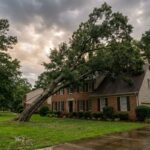
The loblolly pine is the tree most Raleigh homes were built around, and it is also the tree most likely to end up on a roof. It grows fast, gets very tall, and holds itself up on a root plate that is shallow and wide rather than deep. Once a loblolly starts to fail it rarely recovers, so the useful question is not how to save it but whether it is still safe where it stands.
Drive through North Raleigh, Wake Forest, or Garner and look up. The tall, straight, bare-trunked trees carrying their green right at the top are almost all loblolly pines, and many of them were mature before the subdivisions arrived underneath them.
They are genuinely good trees. They grow quickly, they shade a property well, and they are the backbone of North Carolina’s forests. The problem is what happens when one of them reaches the end of its safe life within falling distance of a bedroom, which is a call our certified arborists in Raleigh take almost every week.
Why Loblolly Pines Dominate the Raleigh Canopy
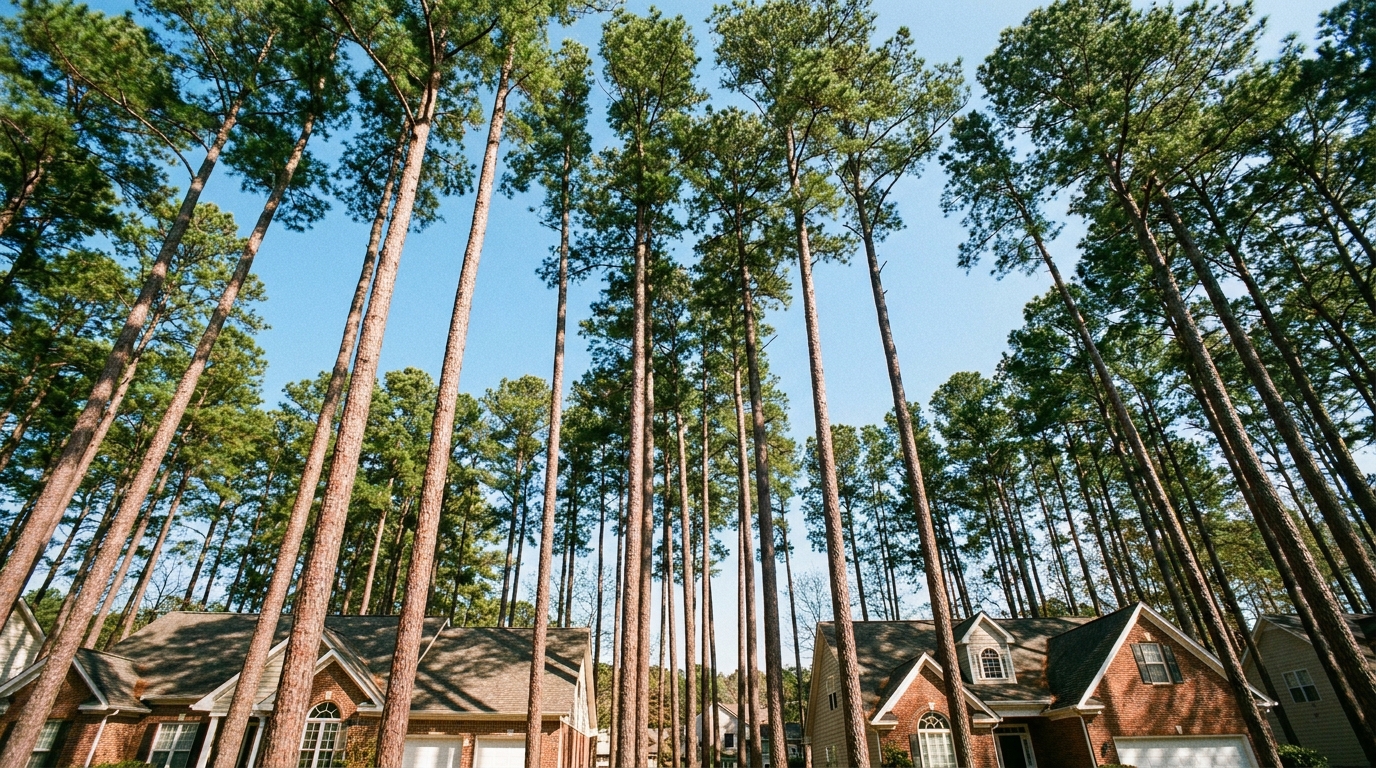
Loblolly pine, Pinus taeda, is the dominant timber species across the North Carolina Piedmont and the reason so much of Wake County is green from above. It grows faster than almost any hardwood here, putting on two feet or more a year in good conditions and reaching 80 to 100 feet at maturity.
That speed is exactly what makes it a liability in a residential yard. A tree that took thirty years to reach roof height did not spend those thirty years building the dense, heavy wood that an oak of the same size would have. Loblolly wood is comparatively light and resinous, and the tree invests in height rather than in structure.
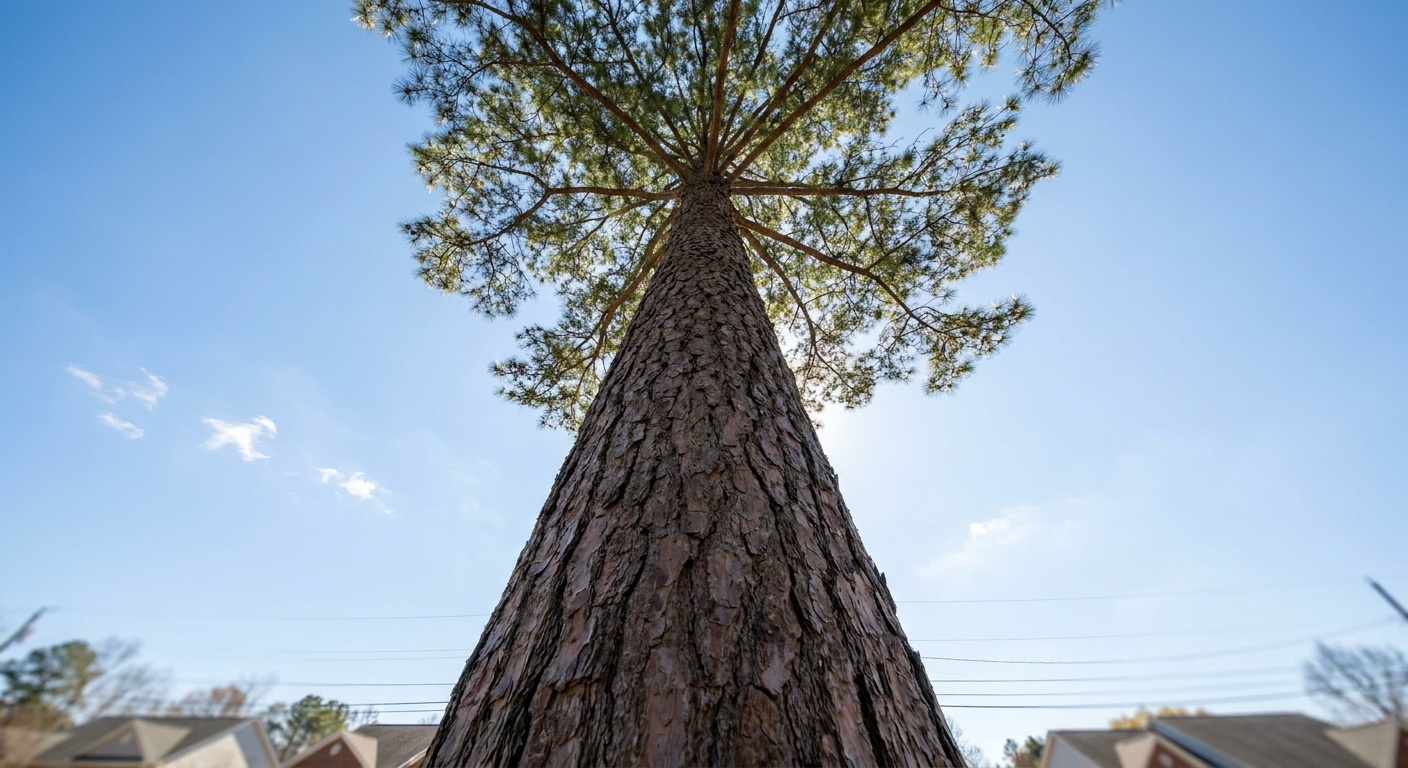
You can identify one from the ground without much effort. Look for needles in bundles of three, five to nine inches long, plated reddish brown bark that flakes off in irregular jigsaw pieces, and a long clean trunk with the canopy pushed right to the top. That last feature matters more than it sounds, because it means all the weight and all the wind load sit at the very end of a long lever.
Not Sure If Your Pine Is Still Safe?
Our certified arborist will look at the root plate, the trunk, and the canopy, and give you a straight answer on whether it needs to come down.
How Deep Do Loblolly Pine Roots Go?
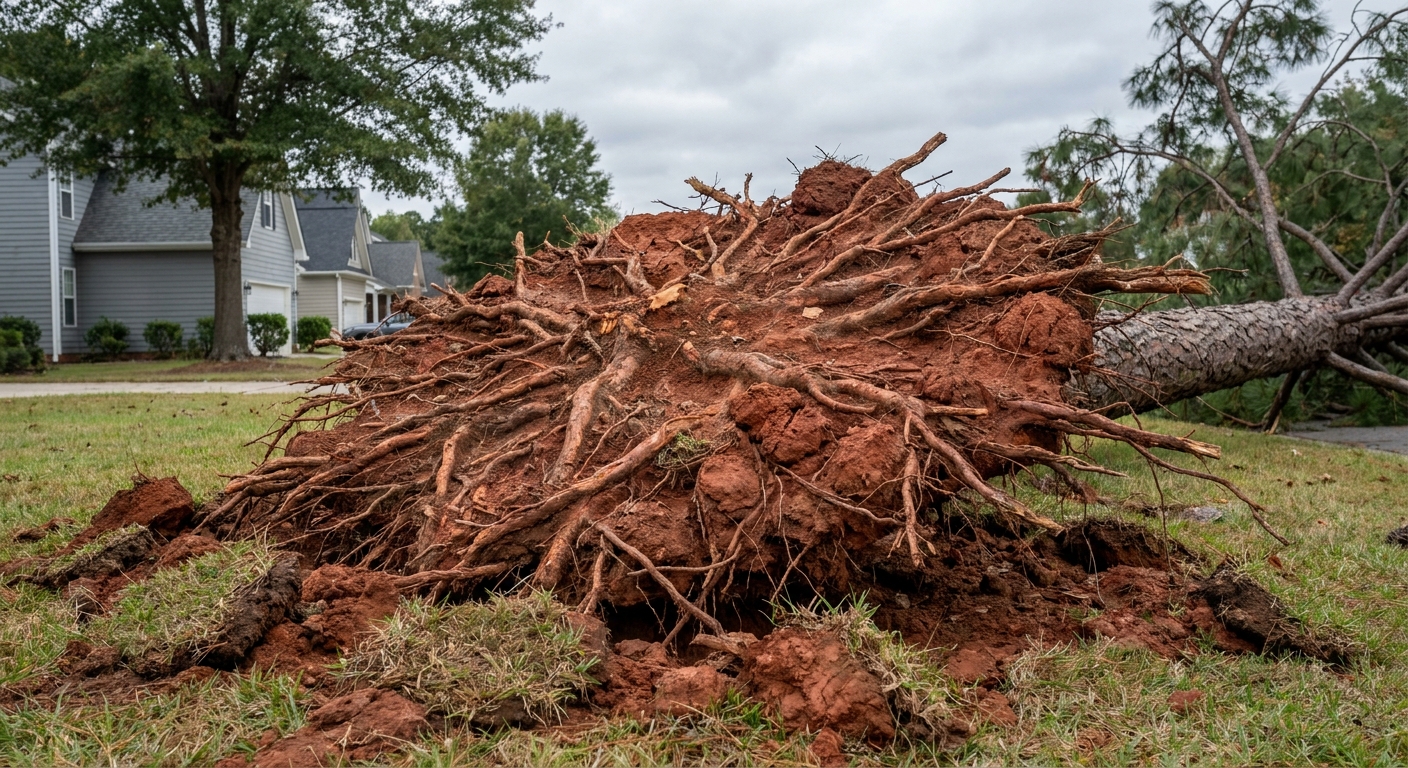
This is the question that explains everything else on this page. Loblolly pines do develop a taproot as seedlings, but in the heavy clay soils around Raleigh that taproot usually stops early, and the tree switches to a broad plate of lateral roots instead.
The practical result is a root system that spreads far wider than the canopy but sits mostly in the top twelve to eighteen inches of soil. A 90 foot tree can be anchored by a root plate that is barely deeper than a raised bed, which works perfectly well until the soil it is gripping stops behaving like solid ground.
That is why pines come down in the specific weather they do. Wake County clay drains slowly, so several days of rain leaves the ground saturated and soft, and if a windstorm arrives on top of that saturation the root plate can simply rotate out of the ground. The tree does not snap in those cases. It tips, and it takes a disc of lawn up with it.
It is also why construction is so hard on pines. Trenching for a driveway, a pool, or a service line inside the root zone can sever a large share of the anchoring roots on one side, and the tree will often stand for two or three more years before failing in the direction of the cut.
Why Loblolly Pines Fall in Wake County Storms
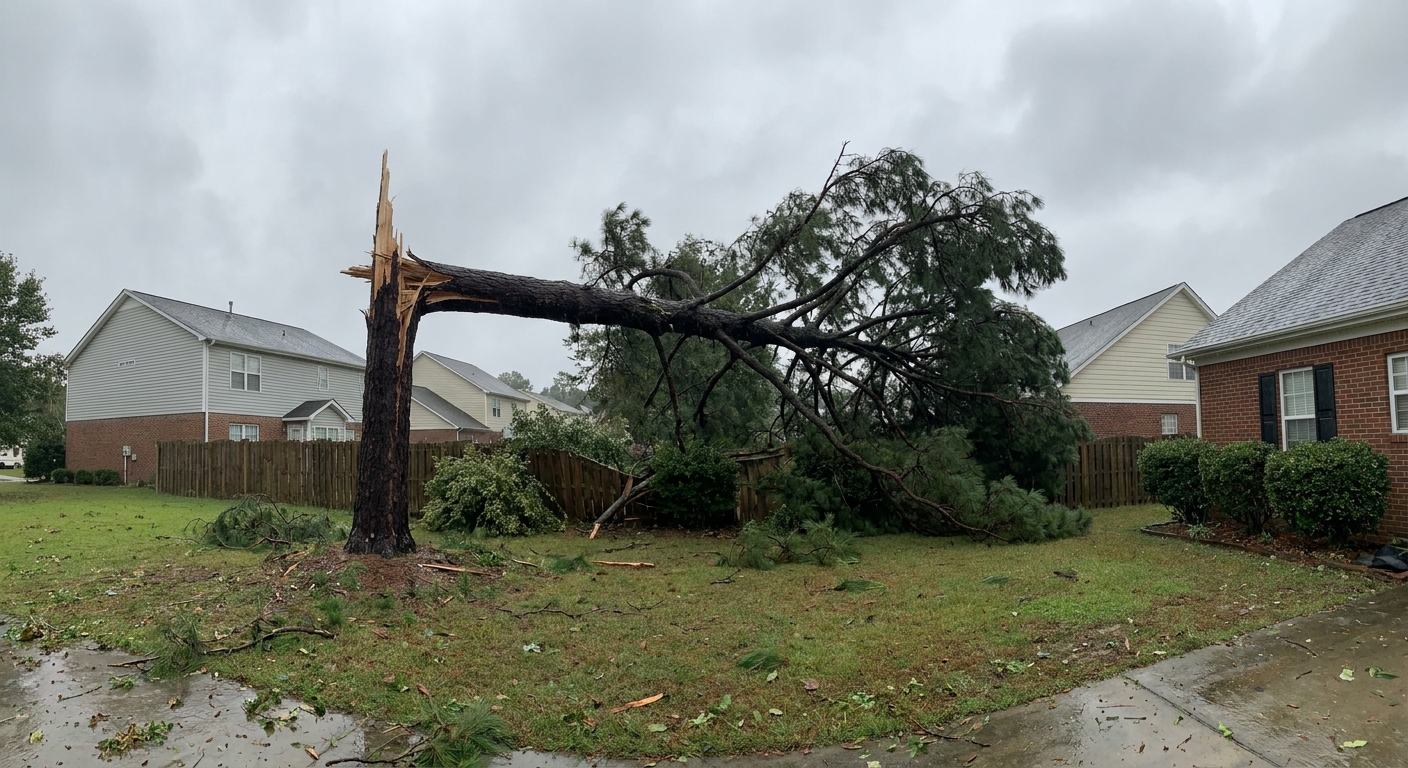
Loblollies fail in patterns, and once you know the patterns you can usually spot the candidates in your own yard before the weather does it for you.
- Saturated ground plus wind. The classic Wake County failure. Days of rain soften the clay, then a squall line arrives and the whole root plate rotates out.
- Trunk snap in the upper third. All the sail area sits at the top of a long bare trunk, so the leverage is enormous and the break often happens well above head height.
- Edge trees left after clearing. A pine grown in the middle of a stand was sheltered by its neighbours. Clear the ones around it and it is suddenly exposed to wind it never developed the taper to handle.
- Root damage from construction. Anything trenched, compacted, or paved inside the root zone removes anchorage on that side, and the tree tends to fall toward the damage.
- Ice loading. Less common here than in the mountains, but freezing rain on a pine canopy adds weight in exactly the worst place.
- Lightning. Tall isolated pines are frequent strike targets, and a struck pine often looks fine for a season before the top begins to die back.
Hurricane season runs June through November here, and it overlaps with the wettest ground of the year. That combination, not raw wind speed, is what puts pines through roofs in the Triangle. Our 24/7 emergency tree service in Raleigh gets its busiest calls in exactly that window.
Dying Pine Tree Symptoms: How to Tell If a Loblolly Is Failing
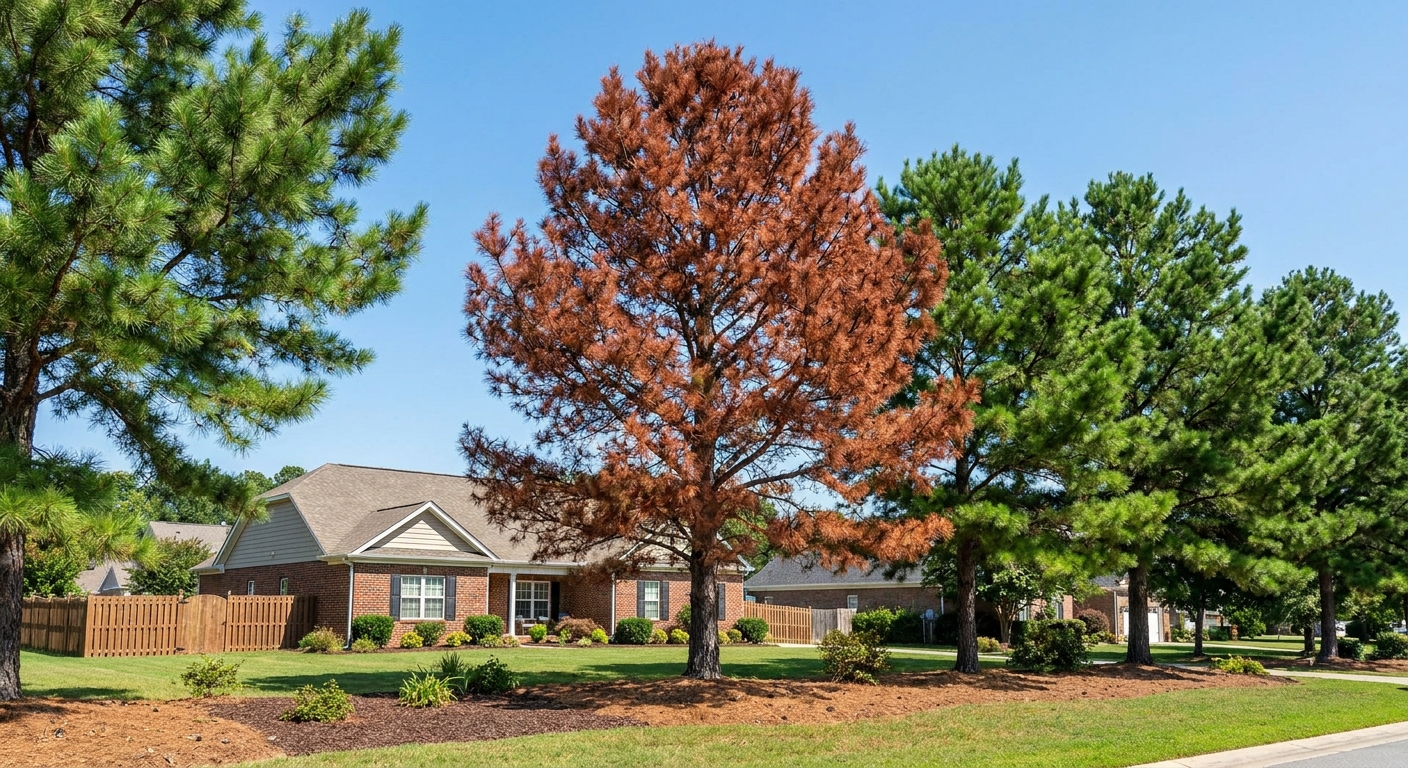
Pines are less forgiving than hardwoods. An oak can lose a third of its canopy and rebuild it over several seasons, whereas a pine that browns out is usually finished, so reading the symptoms early is what gives you options.
The direction of the decline is the most useful diagnostic you have.
| What you see | What it usually means | How urgent |
|---|---|---|
| Browning from the top down | Bark beetles, root damage, or lightning. The tree is losing its water supply. | High |
| Browning from the bottom up | Often normal needle shed, or a needle disease. Frequently survivable. | Low to moderate |
| Whole tree turns red-brown within weeks | Usually southern pine beetle. The tree is already dead. | Very high, and neighbouring pines are at risk |
| Popcorn-sized white or pink resin blobs on the trunk | Pitch tubes. Beetles are boring into the tree. | Very high |
| Fine sawdust in bark crevices or at the base | Boring insects active inside the trunk. | High |
| Soil cracking or lifting on one side of the base | The root plate is already moving. | Immediate. Keep people away. |
| Mushrooms or bracket fungi at the root flare | Root rot. The anchorage is decaying below ground. | High |
A pine that has gone fully red-brown is dead, and dead pines dry out and become brittle far faster than hardwoods do. That matters for removal, because a pine left standing for a year after it dies is considerably more dangerous to take down than one dealt with promptly. Our guide on how to tell if a tree is dead covers the ground-level checks in more detail.
Have a Pine You Are Worried About?
Book a free, no-obligation site visit. We will tell you whether it is dying, whether it is dangerous, and whether it actually needs to come down yet.
★★★★★
“Really great job. These guys arrived on time ready to take down seven tall pine trees. Job well done and fast. We were really impressed with the job and clean up. I will use them again and refer them to others.”
Johnnie C., Raleigh, NC · Verified Google Review
Loblolly Pine Diseases and Pests in North Carolina
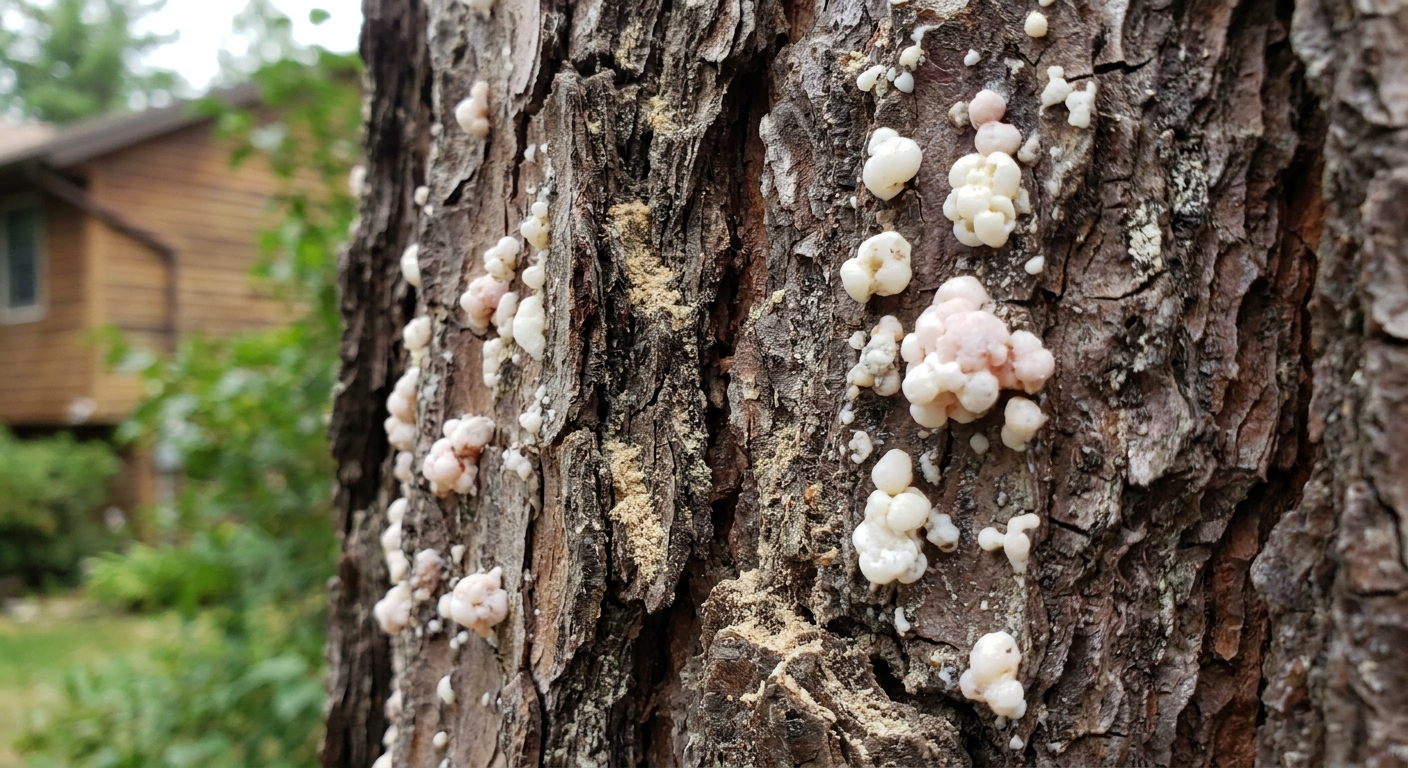
North Carolina pines face a specific set of problems, and one of them moves fast enough to matter within a single season.
| Problem | What to look for | Outlook |
|---|---|---|
| Southern pine beetle | Pitch tubes, S-shaped galleries under the bark, whole crown turning red-brown quickly | Fatal, and it spreads to nearby pines. Remove promptly. |
| Ips engraver beetles | Similar to the above, usually attacking trees already stressed by drought or damage | Usually fatal once established |
| Annosus root rot | Thinning crown, leathery bracket fungi near the base, often after thinning work | Attacks anchorage. Treat as a failure risk, not just a health issue. |
| Fusiform rust | Swollen spindle-shaped galls on branches or the trunk, sometimes with orange spores in spring | A trunk gall is a snap point. Branch galls are less serious. |
| Pitch canker | Dead branch tips with heavy resin bleeding at the canker | Often survivable, but weakens the tree over time |
| Needle cast and blight | Browning and shedding of older inner needles, usually from the bottom up | Rarely fatal. Often mistaken for something worse. |
Southern pine beetle is the one to know by name. If a pine in your yard turns red-brown across the whole crown within a few weeks and you can find pitch tubes on the trunk, the tree is gone and the priority becomes protecting the pines around it, because beetles move to adjacent stressed trees.
Can You Save a Dying Loblolly Pine?
Sometimes, and the answer depends almost entirely on which direction the browning is moving and what caused it.
Bottom-up browning on the inner, older needles is frequently normal seasonal shed or a needle disease, and a tree showing that pattern with a green top is often fine. Improving conditions genuinely helps here: water deeply during drought, mulch out to the drip line without piling it against the trunk, and keep mowers and trenchers out of the root zone.
Top-down browning is a different conversation. Once the crown is failing from above, the tree has usually lost either its root anchorage or its vascular function, and neither comes back. There is no treatment that reverses a beetle-killed pine, and spraying a tree that is already red is money spent on a tree that is already dead.
The honest position, and the one we take on site, is that a pine worth saving is one that still has a green top and a sound base. Everything else is a removal decision with a timeline attached.
When to Remove a Loblolly Pine, and When to Leave It Alone
Not every pine near a house is a problem, and we turn down work regularly because a tree is simply healthy. These are the conditions that change the answer.
Remove it, and do not wait for the season to change, if:
- The crown has gone red-brown, whether from beetles or anything else
- Soil is cracking or heaving on one side of the trunk base
- The lean is new, or has increased noticeably after heavy rain
- There are bracket fungi at the root flare
- The trunk carries a large fusiform gall inside falling distance of the house
- It was an interior forest tree and the stand around it has just been cleared
Leave it alone if the top is green, the base is sound, there is no new lean, and nothing is bleeding resin. A healthy loblolly that is simply tall is not a hazard, and height on its own is a poor reason to remove a tree that is doing its job.
When removal is the right call, the position of the tree usually decides the method. Pines close to a structure normally come out in sections rather than being felled whole, and the resinous stumps they leave behind are worth grinding rather than living with, which our stump grinding service in Raleigh handles as part of the same visit. Planned tree removal in Raleigh is always cheaper and safer than the emergency version at two in the morning.
Frequently Asked Questions About Loblolly Pines in Raleigh
How deep do loblolly pine roots go?
Shallower than almost anyone expects. In Raleigh’s clay the bulk of the root system sits in the top twelve to eighteen inches, spreading wider than the canopy rather than going down. The seedling taproot usually stalls early in heavy soil, which is why a saturated yard plus wind is the combination that puts pines on the ground.
What are the first signs a pine tree is dying?
Watch the direction of the browning. Needles going brown from the top down, or the whole crown turning red-brown within a few weeks, means serious trouble and usually beetles. Browning on the older inner needles from the bottom up is often just normal shed. Resin blobs on the trunk, sawdust in the bark, and fungi at the base are all reasons to have it looked at quickly.
Can a dying loblolly pine be saved?
If the top is still green and the problem is drought stress or a needle disease, often yes, with deep watering and proper mulching. If the crown is browning from the top down, or the tree has gone red, no. There is no treatment that brings back a beetle-killed pine, and anyone selling you one is selling you a spray for a tree that has already died.
My pine turned brown in a few weeks. What happened?
That speed almost always points to southern pine beetle. Check the trunk for popcorn-sized resin blobs called pitch tubes, and look for fine sawdust in the bark crevices. The affected tree cannot be saved, and the reason to move quickly is the pines standing next to it, because beetles spread to neighbouring trees that are already stressed.
How fast do loblolly pines grow and how tall do they get?
Fast. Two feet or more a year in good conditions, reaching 80 to 100 feet at maturity in this area. That growth rate is why they were planted and harvested so widely across the Piedmont, and it is also why a tree that looked modest when a house was built can be well above the roofline twenty years later.
How do I know if my tree is a loblolly pine?
Three things together confirm it. Needles in bundles of three, roughly five to nine inches long, reddish brown bark in flaky irregular plates, and a long bare trunk with the green pushed to the very top. If the needles are in bundles of two or the tree is short and bushy, you are probably looking at something else.
Are pine trees harder to remove than other trees?
Not harder exactly, but different. Their height means more sections and more rigging, and a dead pine dries brittle much faster than a dead hardwood, which limits how it can be climbed. That is why we assess a dead pine differently from a live one, and why leaving a dead pine standing for a year makes the job more difficult rather than less.
Will building work near my pines damage them?
Very often, yes, and the damage shows up years later. Trenching for a driveway, pool, or utility line inside the root zone cuts anchoring roots on one side, and compaction from heavy machinery does quiet harm that never fully reverses. Trees damaged this way tend to fail toward the side that was cut, usually two or three storms later.
What is the difference between a loblolly and a longleaf pine?
Needle length and bundle count give it away. Longleaf needles are much longer, often ten to eighteen inches, and usually come in bundles of three with a distinctive white candle-like bud at the branch tip. Loblolly needles are shorter. In and around Raleigh, the overwhelming majority of what you are looking at is loblolly.
Do I need permission to remove a pine in my own yard?
For most trees inside a private residential yard in Raleigh, no permit is needed. It changes if the tree sits in a tree conservation area, a right of way, or on a commercial site, and plenty of HOAs have rules of their own on top of the city’s. We check that as part of the estimate so nobody gets a surprise after the fact.
I am Steve, and I own Ashland Tree Service. In 30+ years around Raleigh I have taken down a lot of pines that had to go and talked plenty of homeowners out of removing ones that did not, because a healthy loblolly with a green top and a sound base is not the problem people assume it is. Call me directly at (984) 328-3971 or book a free estimate, and I will look at the root plate, the trunk and the canopy and tell you honestly which one you have. And we leave your property looking better than it was when we arrived.