Quick Answer
The best time to deal with a risky tree in Wake Forest is before the storm, not after. Walk your property for dead limbs, new leans, trunk cracks, and lifting roots, keep branches clear of the roof and power lines, and have a certified arborist assess anything you are unsure about. Ashland Tree Service offers free pre-storm assessments across Wake Forest at (984) 328-3971.
Atlantic hurricane season runs from June through November, and Wake Forest gets the leftover wind and rain long after the coast has had its turn. By the time a named storm is on the radar, it is too late to do much except brace and hope.
The trees that come down on Wake Forest homes are almost never a surprise. They are the dead limb someone kept meaning to deal with, the pine that started leaning last spring, the oak with a crack you could see from the driveway. Every one of those was a scheduled job that got skipped until the wind made the decision instead.
This is a straight checklist for getting your Wake Forest trees ready before the next system rolls through, drawn from the work our Wake Forest tree service crews do every season. From a quick walk of your own yard to knowing when to call a certified arborist, here is what actually protects your home. Safety first, every time.
Why Pre-Storm Prep Beats Cleanup Every Time
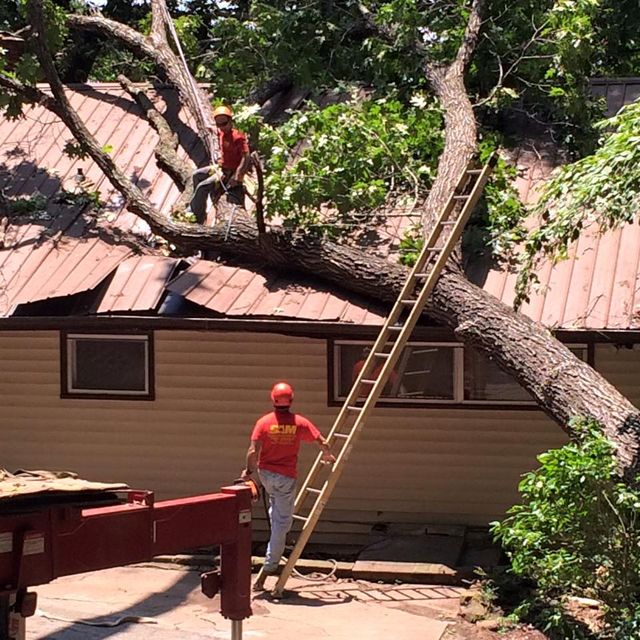
A tree that fails in a storm rarely fails cleanly. It takes the roof, the fence, the power line, or the car with it, and it does it at the worst possible moment, in the dark, in the wind, when every tree crew in Wake County is already booked solid.
Prevention flips all of that. A dead limb removed on a calm Tuesday is a 30-minute job. That same limb through your roof at 2 AM is an insurance claim, a tarp, a week of stress, and a call to our 24/7 emergency tree service at the worst possible hour. The math is not close.
Whether your property has two trees or twenty, a little attention now is what keeps a storm from turning into a repair bill later. That is the whole point of pre-storm prep.
Want a Tree Looked At Before the Next Storm?
Our certified arborists offer free, no-pressure pre-storm assessments across Wake Forest. We will tell you honestly which trees are sound and which ones need attention.
The Wake Forest Pre-Storm Tree Checklist
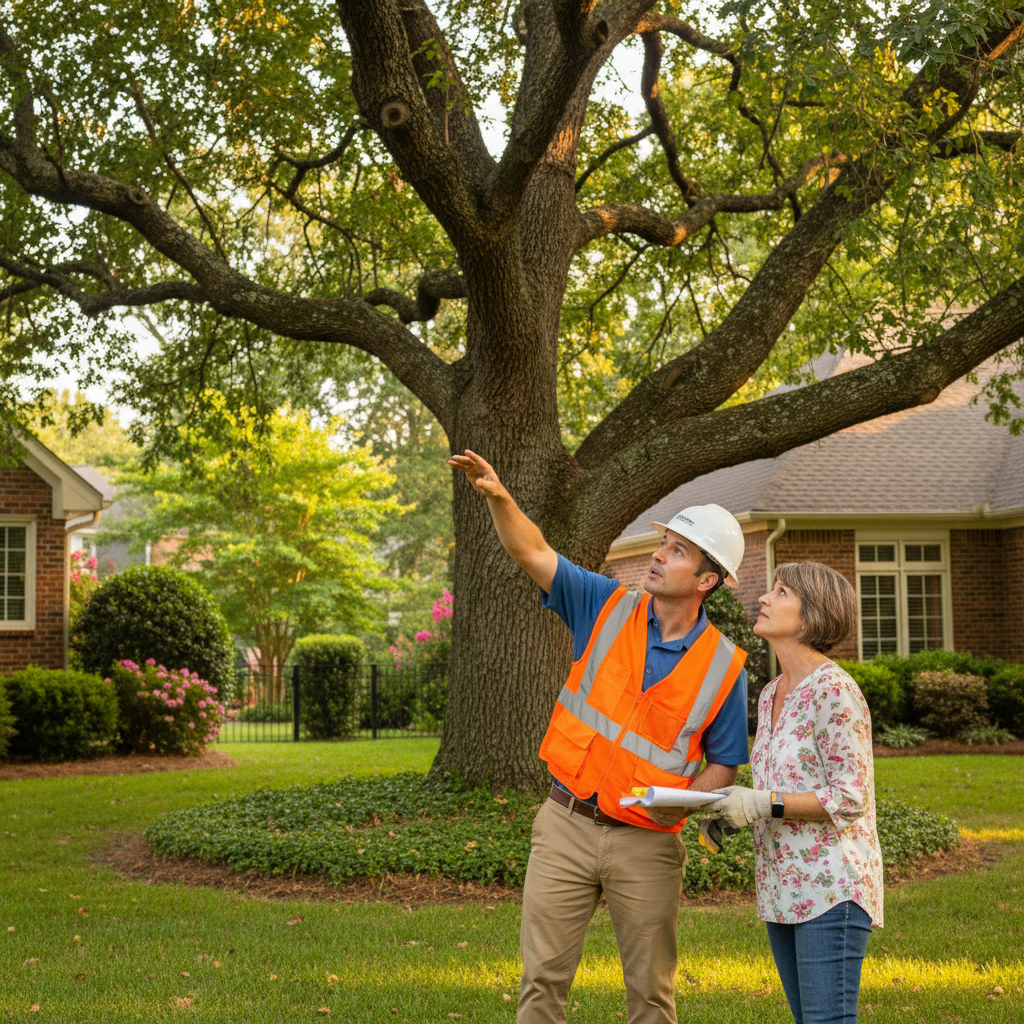
Walk your property with fresh eyes and check each of these. You do not need to be an expert to spot most of them.
01. Dead and hanging limbs. Dead branches, the ones the industry calls widow-makers, are the first to snap and fall in high wind. Look for limbs with no leaves in summer, bark peeling away, or branches already cracked and hanging. Anything dead over a roof, driveway, or walkway should come down before a storm, not after.
02. A new or worsening lean. A tree that has always leaned a little is usually fine. A tree that started leaning recently, especially with soil cracking or heaving on one side of the base, is telling you the roots are letting go. That one needs a professional look now.
03. Cracks and cavities in the trunk. Vertical cracks, seams, or open cavities in the main trunk are structural weak points. Under storm load they become the place the tree breaks. Fungus or mushrooms at the base are another warning, they often mean decay you cannot see.
04. Branches touching the house or power lines. Limbs resting on the roof grind shingles and give squirrels a bridge indoors, and in a storm they lever against the structure. Keeping the canopy cleared back from the house is routine tree trimming work. Never touch anything near a power line yourself, that is a call to the professionals every time.
05. A canopy that acts like a sail. A dense, top-heavy canopy catches wind like a sail and puts enormous force on the trunk and roots. Proper crown thinning, done by an arborist, opens the canopy so wind passes through instead of pushing the whole tree over. Done right it lowers risk. Done wrong, by topping or over-cutting, it makes the tree more dangerous, which is why this is not a DIY job.
★★★★★
“I used Ashland Tree Service to remove a tree we had some storm damage on. Steve was very prompt in everything he did. Once again I need some simple trimming, Steve came out to take a look and pointed out a dangerous situation that could have cost me thousands. Steve was able to remove the danger and potentially save me a ton had that tree come down on its own.”
— Ken P., North Raleigh · Verified Google Review
What to Watch, Tree by Tree, in Wake Forest
Wake Forest yards, from the older streets around downtown and White Street out to Heritage and the neighborhoods near Joyner Park, lean heavily on a few species. Each one fails in its own way.
Willow oaks and water oaks. These give Wake Forest a lot of its shade, and they are prone to holding decay quietly in large limbs. Watch for big deadwood high in the canopy and any limb thicker than your leg hanging over the house.
Loblolly pines. Tall, fast-growing, and shallow-rooted. In saturated soil they uproot whole, and once a pine starts leaning after a storm it rarely recovers. A cluster of pines close to the house is worth an arborist’s eyes.
Sweetgums and maples. These drop limbs readily in wind and storms and often carry weak branch unions that split under load. Structural pruning while they are young saves a lot of trouble later.
You do not have to diagnose all of this yourself. That is what we are for. Whether it is one oak you are worried about or a whole line of pines along the property line that may need removing altogether, our arborist pruning and tree trimming crews can reduce the risk before the season peaks, and every job ends with the debris cleared and hauled away.
When to Call an Arborist Instead of Handling It Yourself
Some pre-storm work is fine to do yourself. Raking up deadfall, clearing small ground-level brush, keeping an eye on the trees you can see clearly, all of that is homeowner territory.
The line is simple. If the job needs a ladder, a chainsaw, or it is anywhere near a power line or a structure, stop and call a professional. According to the North Carolina Urban Forest Council, most serious tree-work injuries happen to homeowners attempting removals and high pruning they were not equipped for. It is not worth it.
A certified arborist can see what an untrained eye misses, the early decay, the weak union, the root problem hiding under the mulch. That eye is what our Raleigh tree care services are built around. We bring the right tools for the situation too, from a bucket truck for high pruning to a crane for a large removal, so the work gets done safely instead of dangerously. Call us at (984) 328-3971 and we will walk your Wake Forest property with you, free of charge, and tell you exactly where you stand before the next storm.
Frequently Asked Questions
When should I prep my Wake Forest trees for hurricane season?
Early summer is ideal, before the peak of Atlantic hurricane season in late summer and fall. That gives you time to remove deadwood and do any corrective pruning while the weather is calm. If you have not done it yet this year, now is still far better than waiting for a storm to be forecast. Call (984) 328-3971 and we will get you on the schedule.
How do I know if a tree in my yard is a storm risk?
Look for dead or hanging limbs, a lean that has appeared or worsened, cracks or cavities in the trunk, fungus or mushrooms at the base, and roots lifting the soil. Any of those on a tree near your house is worth a professional assessment. Our certified arborists offer that assessment free, and it takes about 15 minutes.
Does trimming really help a tree survive a storm?
Yes, when it is done correctly. Proper crown thinning removes select branches so wind passes through the canopy instead of pushing against it like a sail, which lowers the force on the trunk and roots. The key is that it has to be done by an arborist. Topping or over-cutting a tree makes it weaker and more dangerous, not safer.
How much does a pre-storm tree assessment cost in Wake Forest?
Our assessment is free. A certified arborist comes to your Wake Forest property, walks it with you, and tells you honestly which trees are sound and which ones need attention, with a clear estimate for any work you choose to do. There is no obligation and no pressure. The goal is to catch problems before the storm does.
Which trees are the biggest storm risk in Wake Forest?
Tall loblolly pines are the most likely to uproot in saturated soil, and large willow oaks and water oaks tend to hold hidden decay in major limbs. Sweetgums and maples drop branches readily and often have weak branch unions. If any of those stand close to your home, they are worth an arborist’s look before the season peaks.
Can I prune large branches near power lines myself?
No. Any work near a power line is dangerous and should always be left to professionals who coordinate with the utility. The same goes for anything that needs a ladder or a chainsaw at height. If a limb is near a Duke Energy line, call us, and if a line is down, call 911 and the utility first.
What should I do if a storm damages my tree despite prepping?
If a tree comes down on a structure or a power line, keep everyone clear, call 911 if wires are involved, photograph the damage, and call us at (984) 328-3971 for 24/7 response. If the damage is minor and nothing is threatening a structure, we can schedule a visit to assess and clean it up. Either way, do not cut a damaged tree yourself.
Steve Beard
Owner & Arborist
In 30 years of tree work around the Triangle, I can count on one hand the storm failures that were truly unpredictable. The rest showed their hand early, a dead limb, a lean, a crack, if someone had looked. Looking is free.
I am Steve, and I own Ashland Tree Service. Call me directly at (984) 328-3971 and I will come walk your Wake Forest property before the next storm. We will tell you honestly what is sound and what needs attention, handle any work safely with the right equipment, and clean up completely. No pressure, no guesswork. We leave your property looking better than it was when we arrived.
Get In Touch
Phone: (984) 328-3971
Hours: 24×7
Email: beardsteven1959@gmail.com
Address: 7205 Pinewood Ln, Raleigh, NC 27616, United States