Short version
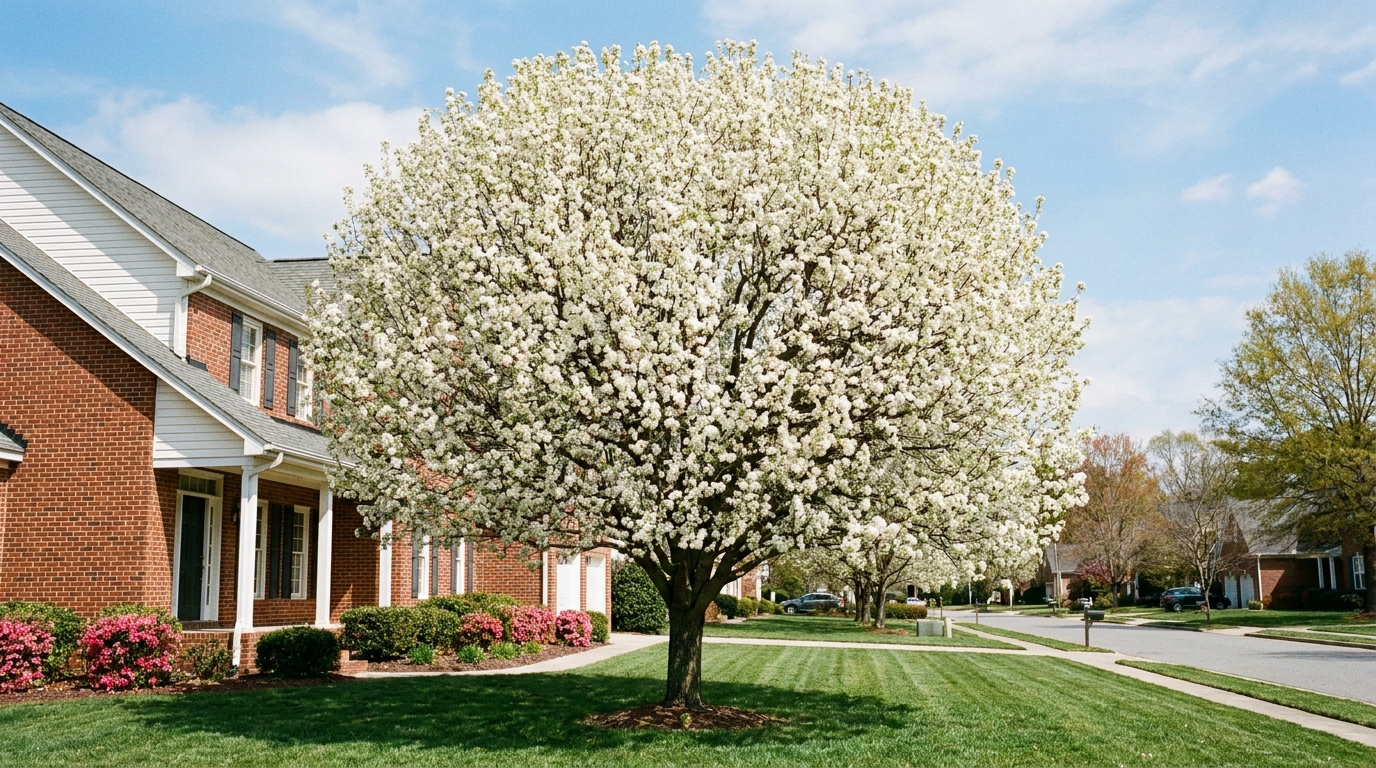
Bradford pears were planted across Raleigh by the thousand in the 1980s and 1990s, and they are now reaching the age where they come apart. The flaw is structural and built in, because all the main limbs emerge from nearly the same point on the trunk at tight angles that trap bark and never bond properly. Most fail within 15 to 25 years, and North Carolina now runs a programme that gives you a free native tree for removing one.
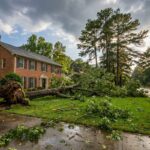
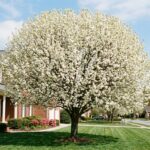
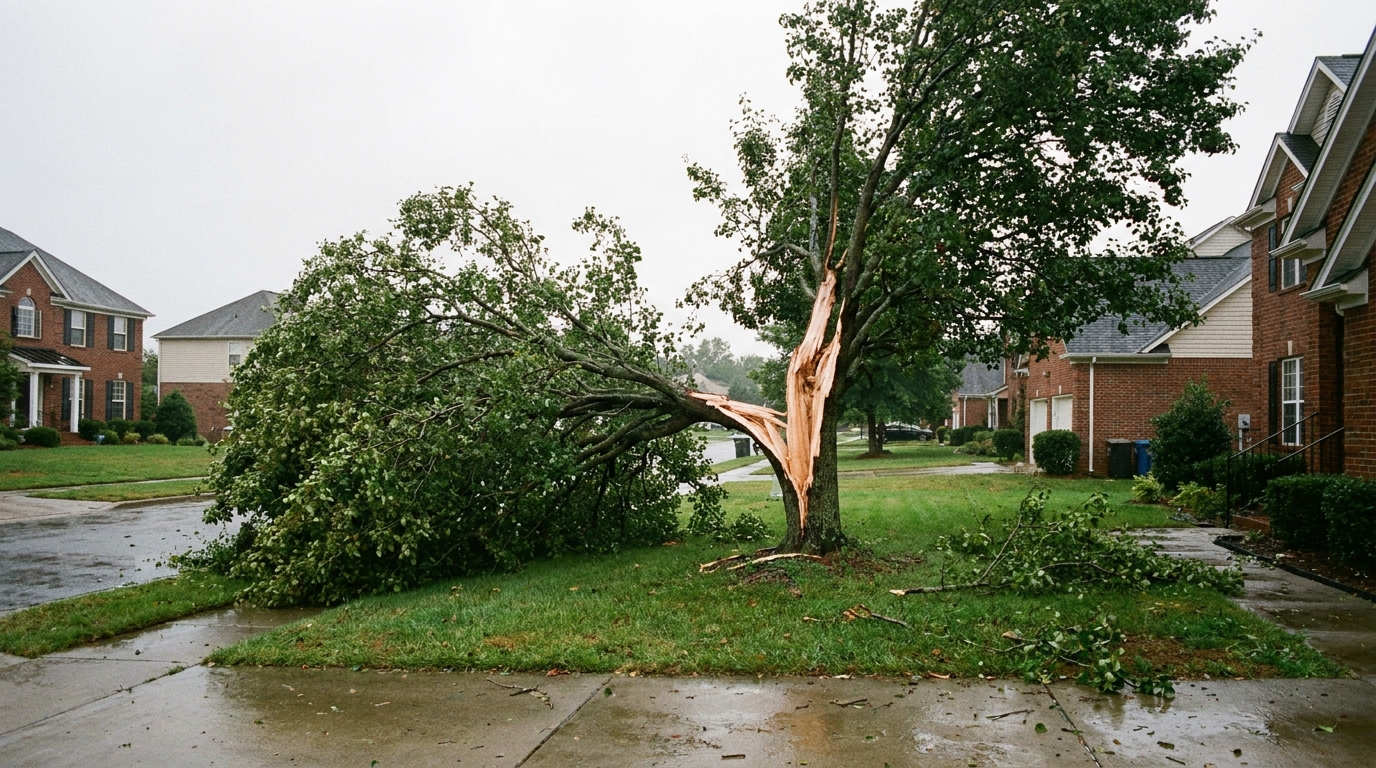
Every spring the Triangle fills with white blossom, and every summer we get the calls. A Bradford pear that looked perfectly healthy in April is lying open in the driveway in July, split straight down the middle after an ordinary thunderstorm.
It is not bad luck and it is rarely bad maintenance. The tree is doing exactly what its structure was always going to make it do, and it tends to happen at the same age across a whole street, because the whole street was planted in the same season. Our certified arborists in Raleigh see more of these than any other single species failure.
Why Bradford Pear Trees Split Apart in Storms
The Bradford pear is a cultivar of the Callery pear, and it was selected for exactly the traits that make it fail. Nurseries wanted a tree with a tidy uniform shape, fast growth, and reliable flowering, and the shape they got is the problem.
On a well-built shade tree, the main limbs come off the trunk at wide angles and at different heights, spaced out along the stem. On a Bradford pear they all erupt from nearly the same point, crowded together and rising almost vertically, which produces that neat lollipop outline everyone liked.
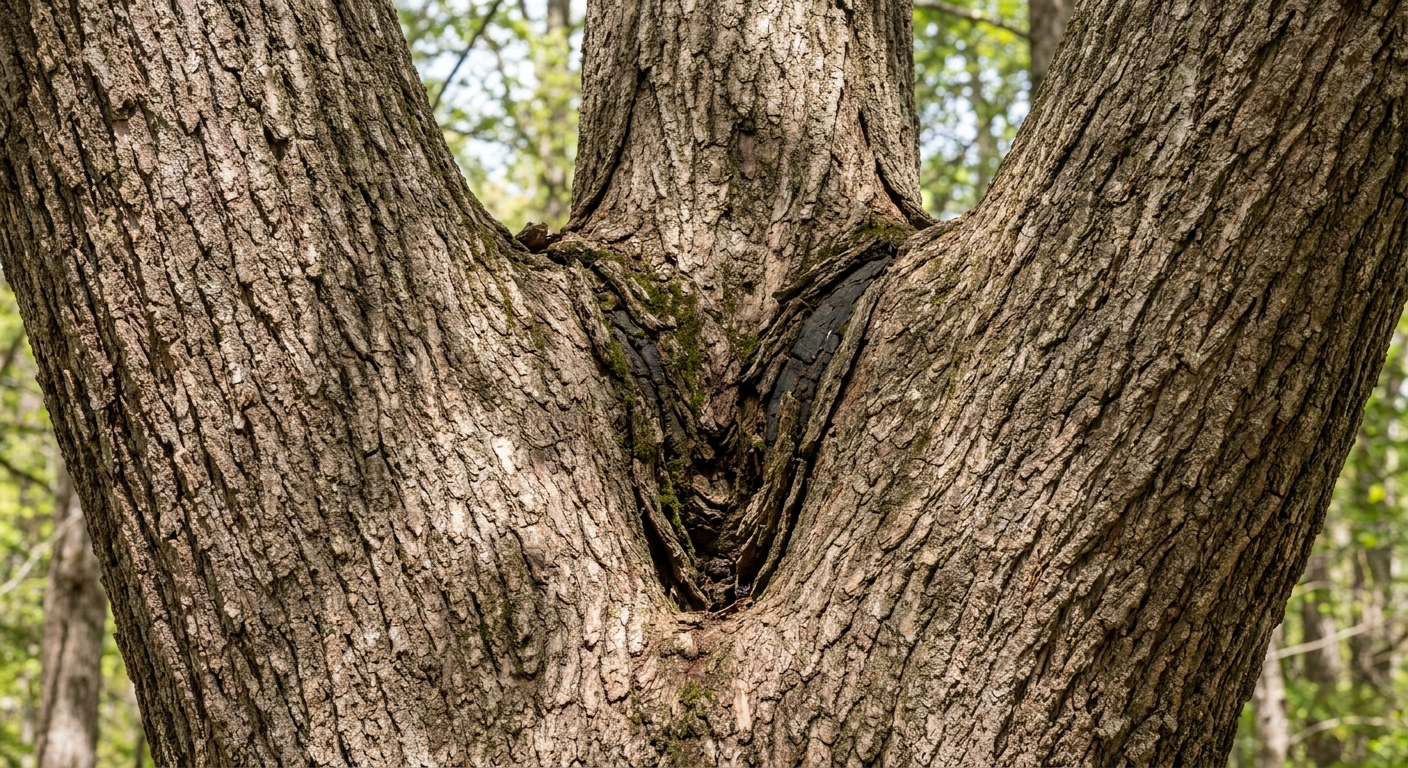
Those tight upright unions trap bark between the limbs as they thicken. Included bark, as it is called, means the two limbs are pressing against each other rather than growing woven together, so there is no real structural bond holding them. The union looks solid from the outside and is essentially a crack waiting for a load.
Why the failure is built in:
- All limbs from one point. Multiple heavy scaffolds crowded onto a single spot on the trunk, rather than spaced along it.
- Narrow V-shaped unions. Tight angles between limbs are far weaker than wide U-shaped ones.
- Included bark in the forks. Bark trapped inside the union prevents the wood from ever knitting together.
- Very fast growth, weak wood. The tree adds size quickly and the timber it produces is brittle.
- Dense top-heavy canopy. A thick crown catches wind like a sail and loads those weak unions hard.
- Fire blight susceptibility. A common bacterial disease here that kills branch tips and adds further weak points.
Put all six together and you have a tree that grows fast, looks good for fifteen years, and then tears itself apart. Ice and wet snow do it too, because the same dense crown holds weight beautifully right up until the fork lets go.
Got a Bradford Pear Near the House?
Our certified arborist will check the unions for included bark and tell you honestly how much time that tree has left.
The Bradford Pear Problem: Invasive, Stinking, and Short-Lived
Structure is only the first complaint. The Bradford pear has turned out to be a problem tree on several fronts at once, which is why it has gone from the most recommended street tree in the South to one actively being removed.
| Problem | What it means for a Raleigh homeowner |
|---|---|
| Structural failure | Splits at the union, usually taking half the canopy with it, often onto a car or a roof. |
| Invasive spread | Cross-pollinated Callery pears set fertile fruit, birds carry the seed, and thorny thickets take over field edges and roadsides. |
| The smell | The blossom that looks lovely from the kerb smells distinctly unpleasant up close, which is why it is such a common complaint every March. |
| Short lifespan | Typically 15 to 25 years before serious failure, against a century or more for a native oak. |
| Fire blight | Blackened, scorched-looking branch tips that die back and create further weak points. |
| Low wildlife value | Supports very little native insect life compared with a dogwood, redbud, or oak of the same size. |
The invasive point is the one people underestimate. Bradford pear was sold as sterile, and on its own it largely is, but once other Callery cultivars were planted nearby they cross-pollinated and began producing viable fruit. The wild offspring revert to a thorny form that is very hard to clear, and you can see them colonising untended ground all around the Triangle.
Thinking About Replacing a Bradford Pear?
Book a free, no-obligation site visit. We will assess the tree, quote the removal and stump, and talk through what would suit that spot better.
How Long Do Bradford Pears Last Before They Fail?
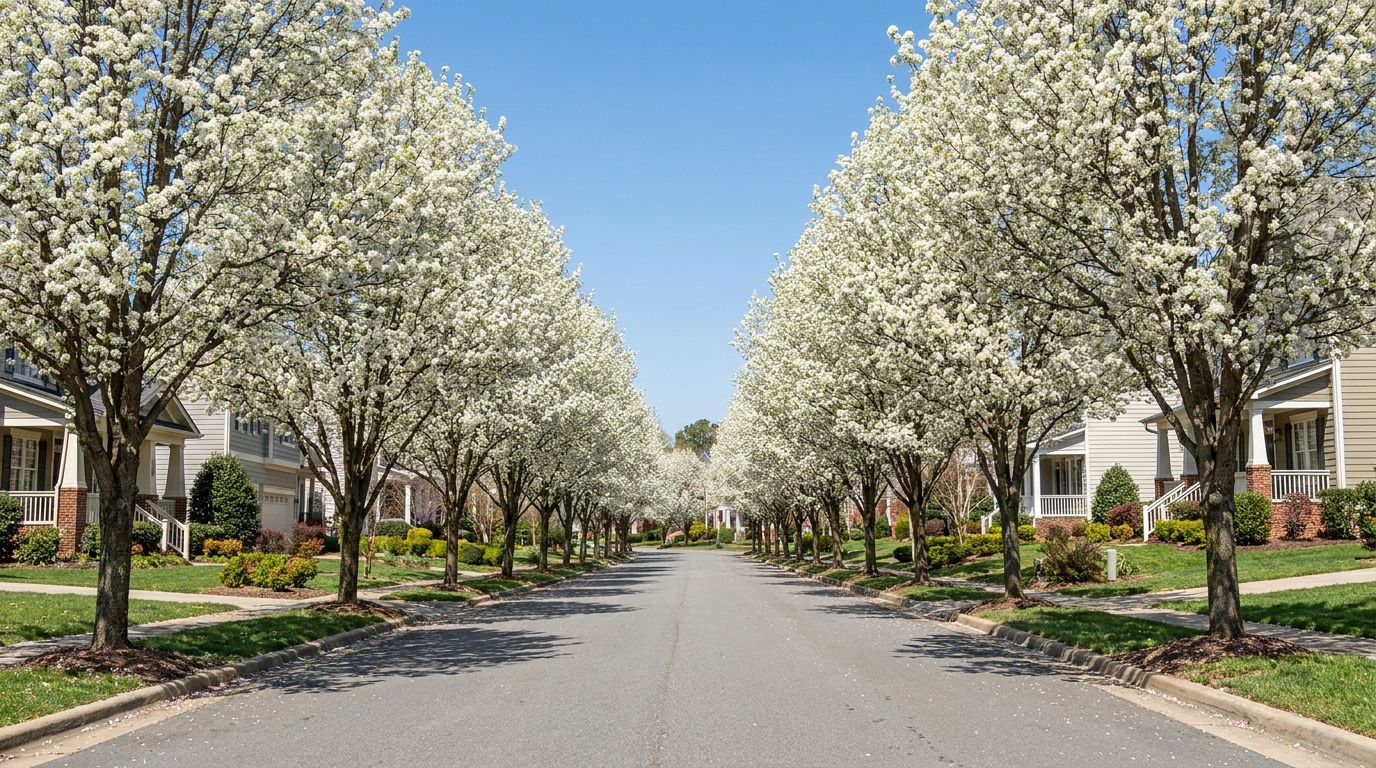
Fifteen to twenty-five years is the usual working life, and the failures cluster. A tree planted in 1998 is now well past the point where the unions can be trusted, which is why so much of Raleigh’s Bradford pear stock is coming down at once.
Age alone is not the whole story though, and there are visible warning signs that a particular tree is close. A vertical seam or crack running down from a fork is the clearest one, and so is any union where you can see bark pinched between two limbs rather than a raised ridge of wood.
Look also for limbs that have begun to spread apart at the top compared with a few years ago, for old failure points where a limb has already torn out, and for blackened shoot tips from fire blight. A tree showing two or more of those is worth acting on before storm season rather than after it.
★★★★★
“I had Steven and his crew remove a giant oak that was arching over my house and a pear tree that was splitting. They arrived on time, removed both trees, ground the stumps, and cleaned everything up when done. Excellent price with excellent customer service!”
Mandy B., Raleigh, NC · Verified Google Review
The NC Bradford Pear Bounty: Swap Yours for a Free Native Tree
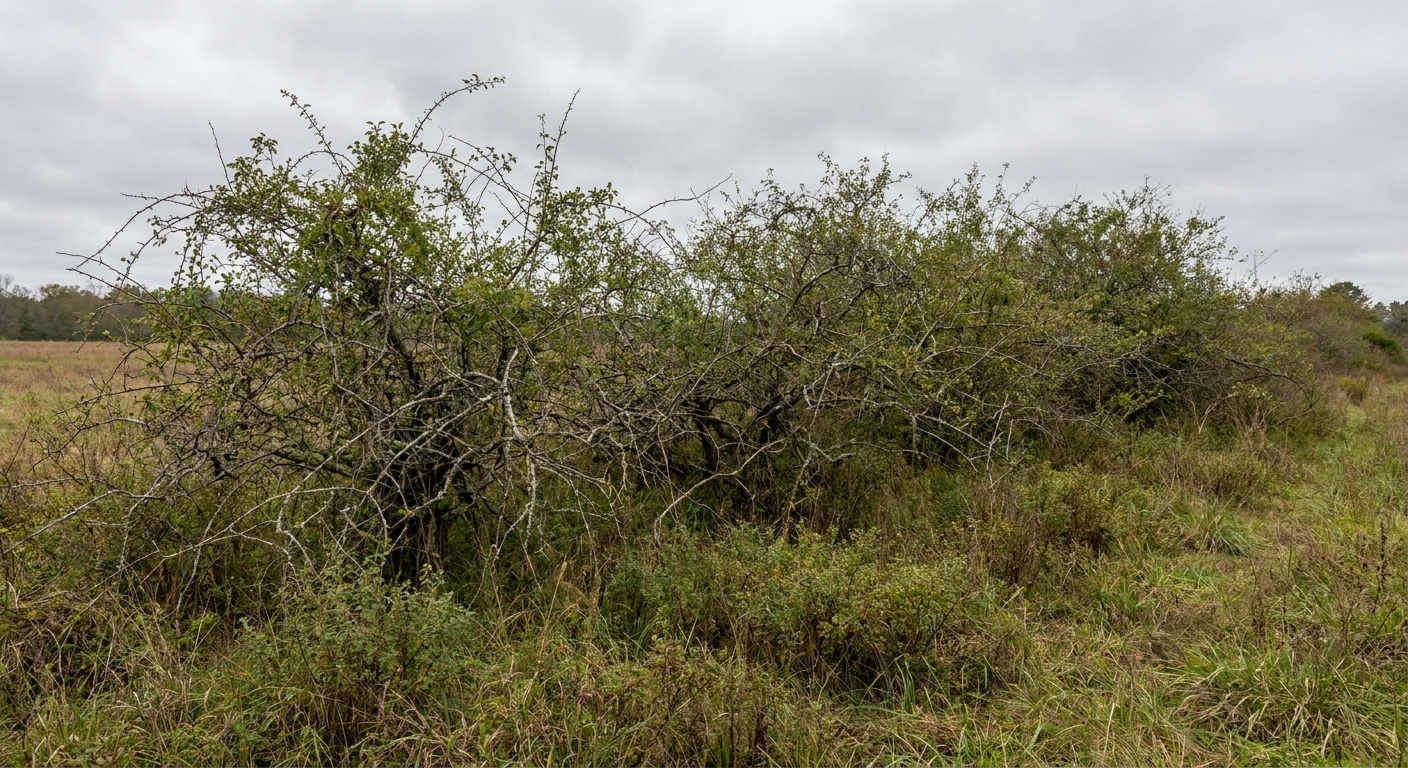
North Carolina takes this seriously enough to pay people to reverse it. The NC Bradford Pear Bounty is run by NC State Extension Forestry alongside the North Carolina Urban Forest Council, the North Carolina Wildlife Federation, and the North Carolina Forest Service.
The model is straightforward. You remove a Bradford pear from your property and you receive a free native tree in exchange, generally one replacement per tree removed and up to five in total, chosen from a list of ten to fifteen native species.
There are a couple of conditions worth knowing before you start. You have to pre-register for one of the regional exchange events rather than simply turning up, and you need before and after photographs of the removal to qualify. Events are held around the state through the year and the replacement trees are first come, first served, so it is worth checking the current schedule on their site before you book any removal work.
If you are planning to take advantage of it, photograph the tree standing before anyone touches it. We are happy to work around that, and our tree removal service in Raleigh will leave you with clear before and after shots if you tell us in advance that you are entering the programme.
What to Plant Instead of a Bradford Pear in Raleigh

The good news is that everything people liked about the Bradford pear is available from trees that actually belong here. If you wanted spring flowers on a modest tree that fits a front garden, you have better options than the one that comes apart.
| Native alternative | Mature size | Why it works here |
|---|---|---|
| Flowering dogwood | 15 to 25 ft | North Carolina’s state flower. White or pink spring bloom, good autumn colour, understory tolerant. |
| Eastern redbud | 20 to 30 ft | Magenta flowers directly on the bare branches before the leaves, very early in spring. |
| Serviceberry | 15 to 25 ft | White spring bloom, edible summer berries, and strong autumn colour. Closest match to the pear’s look. |
| American fringetree | 12 to 20 ft | Unusual drooping white flowers in late spring. Tough and underused. |
| Sweetbay magnolia | 20 to 35 ft | Scented cream flowers through summer, and it handles the wetter corners of a Wake County garden. |
| Carolina silverbell | 25 to 40 ft | Hanging bell-shaped white flowers, native to the region, and genuinely well-built. |
Whichever you choose, plant it away from where the old root plate sat if you can, and get the stump properly ground out first so the new tree has soil rather than decaying wood to establish into. Our stump grinding service in Raleigh takes it below grade and backfills, which is what a replacement tree needs.
When to Remove a Bradford Pear
Not every Bradford pear needs to come out this year, and a young one in an open corner of the garden is not urgent. What changes the calculation is age, visible defects, and what sits underneath it.
Take it out sooner rather than later if the tree is over fifteen years old and stands over a driveway, a parked car, a roof, or anywhere people regularly walk. Take it out immediately if you can see a vertical crack below a fork, if a limb has already torn out, or if the unions are visibly spreading apart.
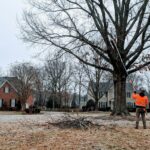
Removal is usually straightforward compared with a big oak or pine, because the tree is modest in size and the wood is light. Where it becomes awkward is a tree that has already partially split, since half a canopy hanging on a torn hinge is unpredictable and under tension. That is emergency work rather than scheduled work, and it is what our 24/7 emergency tree service in Raleigh handles through storm season.
Frequently Asked Questions About Bradford Pears in Raleigh
Should I get rid of my Bradford pear?
If it is over fifteen years old and stands over a driveway, a car, a roof, or a walkway, yes, and planning that now beats clearing it up after a storm. If it is young and sits in an open corner where a failure would hurt nothing, you have time. The deciding factors are age, what is underneath it, and whether the unions already show cracks or trapped bark.
Why do Bradford pears split down the middle?
Because all the main limbs grow from nearly the same point on the trunk at very tight angles, and bark gets trapped inside those unions as the limbs thicken. Included bark stops the wood knitting together, so the join has almost no real strength. Add fast growth, brittle timber, and a dense crown that catches wind, and the split is a matter of when rather than if.
Are Bradford pears invasive in North Carolina?
Yes, in effect. The Bradford cultivar was sold as sterile, but once other Callery pear varieties were planted nearby they cross-pollinated and began setting fertile fruit. Birds spread the seed, and the wild seedlings revert to a dense thorny form that colonises roadsides and field edges. That spread is exactly what the NC Bradford Pear Bounty exists to slow down.
How do I get a free tree from the NC Bradford Pear Bounty?
Register in advance for one of the regional exchange events, remove your Bradford pear, and bring before and after photographs to claim your replacement. You generally get one native tree per pear removed, up to five, chosen from a list of ten to fifteen species. Check the current event schedule before you book removal work, because trees go on a first come, first served basis.
Can you eat the fruit from a Bradford pear?
Not in any meaningful sense. The fruit is tiny, hard, and astringent, nothing like an eating pear, and it is grown for the birds rather than for you. Those small fruits are the mechanism by which the tree spreads into wild ground, which is the whole invasive problem in miniature.
Why do Bradford pear flowers smell so bad?
The blossom produces compounds that attract flies and beetles rather than bees, and those compounds are what people describe as smelling like rotting fish. It is most noticeable on warm still days in March when a whole street is in flower at once. Nothing is wrong with the tree, that is simply how it is pollinated.
Why are Bradford pears no longer recommended?
The structural failures and the invasive spread together turned professional opinion against them, and several states have now restricted or banned nursery sales of Callery pear. North Carolina’s approach has been the bounty programme rather than a ban, encouraging removal and replacement with natives. Either way, no arborist is planting them now.
My Bradford pear has blackened branch tips. What is that?
That is almost certainly fire blight, a bacterial disease that makes shoots look scorched and curled at the ends. A tree can carry it for years without dying, but each affected shoot dies back and leaves another weak point in a canopy that already has plenty. On a tree already prone to splitting, it is one more reason not to leave it standing over the drive.
Can pruning save a Bradford pear from splitting?
Pruning can buy time on a young tree if it is done early, by selecting better-spaced limbs and removing the worst unions before they get heavy. On a mature tree it does not fix the problem, because the weak unions are already formed and carrying weight. Cutting the top out hard, which people often try, makes it considerably worse rather than better.
What should I plant where the Bradford pear was?
Serviceberry is the closest match if you want the same white spring bloom and similar size. Flowering dogwood and eastern redbud are the classic Raleigh choices and both are natives that support local wildlife. Grind the old stump out first and plant slightly off the original spot if you can, so the new roots get soil rather than decaying wood.
I am Steve, and I own Ashland Tree Service. I have cleaned up more split Bradford pears than any other tree in 30+ years around Raleigh, and almost every one of them was healthy right up to the afternoon it came apart, because the weakness is in the shape rather than the health. Call me directly at (984) 328-3971 or book a free estimate, and I will check the unions, tell you how much time it has, and if you are entering the bounty programme we will make sure you get the photographs you need. And we leave your property looking better than it was when we arrived.