Quick Answer
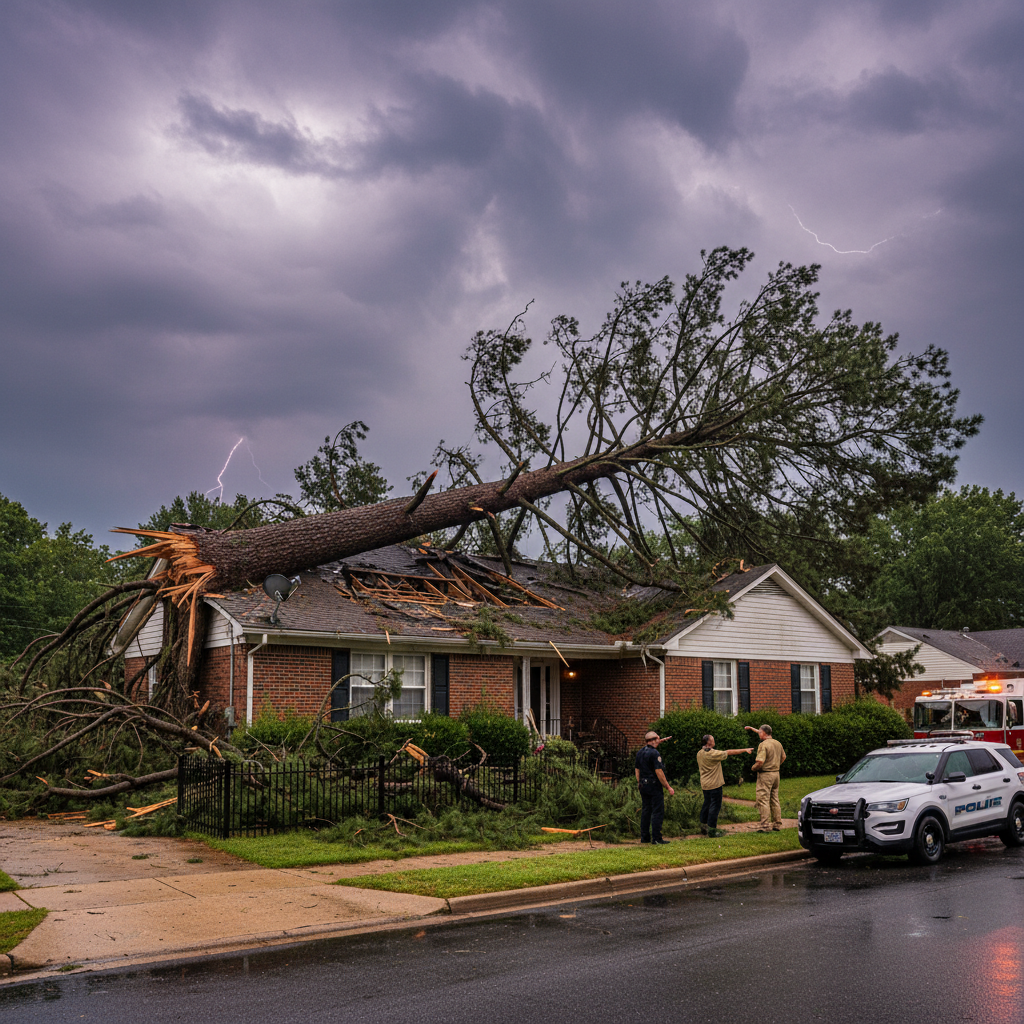
An emergency tree situation is any tree that has already fallen on a structure, is actively failing, or is in immediate danger of causing property damage or injury. If the tree is on your home, fence, car, or power line — or if it is cracked at the base and leaning toward a structure — call a certified arborist immediately. Ashland Tree Service responds 24 hours a day, 7 days a week at (984) 328-3971. Do not try to remove or cut a compromised tree yourself.
Storms move fast in central North Carolina. A line of thunderstorms can roll through Raleigh in 40 minutes and leave a 70-foot oak across your roof before the weather radar catches up to it.
What happens in the next few hours matters. The wrong moves — trying to cut a tree that is under tension, pulling a fallen branch off a roof without knowing what is holding what, or waiting until morning to assess a tree that is still actively moving — can turn a property damage problem into a personal injury event.
This guide covers what actually qualifies as a tree emergency, what to do in the first 24 hours, and how Ashland Tree Service handles emergency removals throughout Raleigh and the Triangle area. Emergencies don’t wait for business hours, and neither do we.
What Qualifies as a Tree Emergency in Raleigh
Not every fallen branch is an emergency. Some are. Here is how to read the difference.
Immediate emergency — call now:
- A tree or large limb has fallen on or against your home, garage, or outbuilding
- A tree has fallen on a vehicle, fence, or neighboring structure
- A tree has fallen on or near a power line — do not approach, call your utility company first, then us
- A tree is visibly cracked at the base or root flare and leaning toward a structure
- A large limb is hanging by a thread over a roof, walkway, driveway, or area where people pass
- A tree is tilting and the root ball is beginning to lift from the ground
Urgent but not immediate — call today:
- Storm damage left a tree structurally compromised — large splits in the trunk, missing major scaffold limbs, significant lean that was not there before
- A tree lost half its canopy in a storm and what remains is unbalanced and unstable
- You have a tree that was already identified as a concern and a storm has worsened its condition
Schedule within the season:
- Storm debris — scattered branches, small limbs, minor cleanup — with no structural damage to the tree or nearby structures
- A tree lost some limbs but the main structure is intact and there is nothing in the fall zone
When in doubt, call. A free on-site assessment takes 15 minutes and gives you a real answer instead of a guess.
Tree Down or Failing Right Now?
We respond 24 hours a day. Our certified arborist will assess the situation and give you a clear plan — no pressure, no guesswork, same-day response available.
What to Do in the First 24 Hours
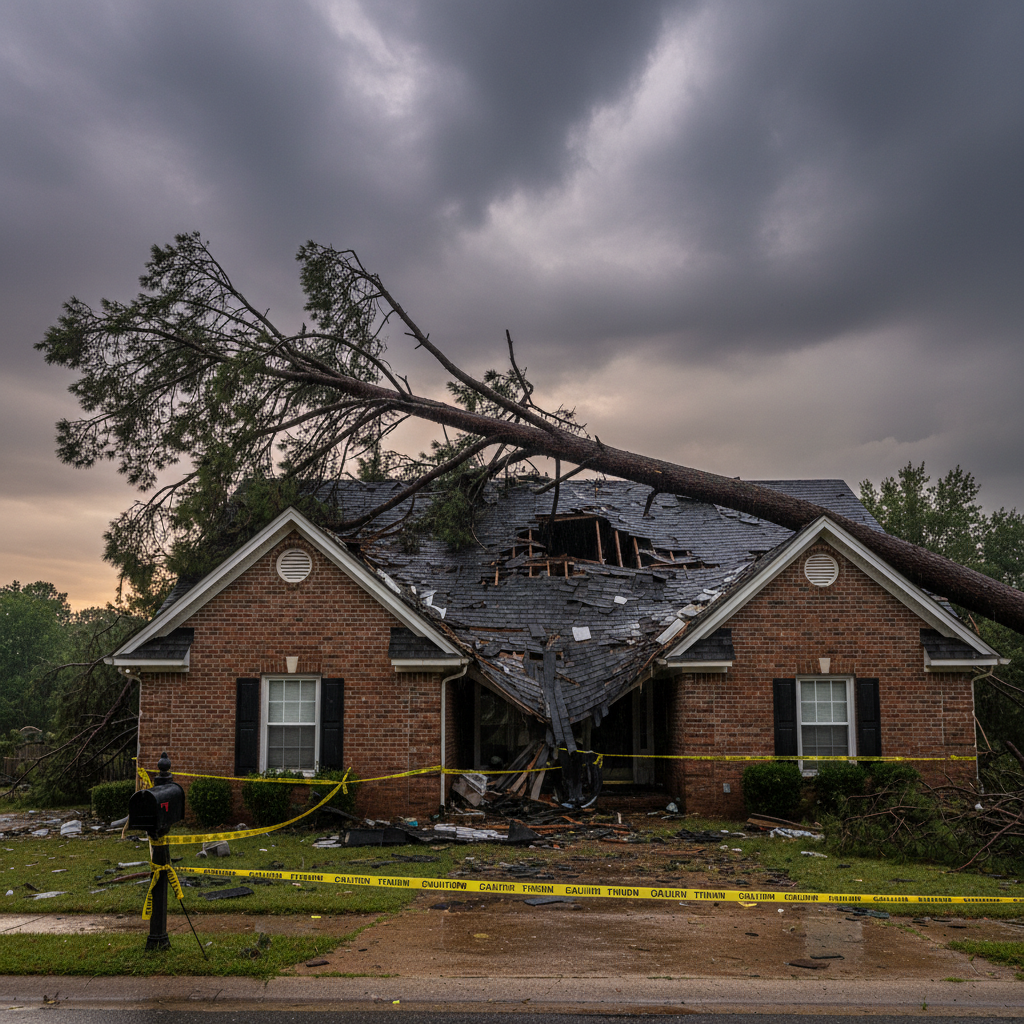
The first 24 hours after a tree emergency are the highest-risk window. Here is the right sequence of steps.
Step 1: Get everyone away from the tree. Before anything else, move people and pets away from the fallen or failing tree. A tree under tension — a trunk that is partly fallen but still connected at the base, or a limb that is suspended between branches — can shift without warning. The area around it is not safe until a professional has assessed it.
Step 2: If a tree is on or near a power line, call Duke Energy or your utility provider first. Do not approach a downed power line or a tree that has contacted one. Call 911 if wires are sparking or if anyone is near the line. Then call us. We coordinate with utility companies regularly and know what clearance is needed before tree work can begin safely.
Step 3: Document the damage for your insurance claim. Before any cleanup begins, take photos and video of the fallen tree, the damage to structures, and the overall scene. Your insurance company will need this documentation. Take wide shots showing the full scene and close-ups showing where the tree made contact. Do not move anything before you have photos.
Step 4: Call a certified arborist for immediate assessment. Call Ashland Tree Service at (984) 328-3971. We respond around the clock. When we arrive, we assess the structural situation — whether the remaining tree or limbs pose continued risk, what equipment is needed to remove what is down safely, and whether temporary tarping or emergency protection for your structure makes sense before full removal begins.
Step 5: Do not attempt to cut the tree yourself. A tree under tension behaves unpredictably when cut. A limb that looks stable can spring, kick, or roll when a chainsaw relieves the tension holding it. Emergency tree removal requires knowing where the stress is distributed before any cut is made. This is what certified arborists train for. Call us before picking up a saw.
★★★★★
“Prompt and thoughtful, they helped us during an emergency tree removal. Two trees fell against our fence and were leaning toward our neighbors house. They came first thing in the morning. They removed 5 dead trees in addition to the 2 trees leaning against the fence. All 7 trees represented a threat to our neighbors house and our own house. What a relief to see the trees go down safely, get cut up and hauled away by 1 PM.”
— Jerry C., Raleigh, NC · Verified Google Review
How Emergency Tree Removal Works
Emergency removals follow the same safety standards as any other tree job — they just happen faster and often in more complex conditions.
Assessment first, always. When we arrive on an emergency call, the first thing we do is read the site. Where is the tree’s weight distributed? What is it resting on and how stable is that contact? What is still connected to the root system and what has separated? No cuts happen until we understand the tension in the tree.
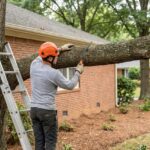
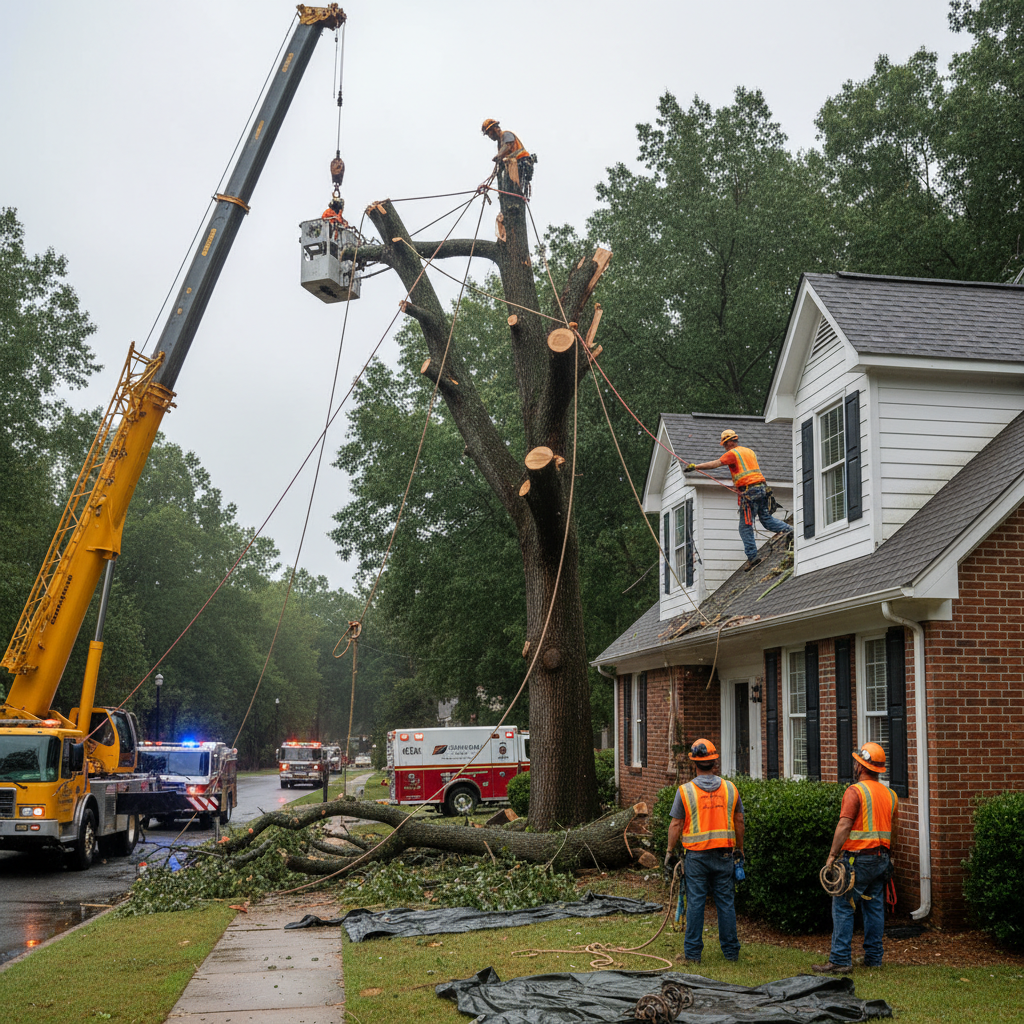
Right equipment for the situation. Depending on what the storm left behind, we bring a bucket truck for elevated cuts, a grapple saw for controlled piece-by-piece removal, a crane for extracting a whole tree off a structure without further damage, or a spider lift when access is tight. Emergency situations often require multiple pieces of equipment. We are equipped for it.
Structure protection throughout the removal. When a tree is on a roof or against a wall, removal is done in controlled sections — not a single cut and drop. Each section is rigged and lowered deliberately to avoid additional impact on the structure below. This takes longer than standard removal but it protects the property from secondary damage during the process.
Debris removal and site cleanup on the same visit. Emergency or not, we leave your property cleaner than we found it. Every trunk section, every branch, every handful of debris is cleared and hauled away before we leave. The cleanup is not scheduled for a follow-up visit. It is part of the emergency response.
Homeowners in Cary and Durham have called us for emergency response after storms move through the Triangle. The process is the same regardless of how far the call comes from — we respond, we assess, and we handle it completely, from the first cut to the final cleanup.
Storm Season in Raleigh: When to Prepare, Not React
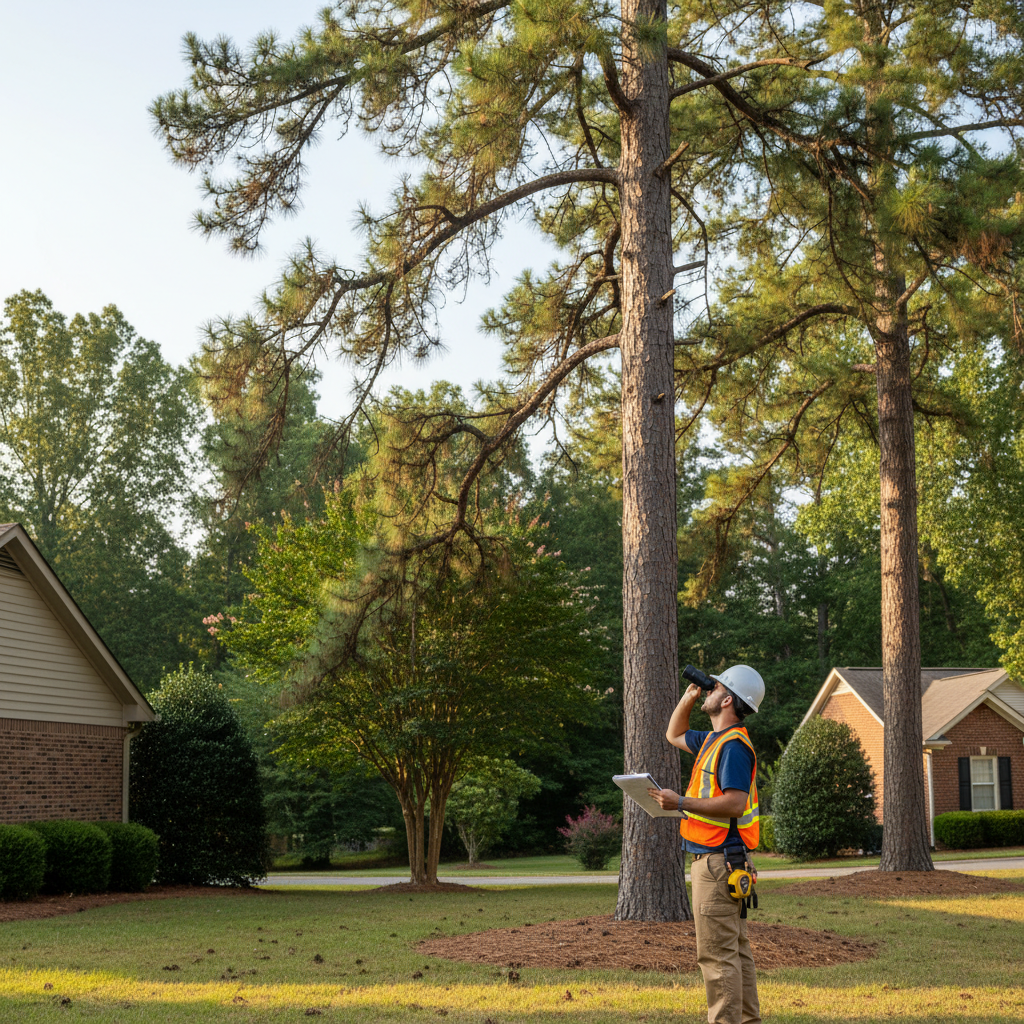
Central North Carolina runs the full range of damaging weather: summer thunderstorms from May through September, the tail end of Atlantic hurricane season through October, and winter ice storms that load branches with hundreds of pounds of additional weight.
The trees most likely to fail in these conditions are the ones homeowners already knew about. The oak that had been leaning slightly toward the fence for two seasons. The pine with the long dead branch hanging over the back deck. The tree with mushrooms at the base that someone said “we should probably have looked at.”
According to the International Society of Arboriculture, most tree failures are preceded by visible warning signs — structural defects, decay indicators, root problems — that a trained arborist can identify before failure occurs. Pre-storm assessment is not an upsell. It is the difference between a scheduled tree removal on your terms and a 2 AM emergency call after the tree has already hit the house.
The best time to address a tree you are concerned about is now, before storm season peaks. Call us at (984) 328-3971 and we will come out, assess the trees you are worried about, and tell you honestly which ones need to come down before the weather window opens.
Frequently Asked Questions
How fast can Ashland Tree Service respond to a tree emergency in Raleigh?
We respond 24 hours a day, 7 days a week. For active emergencies where a tree is on a structure or blocking access, we aim to be on-site the same day. For after-hours calls, we respond to the call immediately and dispatch based on the urgency of the situation. Call (984) 328-3971 any time — do not wait until morning if the tree is still moving or creating active risk.
What should I do if a tree falls on my house in Raleigh?
First, get everyone out of the rooms affected and away from the tree. Second, if there is any chance of fire or exposed wiring, call 911. Third, document the damage with photos before anything is moved — you will need this for your insurance claim. Fourth, call us at (984) 328-3971. Do not attempt to remove the tree from the structure yourself. Trees that are under tension against a structure can shift unpredictably when cut.
Does insurance cover emergency tree removal in North Carolina?
If a tree falls on a covered structure — your home, garage, or insured outbuilding — most standard homeowners policies cover removal costs as part of the damage claim. If the tree falls in the yard without hitting a structure, coverage is less common. Call your insurer as soon as the damage is documented. We are happy to provide written documentation of the damage and removal scope for your claim.
How much does emergency tree removal cost in Raleigh?
Emergency removal is typically priced higher than a scheduled job because of the 24/7 availability, rapid response, and the more complex conditions involved. The actual cost depends on tree size, what it has fallen on, and what equipment is needed. We give honest, fair estimates even under emergency conditions — we do not inflate prices after storms. Call us and we will give you a clear number before work begins.
What if a neighbor’s tree falls onto my property in Raleigh?
In North Carolina, if a neighbor’s healthy tree falls onto your property due to a storm, each property owner is generally responsible for the damage on their own side. If the neighbor knew the tree was dead or hazardous beforehand and failed to act, their homeowners liability coverage may apply. Document everything with photos and contact your insurer. We can remove the tree regardless of whose it was — the removal process does not wait on the liability question.
Is it safe to stay in my house if a tree is resting on the roof?
That depends on the size of the tree, where it landed, and what structural damage it caused. A small branch resting lightly on a roofline is very different from a 50-foot trunk that has penetrated the roof deck. If there is any structural penetration, exposed framing, or the roof is visibly sagging under the tree’s weight, get out of that portion of the house and call us immediately. When in doubt, err on the side of caution and let a professional assess the stability before you go back in.
How do I know if a tree on my property is about to fall?
The main warning signs are: visible cracks in the main trunk or at the root flare, a lean that has developed or worsened recently, fungal growth at the base, large dead branches throughout the canopy, and bark that is falling off in patches. Any one of these in combination with proximity to a structure warrants a professional assessment. Call us for a free on-site look — it takes 15 minutes and gives you a real answer instead of a guess.
Do you offer emergency tree removal in Cary, Durham, and surrounding areas?
Yes. We serve all of Raleigh and the surrounding Triangle area, including Cary, Apex, Durham, Wake Forest, Garner, Knightdale, Clayton, and beyond. Emergency response is not limited to Raleigh city limits. Call (984) 328-3971 any time and tell us your location — we will dispatch based on urgency regardless of which part of the Triangle you are in.
Steve Beard
Owner & Arborist
Whether the tree came down in last night’s storm or you have been watching a dead limb hang over your back deck for two seasons and a wind event finally moved it, the answer is the same: get a certified arborist on-site before anyone goes near it. That is what we do, any hour of the day.
I am Steve, and I own Ashland Tree Service. Call me directly at (984) 328-3971. We respond 24 hours a day throughout Raleigh and the Triangle. We will assess the situation, give you a clear plan, and handle everything from the first cut to the final cleanup. No pressure, no guesswork. We leave your property looking better than it was when we arrived.
Get In Touch
Phone: (984) 328-3971
Hours: 24×7
Email: beardsteven1959@gmail.com
Address: 7205 Pinewood Ln, Raleigh, NC 27616, United States