Quick Answer
Scratch a small patch of bark with your fingernail. Green and moist underneath means the tree is alive in that spot. Dry and brown means that section is dead. But one scratch test is not the whole picture. Dead trees often fool homeowners for a season or two before the real signs become obvious. This guide covers the five most reliable warning signs, how to confirm what you are seeing, and what to do next if the tree turns out to be gone.
A dead tree does not always announce itself. One spring it leafs out just fine, the next spring nothing.
Or you notice the bark peeling off in long strips. Or mushrooms start growing at the base. By the time most Raleigh homeowners realize something is wrong, the tree has been dead for a full season, sometimes two.
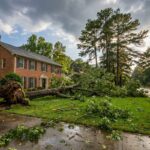
That delay matters. Once a tree dies, the wood begins to decay from the inside and the root system weakens. It can come down in a storm, on a calm afternoon, or after a dry stretch, without any warning at all. If that tree is within falling distance of your house, your car, your fence, or a neighbor’s property, you have a real hazard on your hands.
Here is how to read the signs yourself, and when to call in a certified arborist to confirm what you are dealing with.
5 Warning Signs a Tree May Be Dead or Dying
No single sign is definitive on its own. Dead and dying trees show a combination of these. The more of them you see together, the more concerned you should be.
1. No Leaves When Neighboring Trees Have Them
In Raleigh and the surrounding Triangle area, deciduous trees (oaks, maples, tulip poplars, sweetgums) are fully leafed out by mid-April and hold their leaves through October. If it is July and a deciduous tree on your property has no leaves while the trees around it are full and green, that is the clearest possible sign something is wrong.
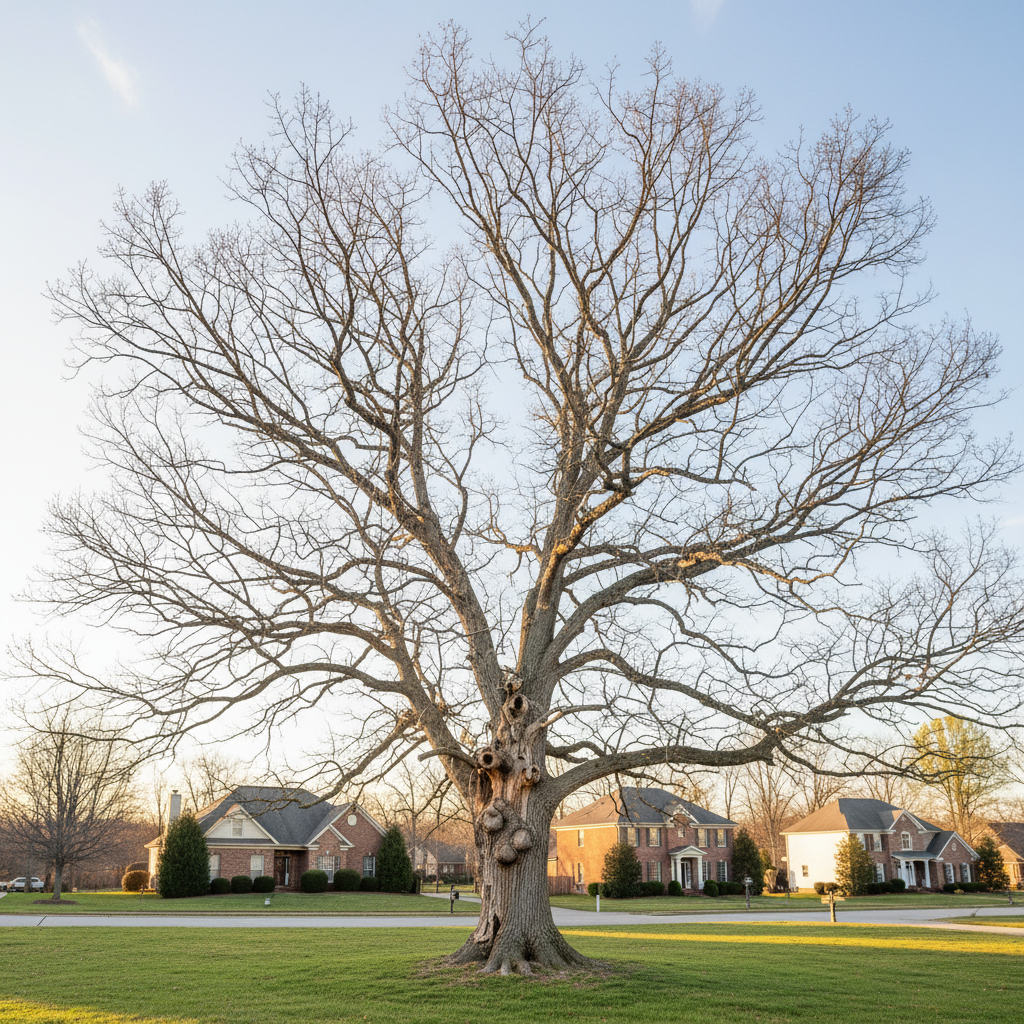
The exception is dormancy. In late fall and winter, deciduous trees losing their leaves is completely normal. The test is timing: if the tree fails to leaf out in spring when everything around it is greening up, it is likely dead.
2. Bark That Is Falling Off or Missing in Patches
Healthy bark is the tree’s outer defense layer. Dead trees lose their bark. It dries out, separates from the wood underneath, and falls away in chunks or strips. You may see large patches of bare wood exposed, or sections where the bark looks loose and detached.
Some bark shedding is normal for specific species (sycamores, crape myrtles, river birches). But if the exposed wood underneath looks dry, discolored, or hollow rather than fresh and pale, that is decay, not normal shedding.
3. Fungal Growth at the Base or on the Trunk
Mushrooms, shelf fungi (conks), or white and orange growths on the trunk or root flare are a serious warning sign. Fungal growth on a tree almost always means internal wood decay is already underway. The tree may look standing and structurally sound from the outside while the center is hollow and rotting.
This is one of the most dangerous scenarios for homeowners, because the decay is invisible until the tree fails. If you see shelf fungi at the base or on the main trunk, call a certified arborist before assuming the tree is safe to leave standing.
4. Brittle, Snapping Branches With No Green Inside
Grab a smaller branch and try to bend it. A live branch flexes. It bends without snapping. A dead branch breaks cleanly with a dry snap, the way a twig that has been sitting in the sun for weeks would break. Snap a few branches at different heights and look at the cross-section. Green and moist inside means alive. Dry, pale brown, or hollow inside means dead.
NC State Extension guidelines on general pruning techniques note that broken and dead branches should be removed as soon as they are identified. They are not just cosmetic issues, they are structural ones. Dead branches throughout the canopy, not just at the tips, are a clear signal the whole tree may be gone.
5. Cracks, Lean, or Damage at the Base
A significant lean that was not there before, large cracks in the main trunk, or visible damage and decay at the root flare (where the trunk meets the ground) are all structural red flags. Root rot can kill a tree from below while the canopy still looks passable. If the tree is visibly leaning toward your house, fence, or a neighbor’s property, treat it as a hazard regardless of whether the canopy still has leaves.
Worried About a Tree Near Your Home?
Our certified arborist will assess the situation on-site and give you a clear, honest answer about what the tree needs, with no pressure and no guesswork.
The Scratch Test: One Quick Check You Can Do Right Now
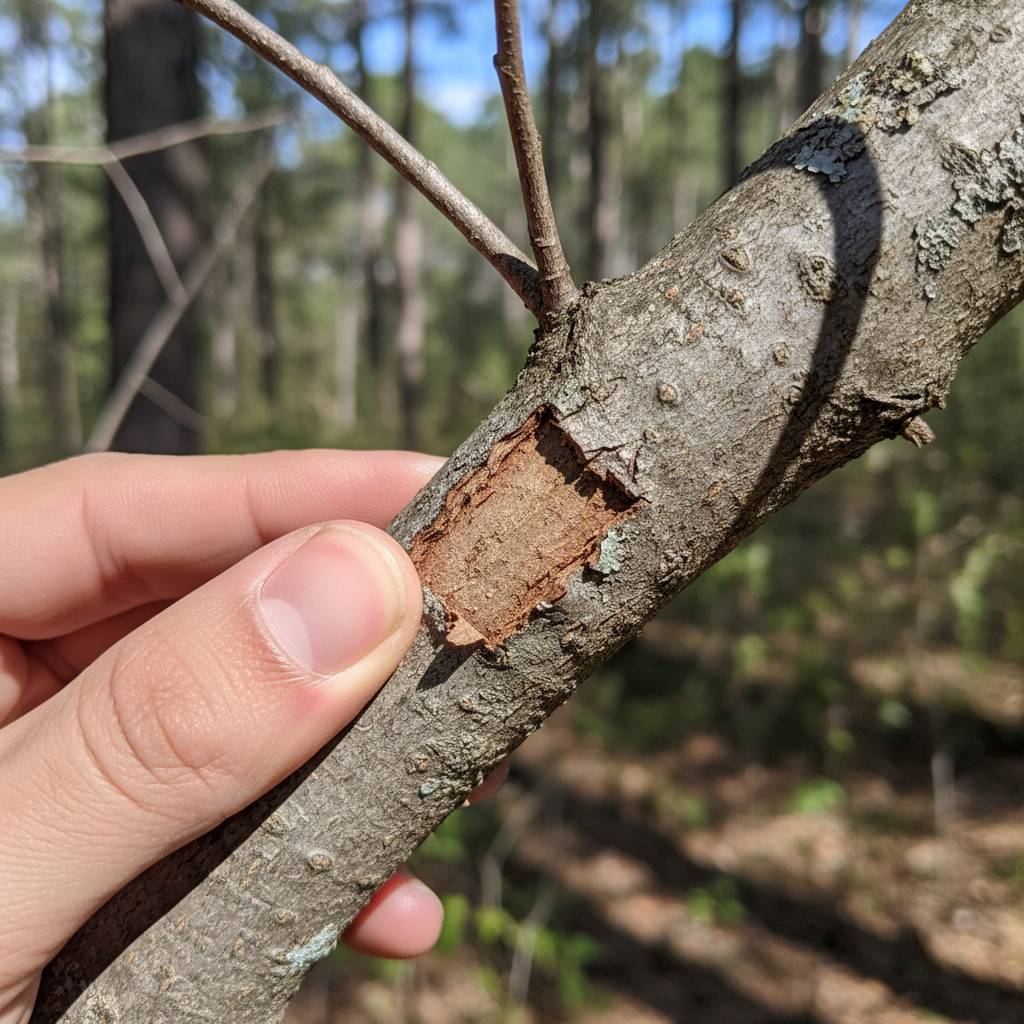
The scratch test is the most reliable DIY check you can do in two minutes. Here is exactly how to do it:
Step 1: Find a small branch that is roughly pencil-thickness, thin enough to expose fresh material when scratched.
Step 2: Use your fingernail or a pocket knife to scrape away a small section of the outer bark. You are exposing the cambium layer, the thin living tissue just under the bark.
Step 3: Look at the color and feel the texture. Green and moist means that section of the tree is alive. Brown, dry, or tan means that branch is dead.
Step 4: Do not stop at one spot. Test branches from the lower canopy, middle canopy, and upper canopy. Test the main trunk at two or three heights. A tree can be partially dead, alive in some sections and gone in others.
If every branch you test comes back brown and dry, and the trunk shows the same result, the tree is dead. If you are getting mixed results, some green and some brown, the tree may be severely stressed, dying, or partially dead. Either way, that warrants a closer look from a professional.
Dead vs. Dormant: How to Tell the Difference in Raleigh
The most common mistake homeowners make is writing off a dormant tree as dead in winter, or, more dangerously, assuming a dead tree is just dormant because it is February. Here is how to read the timing correctly in the Raleigh and Wake County area.
Dormant trees in winter: Deciduous trees in central North Carolina go dormant in late November and begin leafing out again in March and April. A bare deciduous tree in January is almost certainly dormant, not dead. Look for buds on the branch tips, small firm swellings that signal the tree is preparing to leaf out. No buds at all is a warning sign.
Dead trees in spring and summer: If it is May or later and a deciduous tree still has no leaves while every other tree around it is full, that tree is not dormant. Dormancy ends. Dead does not.
Evergreens: Pines, hollies, and cedars should be green year-round in Raleigh. Brown needles that persist throughout the canopy, not just the interior needles that shed normally but across the whole tree, are a sign of decline or death. A pine that has gone fully brown with no new growth is gone.
When in doubt, do the scratch test in March after dormancy should have ended. If the branches are still brown and dry when everything around the tree is waking up, you have your answer.
★★★★★
“We had a couple of large dead trees on a property we recently purchased. I called and they came to give a quote the next day, and the following day they removed the trees. The whole team was amazing and managed to get the job done in a couple of hours with no damage to my home, even though the trees were very close. I highly recommend Ashland Tree Service.”
Jack G., Raleigh, NC · Verified Google Review
Why a Dead Tree Is More Than an Eyesore
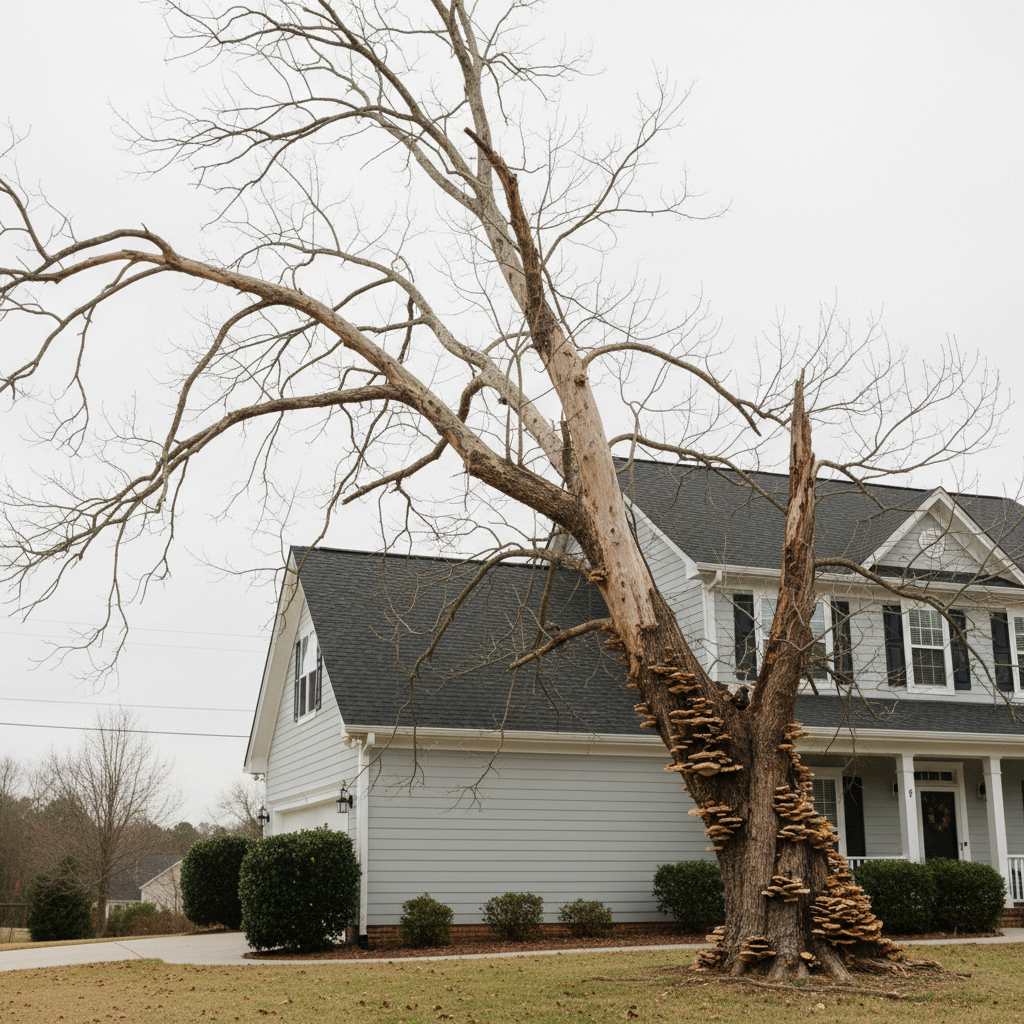
A standing dead tree is a structural failure waiting to happen. The timeline from death to collapse is unpredictable. Some trees stand for years after dying. Others fail within a single growing season. What accelerates the process is exactly what we get a lot of in central North Carolina: summer thunderstorms, hurricane season winds, and winter ice events that add hundreds of pounds of weight to already-weakened branches.
The specific risks homeowners face here:
- Roof and structure damage: A dead tree within falling distance of your home is a direct threat. The cost of a removed dead tree is a fraction of what a tree through a roof costs to repair.
- Vehicle and fence damage: Dead branches fall first. A large dead limb dropping onto a car parked below is a common outcome of a tree that was identified as a concern months earlier.
- Neighbor liability: In North Carolina, if a dead tree on your property falls onto a neighbor’s structure and you knew the tree was dead or hazardous, the liability exposure is real. If you are aware of a problem and do not act, “it fell on its own” is not a complete defense.
- Root system failure: Fungal decay at the base often means the root system is compromised. A tree that looks sturdy from the outside can topple at the root level with no prior warning, no cracking, no leaning, no visible sign.
None of this is meant to alarm you unnecessarily. Not every dead tree is an immediate threat. A dead tree in an open field far from any structure is a very different situation from a dead oak ten feet from your bedroom window. The point is that a certified arborist can tell you which situation you are actually in, and give you a clear answer about how urgently it needs to come down.
What to Do When You Find a Dead Tree on Your Property
Once you have identified warning signs or confirmed through the scratch test that a tree is dead, here is the right sequence of steps.
Step 1: Get a professional assessment. The scratch test and visual signs give you a strong indication, but a certified arborist looks at root health, internal decay, structural integrity, and the full canopy picture. Do not make the call to remove or keep a tree based on a DIY diagnosis alone when the tree is near a structure. Call us at (984) 328-3971 and we will come out for a free on-site look.
Step 2: Understand the urgency level. Not every dead tree needs to come down tomorrow. An arborist can tell you whether you are dealing with an immediate hazard (remove within days) or a declining tree with lower near-term risk (schedule within the season). The answer depends on how close the tree is to structures, how far along the decay is, and what your local storm exposure looks like.
Step 3: Schedule dead tree removal before storm season. In the Raleigh and Wake County area, late spring and summer bring the highest storm activity. If you have a confirmed dead tree, the safest window to deal with it is before that weather window opens. Depending on the tree’s size and location, we bring in a crane, bucket truck, or spider lift to take it down safely with no damage to the surrounding yard or structures.
Step 4: Consider stump grinding at the same time. After the tree comes down, the stump is still there. Stumps left in place decay slowly, attract termites and carpenter ants, create tripping hazards, and make mowing and landscaping difficult. Grinding the stump at the same time as the removal is more cost-efficient than scheduling it separately. One mobilization, one cleanup.
Step 5: We leave your property cleaner than we found it. Every job at Ashland Tree Service ends with full debris removal: branches, trunk sections, wood chips, all of it cleared and hauled away. The yard you get back should look better than the one we started with. That is not a line; it is how we work.
Frequently Asked Questions
How can I tell if my tree is dead or just dormant?
Timing is the key. In Raleigh, deciduous trees should be fully leafed out by mid-April. If your tree has no leaves by May while neighboring trees are green, it is not dormant. It is gone. Confirm it with the scratch test: scrape back a small patch of bark on several branches. Green and moist underneath means alive. Brown and dry means dead in that section. Do the test in spring, after dormancy should have ended, for the clearest result.
Should I be worried about a dead tree near my house?
Yes, if it is within falling distance of your home, your car, a fence, or a neighbor’s property. A dead tree loses structural integrity as the wood decays and the root system breaks down. It can fail during a storm, during an ice event, or on a calm day with no warning at all. The closer it is to a structure, the more urgently it needs to be assessed. Call us and we will come out and give you a clear, honest answer about the risk level.
Does a dead tree need to come down right away?
It depends on location and condition. A dead tree in an open area away from structures has lower urgency than a dead tree hanging over a roofline or leaning toward a fence. What determines urgency is proximity to structures, how advanced the decay is, and whether there are signs of root or base failure. A certified arborist assessment gives you a real answer, not a guess. If the tree is near your home, do not wait on that assessment.
Can a dead tree fall over without any warning?
Yes. This is what makes dead trees different from live trees with visible storm damage. A dead tree with root rot or internal decay can appear structurally fine right up until the moment it fails. There is no crack, no creaking, no warning lean. Just the tree coming down. This is especially true for trees with fungal growth at the base, which signals that the root system or lower trunk has been compromised from the inside.
How much does dead tree removal cost in Raleigh, NC?
Dead tree removal in the Raleigh area is priced per project based on tree size, location, access, and any complicating factors like proximity to structures or powerlines. There is no standard flat rate because a 40-foot pine in an open yard is a very different job from an 80-foot oak against a fence line. The right first step is a free on-site estimate. Call us at (984) 328-3971 and we will walk the property with you and give you a clear number before any work begins.
Do I need a permit to remove a dead tree in Raleigh, NC?
In Raleigh, tree removal permits are required for certain trees depending on size, species, and whether the property is in a protected area or subject to a tree conservation plan. Dead trees sometimes qualify for expedited removal without the standard permit process, particularly if the tree is an immediate hazard. We handle the permit question as part of the assessment. If a permit is needed, we guide you through the process rather than leaving that on you to figure out.
Can a dead tree come back to life?
Not once it is fully dead. There is no treatment or recovery for a tree that has died. If the scratch test shows dry, brown wood throughout the canopy and trunk, that tree is not coming back. What sometimes looks like a dead tree is actually a severely stressed tree. Drought stress, disease, or root damage can cause a tree to drop leaves and look dead while the root system is still alive. A certified arborist can tell you which situation you are dealing with and whether intervention can save the tree or whether removal is the only path forward.
Who should I call to check if a tree is dying in Wake County?
Call a certified arborist, not just a general tree service or lawn company. Certification from the International Society of Arboriculture (ISA) means the person assessing your tree has passed a rigorous exam in tree biology, structure, and risk assessment. At Ashland Tree Service, Steve is a certified arborist with 30 years of hands-on experience in the Raleigh and Wake County area. We offer free on-site assessments. Call (984) 328-3971 and we will come out and give you an honest answer about what your tree needs.
Steve Beard
Owner & Arborist
Whether you are staring at a tree that leafed out last spring and is bare this one, or you have been watching a slow decline for two seasons and are not sure what to do. The answer is the same: get a certified arborist on-site to give you a real assessment. That is exactly what we do.
I am Steve, and I own Ashland Tree Service. Call me directly at (984) 328-3971 for a free, no-obligation estimate. We will walk the property with you, tell you honestly what we see, and give you a clear picture of what needs to happen and what it will cost, no pressure and no guesswork. We leave your property looking better than it was when we arrived.
Get In Touch
Phone: (984) 328-3971
Hours: 24×7
Email: beardsteven1959@gmail.com
Address: 7205 Pinewood Ln, Raleigh, NC 27616, United States