Many homeowners are unaware of how property insurance handles tree removal claims,
especially after unexpected events like a lightning strike. In this article, we explain key
aspects of tree removal claims, including insurance coverage, how to file a claim, and the
importance of working with qualified arborists. Understanding these elements can help you protect your
property and recover compensation when tree removal becomes necessary.
Understanding Tree Removal Insurance Coverage
As homeowners, understanding your insurance coverage is essential when dealing
with tree removal. Reviewing your homeowner’s insurance policy can help identify situations where
tree removal is covered and what percentage of costs may be reimbursed when you file a claim.
Review Your Homeowner’s Insurance Policy Clauses
Many insurance policies include specific clauses covering tree-related incidents such as storm damage,
blocked access, or damage to structures like fences. Understanding these details helps ensure you know
exactly what protection your policy provides for tree care.
Identify Situations Where Tree Removal Is Covered
Tree removal is commonly covered when a fallen tree or limb damages your home, garage, or fence.
Coverage may also apply if fallen trees block driveways or walkways and create safety concerns.
Reviewing your home insurance policy carefully helps clarify these scenarios.
Assessing Damage and Need for Tree Removal

After a storm or ice storm, inspecting your property for damaged
or fallen trees is critical. Prompt assessment helps prevent injury and ensures you understand whether
tree removal is urgent and potentially covered by insurance.
Inspect Property for Damaged or Fallen Trees
- Walk your property after storms.
- Look for leaning trees or broken limbs.
- Photograph damage for insurance documentation.
- Check driveways and walkways for obstructions.
- Contact a tree service if immediate removal is needed.
Determine Urgency of Tree Removal Services
Leaning trees or heavy limbs can cause further damage or lead to water intrusion.
Acting quickly reduces repair costs and simplifies insurance claims.
Filing a Tree Removal Claim With Your Insurance
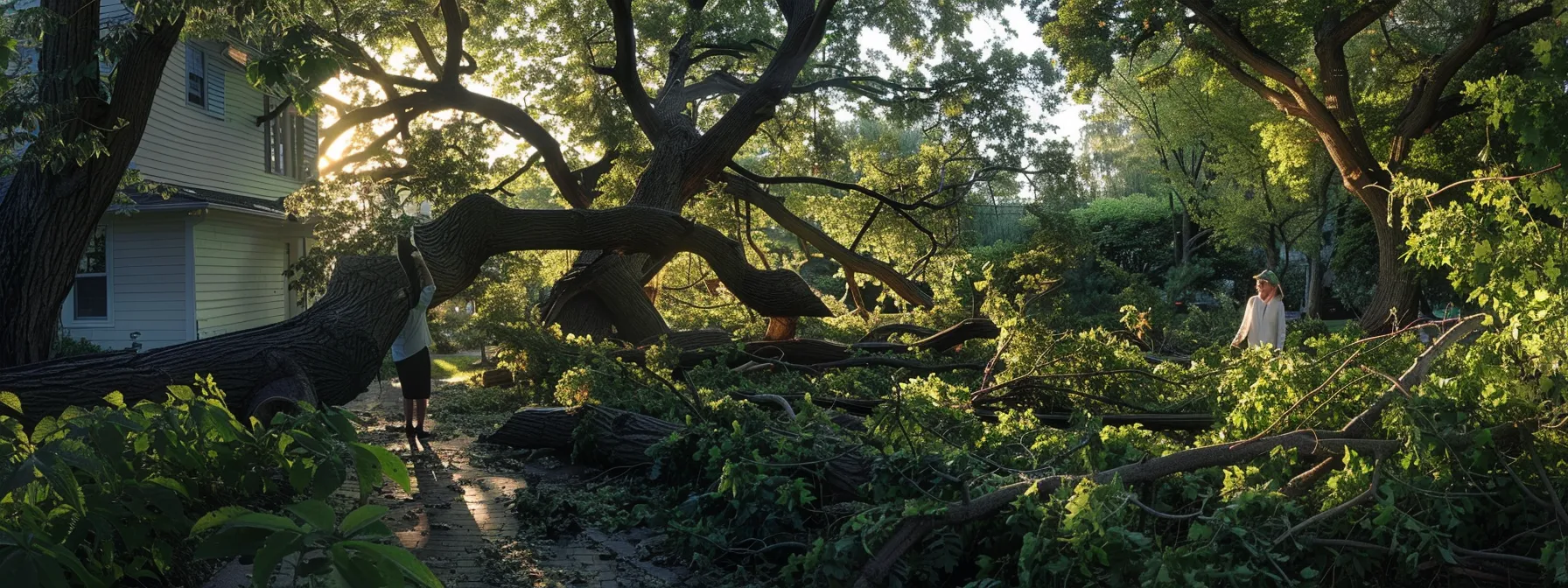
Filing a successful claim begins with documenting damage caused by events such as
lightning, snow, or high winds. Understanding your
deductible and coverage limits helps set realistic expectations.
Collect Evidence and Document Tree Damage
Take clear photos of all visible damage and conduct a thorough inspection of the affected area.
Proper documentation improves claim outcomes and speeds up processing.
Contact Your Insurance Provider to Initiate the Claim
- Assess damage and photograph affected areas.
- Review relevant insurance policy clauses.
- Contact your insurer promptly.
- Provide documentation and estimates.
Working With Tree Removal Professionals

Hiring a certified and insured tree removal company ensures safety and helps
avoid liability issues. This is especially important during emergencies or when trees threaten
your home or roof.
Choose a Certified and Insured Tree Removal Company
- Verify certifications and insurance.
- Confirm emergency tree removal experience.
- Check reviews and references.
- Ask about safety and liability procedures.
Schedule Removal and Ensure Proper Procedures
Work with reputable providers such as
Tree Service Raleigh
and ensure all safety and insurance documentation is in place before work begins.
Preventing Future Tree Damage
Regular inspections and maintenance reduce the risk of storm damage and costly insurance claims.
Removing hazards before storms protects your home, vehicles, and walkways.
Implement Regular Tree Inspections and Maintenance
- Inspect trunks and branches for decay.
- Remove dead or leaning limbs early.
- Schedule seasonal professional inspections.
- Document maintenance for insurance records.
Remove Potential Hazards Before Storms Occur
| Action | Description | Benefit |
|---|---|---|
| Inspect Trees | Check for dead or weak branches | Identifies risks early |
| Trim Branches | Remove overhanging limbs | Reduces storm damage |
| Consult Professionals | Schedule regular arborist visits | Ensures tree health and safety |
Navigating Denied Claims and Appeals

Claim denials can occur due to exclusions, insufficient documentation, or policy limits.
Understanding denial reasons helps strengthen appeals.
Understand Denial Reasons From Your Insurance Provider
- Review coverage limits and exclusions.
- Ensure documentation is complete.
- Confirm the event qualifies as a covered peril.
Prepare and Submit an Appeal With Additional Proof
Strengthen appeals with photos, estimates, professional opinions, and written explanations
outlining why the damage should be covered.
Conclusion
Understanding tree removal insurance claims helps homeowners protect their
property and finances. Reviewing policies, documenting damage, maintaining trees,
and working with certified professionals all improve outcomes. Being informed allows you to
handle tree-related challenges confidently and effectively.